
 EN
EN



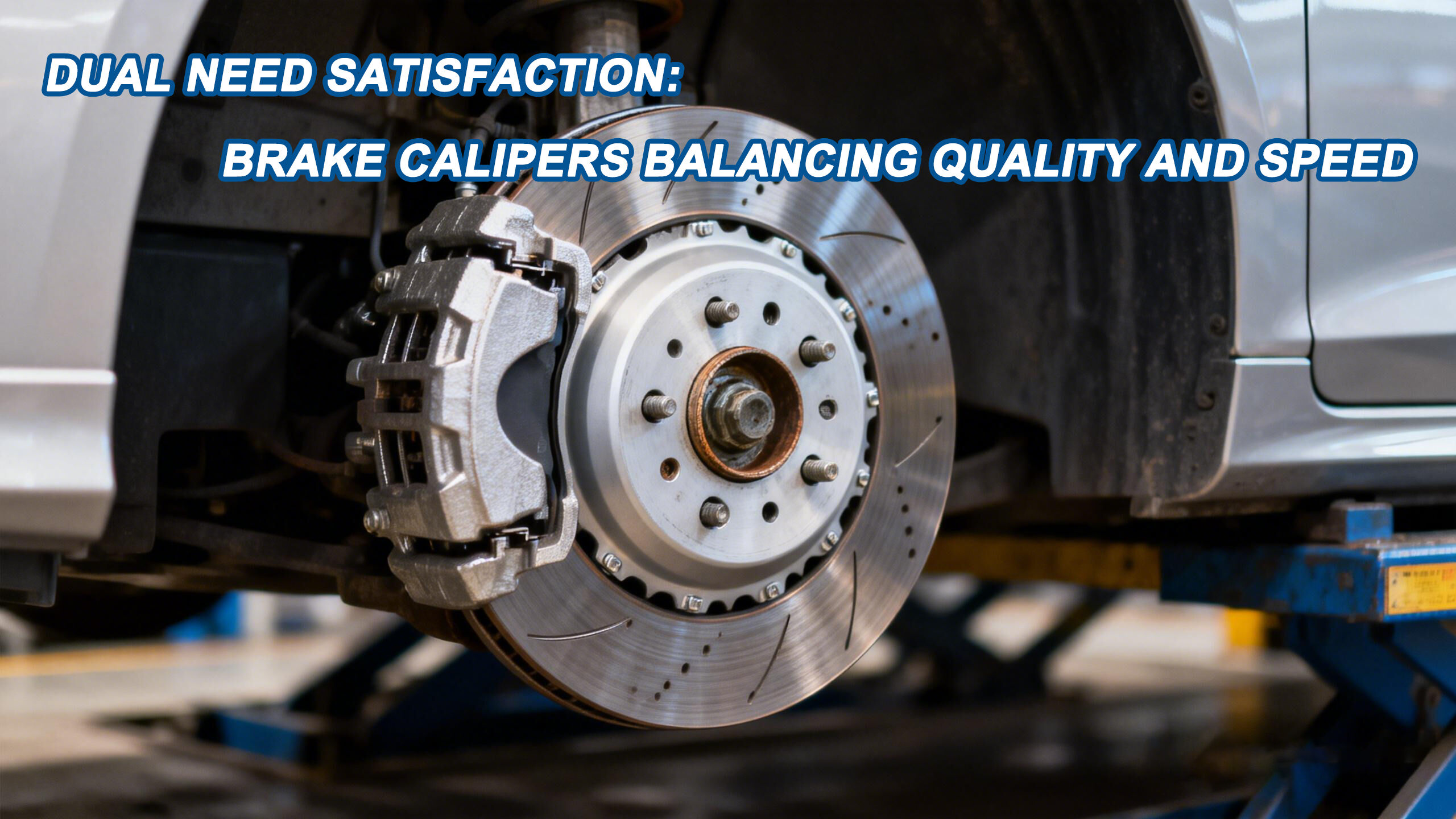
The Core Trade-Off: Why Brake Caliper Design Forces a Quality–Speed Decision
Fixed vs. Floating Brake Caliper Architectures: Stiffness, Modulation, and Thermal Behavior
Choosing the right brake caliper makes all the difference when it comes to how well brakes actually work. There are basically three things that matter most: how stiff the caliper is, how precisely it can control pressure, and how well it handles heat buildup. Fixed calipers attach solidly with pistons on either side of the rotor disk. This gives them much better stiffness so they don't bend or flex when stopping really hard - something that matters a lot for consistent stops from high speeds like 100 km/h down to a complete stop in about 60 meters. Because of this rigidity, the brake pads stay aligned pretty accurately, only moving around half a millimeter at most when pressed against the rotor. Floating calipers take a different approach with just one piston that slides back and forth inside the caliper body. They save space and money but sacrifice some stiffness, which means the pads might shift position by as much as 2mm sometimes. When it comes to heat management, fixed calipers spread out the heat better across their surface area. This helps prevent those annoying hot spots that glaze over brake pads over time. Research into materials shows fixed calipers beat floating ones by roughly 40 percent when it comes to getting rid of heat over long periods.
| Performance Factor | Fixed Caliper | Floating Caliper |
|---|---|---|
| Structural Stiffness | High (rigid mounting) | Moderate (sliding mechanism) |
| Modulation Precision | ±0.5mm pad alignment | ±2mm variance potential |
| Thermal Resilience | Even heat dissipation | Uneven heating risks |
Real-World Impact: Track-Driven Development vs. Mass-Market Production Timelines
When it comes to performance driven development, thorough validation is absolutely critical. Take motorsport grade calipers for example these typically spend anywhere from 18 to 24 months on the track getting tested under extreme conditions. They face temperatures hitting around 300 degrees Celsius and hydraulic pressures reaching up to 150 bars just to find and fix any potential weak spots before they ever hit the road. Things look quite different in mass market production though. Most companies work within tight 12 month timelines for product launches, so they rely heavily on fast tooling processes, standard materials, and overlapping engineering phases to keep things moving. According to recent data from SAE International (2023), about three quarters of automotive engineers believe these rushed timelines definitely cut into performance capabilities. However there's a workaround many manufacturers have found helpful: incorporating high silicon aluminum alloys into their designs. These materials maintain good thermal properties and mechanical strength without adding extra time to already packed schedules. At the end of the day, the real struggle lies in finding that sweet spot between proven racing safety standards and what makes financial sense for everyday vehicles all while keeping brakes reliable when drivers need them most.
Engineering Solutions: Brake Caliper Innovations That Bridge the Gap
Brake caliper engineering confronts a persistent tension: achieving thermal stability and structural stiffness while meeting manufacturing scalability and cost targets. Two innovations directly address this dual mandate.
Two-Piece Brake Caliper Bodies with Aluminum Bridges for Thermal Decoupling
Standard single piece calipers let heat travel straight from where the pads rub against the rotor right into the hydraulic parts inside the caliper body. This can actually cause problems when braking hard repeatedly because it raises the chance of brake fluid turning into vapor over time. That's why many manufacturers now prefer two piece designs instead. These newer models separate the area where friction happens from the important hydraulic channels by adding an aluminum bridge between them as insulation against heat. The result? Around 60 to maybe even 70 percent less heat reaching those sensitive areas near the master cylinder and seals compared to traditional solid block calipers. Drivers notice this difference too since their brakes maintain better response and don't fade during intense stopping situations. To make all this work properly, companies need special casting techniques for certain parts along with specially shaped metal connectors. This approach gives good thermal protection without needing complicated cooling mechanisms that would add weight and cost.
Forged Aluminum and Carbon-Ceramic Integration in High-Performance Brake Calipers
The focus of weight savings has shifted directly to the caliper component these days. Aluminum calipers made through forging processes weigh roughly 40% less compared to standard cast iron versions, yet they maintain good torsional stiffness. This helps cut down on unsprung weight and makes the suspension react better overall. Combine these lighter calipers with carbon ceramic rotors that can handle heat levels around 1800 degrees Fahrenheit, way beyond what regular iron rotors manage at about 1300 degrees. Together, this setup resists brake fade much better in real world conditions. Getting all this to work properly means designing special mounting points that account for how differently aluminum and ceramic materials expand when heated. These mounts need to keep proper clamping pressure throughout normal driving situations as well as extreme performance scenarios.
Procurement Realities: How Buyers Evaluate Brake Caliper Suppliers for Dual Priorities
The procurement team faces a tough balancing act between getting brake calipers that pass all the safety tests and keeping up with tight vehicle production schedules, especially since most manufacturers stick to that 12 month window from design to market. Looking at potential suppliers isn't simply about checking off certifications like ISO/TS 16949 anymore. Teams need to find partners who can actually keep pace with fast moving projects while minimizing risks along the way. The best suppliers understand both the technical requirements and what it takes to deliver parts when needed without compromising quality.
Agile Sourcing vs. Reliability Benchmarks: The 12-Month Launch Challenge
The old way of qualifying suppliers involves a lot of checking boxes basically. Foundry audits, complete tests for how materials handle heat, plus those lengthy 18 month fatigue tests everyone hates but needs. On the flip side, companies going agile focus more on getting prototypes out fast, making sure designs can be modified easily, and scaling up production when demand kicks in. Big manufacturers have found a middle ground with what they call tiered qualification systems. The really important stuff stays non-negotiable though seal integrity matters most, followed by how well pistons hold up during temperature changes and whether parts can withstand maximum hydraulic pressure over time. Things that aren't absolutely critical like surface texture details or small weight savings get pushed back until later stages of production. This lets engineers work on multiple aspects at once rather than waiting for everything to be perfect first. When initial batches hit the market, they still go through real world stress testing. Then each new run gets tweaked based on actual performance data collected from previous models all while keeping product safety intact throughout the whole process.
Strategic Framework: Aligning Brake Caliper Selection with Application Requirements
Picking the right brake caliper isn't about finding some magical universal solution but rather pairing what works technically with what actually happens on the road. For performance cars, fixed multi-piston calipers are pretty much essential since they distribute pressure evenly across pads, reduce flex under stress, and handle heat better when someone's slamming on brakes repeatedly at high speeds. On the other hand, most industrial equipment and commercial trucks get along just fine with floating calipers. These make sense because money matters, parts need to be replaced regularly, and there's enough cooling capacity for normal operations. Sure, they don't offer those super fine adjustments down to fractions of a millimeter, but that level of control simply isn't necessary for most heavy duty applications as long as workload stays within what engineers designed them for originally.
Critical evaluation factors include:
- Thermal Tolerance: Racing, heavy-duty transport, or steep-grade operation demands materials resistant to fade—such as forged aluminum bodies or ceramic-coated pistons capable of sustaining >300°C exposure without degradation.
- Mounting Compatibility: Bolt patterns, spatial envelope, and interface geometry must align precisely—not only with the rotor but also with ABS sensors, brake boosters, and existing suspension kinematics.
- Durability Metrics: Corrosion resistance (especially against road salt or industrial chemicals) and long-term seal integrity under environmental stress determine service life far more than static load ratings alone.
When looking at total cost of ownership, commercial fleet managers deal with completely different challenges compared to motorsport engineers who are all about shaving seconds off lap times. Trying to apply the same standards across different situations usually leads to problems one way or another premature component failure in some cases, extra expenses in others. The real test comes from actual scenarios on the road urban traffic with constant stopping and starting versus long stretches of downhill driving where brakes get hot. This kind of hands-on testing is what tells us if something will actually work in practice rather than just look good on paper.
FAQ
What are the main trade-offs between fixed and floating brake calipers?
Fixed brake calipers offer high structural stiffness and precise pad alignment, making them ideal for high-speed stops. However, they are more expensive. Floating calipers are cost-effective but may shift more during use, affecting precision.
Why do motorsport calipers require longer testing than mass-market ones?
Motorsport calipers undergo intense testing over 18 to 24 months to ensure reliability under extreme conditions, unlike mass-market calipers, which are developed under shorter timelines due to market demands.
How do two-piece brake caliper designs improve performance?
Two-piece designs separate high friction areas from hydraulic systems using aluminum bridges, significantly reducing heat transfer and improving brake response during intense use.
What materials are preferred for high-performance brake calipers?
Forged aluminum and carbon-ceramic materials are highly effective, offering significant weight savings and superior heat resistance compared to iron-based components.
Table of Contents
- The Core Trade-Off: Why Brake Caliper Design Forces a Quality–Speed Decision
- Engineering Solutions: Brake Caliper Innovations That Bridge the Gap
- Procurement Realities: How Buyers Evaluate Brake Caliper Suppliers for Dual Priorities
- Strategic Framework: Aligning Brake Caliper Selection with Application Requirements
- FAQ