
 EN
EN



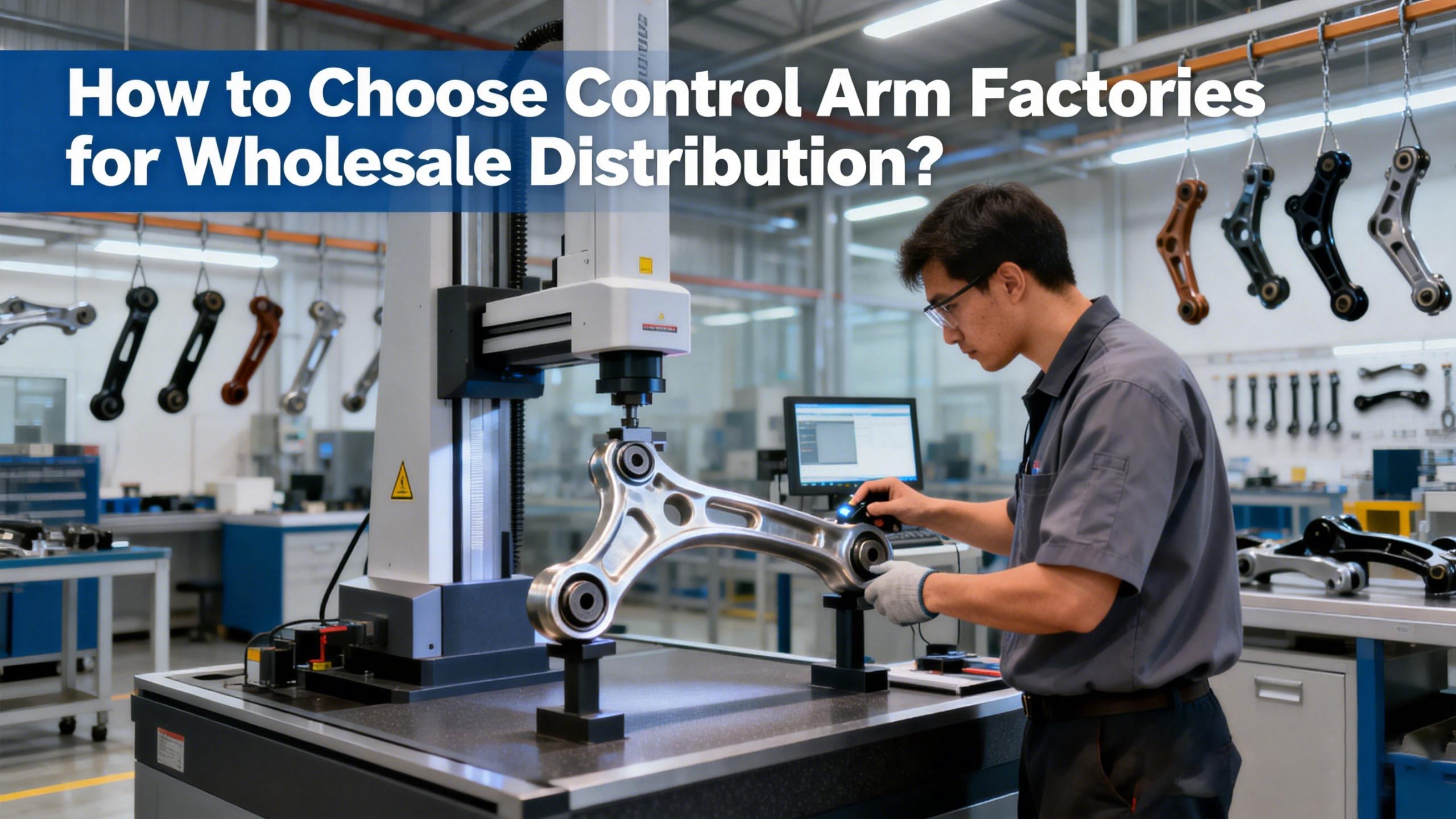
Control Arm Quality Assurance: Certifications, Materials, and Real-World Performance
ISO 9001 & IATF 16949: Why Automotive-Specific Certification Is Non-Negotiable for Control Arm Suppliers
For anyone supplying control arms to the automotive industry, getting IATF 16949 certified goes way beyond basic ISO 9001 requirements. The IATF 16949 standard is basically the gold standard across the automotive world, and companies that follow it see their defect rates drop around 32% compared to those without certification according to manufacturing benchmarks. What makes this standard so important? Well, it demands complete documentation tracking to stop anyone from swapping out materials without permission. Testing equipment needs checking by outside experts once a month, and failure mode analysis becomes part of everyday operations on the factory floor. This matters because OEMs expect certain things from control arms these days. After all, these components impact how cars handle, respond to steering inputs, and even manage crash forces. That's why most major manufacturers won't work with anyone who doesn't have proper certification for safety critical parts. Smart suppliers are already using automated optical systems during forging processes to catch any parts where dimensions drift over 0.5mm tolerance before they can cause problems further along the line.
Steel, Aluminum, or Cast Iron? Matching Control Arm Material to OEM Requirements and Wholesale Volume Needs
Material selection must reflect both OEM engineering intent and wholesale operational realities:
- Forged steel delivers superior strength—withstanding 140% of OEM-specified impact loads—making it ideal for commercial fleets and towing applications, though at a weight penalty.
- T6 aluminum reduces mass by 40% versus steel and enhances ride dynamics, but demands tighter machining tolerances (±0.05mm) and is typically reserved for performance aftermarket channels.
- Ductile cast iron provides the strongest cost-to-volume ratio for high-turnover applications—particularly in economy fleet programs exceeding 10,000 units/month.
The OEM validation reports actually spell out specific grade requirements such as ASTM A536 Grade 100-70-03 or SAE J404 compliant alloys. Material certificates need checking against these exact specs instead of just relying on general industry categories. For wholesalers looking to get it right, matching materials to what customers really want makes all the difference. Cast iron still works best when price matters most and volumes are high. Aluminum parts tend to appeal to customers wanting something better looking and slightly more advanced. But when things absolutely cannot fail, like in heavy machinery applications, nothing beats forged steel for its toughness under stress. We've seen this pattern hold true across multiple industries over time.
OEM Compatibility and Technical Validation for Control Arm Wholesale
CAD-Based Fit Verification and Physical Bench Testing: Ensuring Drop-In Control Arm Replacement
Putting too much faith in what suppliers say about their parts being "OEM equivalent" can lead to expensive headaches down the road. Problems like misalignment, stuck suspensions, and worn out bushings tend to pop up after installation when the real world meets the theoretical specs. Smart wholesale distributors need to check things twice. The first step is checking fits digitally with those CAD models provided by factories, running simulations through all possible suspension movements, camber changes, caster adjustments, and toe angle variations. Then comes actual hands-on testing where components get put through their paces just like they would in real conditions. This means squeezing bushings at loads 50% higher than what's rated, working ball joints through tens of thousands of movements, and keeping track of how much they bend or twist within tight tolerances around 0.3mm. A distributor in North America saved themselves almost three quarters of a million dollars last year when they started doing this double check. They found certain batches lasting only 88% as long as original equipment manufacturer standards in their accelerated wear tests according to research from Ponemon Institute back in 2023.
FMVSS Compliance Gaps: How to Audit Control Arm Geometry, Bushing Durometer, and Load Testing Reports
While FMVSS 127 (Steering Systems) and FMVSS 108 (Lamps/Reflective Devices) set baseline safety thresholds, they do not govern long-term material fatigue, bushing hysteresis, or geometric stability under sustained load—a critical gap for control arms. Audits must go beyond compliance checklists to verify:
- Bushing durometer (60–70 Shore A for urban passenger vehicles; 75–90 for off-road or heavy-duty use), confirmed against OEM chemical composition sheets—not just hardness charts;
- Loaded geometry integrity: torsion must not exceed 0.5 degrees per kN under static load, measured with calibrated torque arms and laser displacement sensors;
- Destructive test footage showing arms supporting 3× vehicle gross axle weight without fracture or catastrophic deformation.
Require ISTA 6B-certified lab reports—not internal factory summaries—for all fatigue and load testing. In 2023, 28% of Asian-sourced control arms failed EU revalidation due to undocumented use of recycled steel alloys that compromised tensile consistency.
Wholesale Partnership Models: Scalability, Branding, and Supply Chain Integrity for Control Arms
Private Label, White Label, or Direct OEM-Sourced? Evaluating Margin, Lead Time, and IP Control
Choosing the right wholesale approach really comes down to what matters most for business goals beyond simple price considerations. Private label arrangements can be quite profitable, sometimes generating margins 30 to 50 percent higher than standard wholesale deals, plus complete control over brand identity. However there are tradeoffs here too. Lead times typically stretch between eight to twelve weeks, along with mandatory minimum orders and needing to invest capital upfront for inventory. For companies wanting to get into markets quickly, white label options make sense since suppliers already have established designs ready to go within two to four weeks. But these come at a cost - thinner profit margins and potential headaches around competition from other channels plus weak intellectual property safeguards. Then there's direct OEM sourcing which ensures products meet exact specifications and takes away responsibility for design issues. Still this route locks businesses into whatever margin rates the manufacturer sets and leaves little room for adjusting production timelines based on demand fluctuations.
| Model | Margin Potential | Lead Time | IP Control Level |
|---|---|---|---|
| Private Label | High (30–50%+) | Long (8–12 wks) | Full ownership |
| White Label | Moderate | Short (2–4 wks) | Shared/limited |
| Direct OEM-Sourced | Fixed by OEM | Variable | OEM-retained |
Scalability follows distinct paths: private label suits mature distributors with warehouse infrastructure and brand equity; white label better serves agile resellers prioritizing inventory turnover. Ultimately, the decision hinges on balancing supply chain resilience, brand positioning, and long-term customer trust—not short-term margin optimization.
Post-Purchase Support: Warranty, Traceability, and Counterfeit Prevention for Bulk Control Arm Orders
Warranty Benchmarking and Batch-Level Traceability for Control Arm Returns
The best control arm manufacturers typically provide warranties lasting around two to three years for material issues these days. Some companies are starting to cover labor costs too when there's proof of installation problems. When looking at warranty details, distributors need to check if things like tire alignment issues or damaged bushings count as covered damages after an arm fails. Modern tracking systems using RFID tags or QR codes let companies pinpoint faulty parts within just one day. This cuts down on how long recalls take by roughly seventy percent and saves money on shipping and handling according to Supply Chain Quarterly last year. For smoother operations, linking serial numbers with production data such as batch numbers, manufacturing dates, and quality test results helps speed up claim processing while building trust with customers over time.
| Counterfeit Prevention Tactics | Implementation Requirement |
|---|---|
| Holographic packaging seals | Mandatory for all shipments |
| ISO/IEC 20248 digital signatures | Tier-1 supplier certification |
| Blockchain-based audit trails | Real-time batch verification |
Packaging Authentication and Due Diligence for Importers
Fake control arms usually give away their true nature pretty quickly through things like wonky logo markings, typos in OEM names, or packaging that looks cheap and lacks proper gloss. For international purchases, companies need to ask for actual proof documents rather than just generic claims. Look for factory audits under standards like IATF 16949 instead of basic ISO 9001 certifications. Material testing should come from third parties linked directly to particular batches of metal. Check business licenses against official databases such as China's National Enterprise Credit Information Publicity System or India's MCA21 portal. Surprise visits work best when checking how materials are stored separately, whether surfaces look consistent across products, and what happens at the actual assembly lines rather than just looking at finished items waiting to ship. Taking these precautions helps keep a company's name clean, maintains ongoing regulatory compliance, and most importantly protects customers who rely on genuine parts for safety reasons.
FAQ
Why is IATF 16949 certification important for control arm suppliers?
IATF 16949 certification is crucial as it ensures comprehensive documentation and quality controls, reducing defect rates and meeting OEM expectations critical for safety.
What materials are commonly used for control arms?
Common materials include forged steel for strength, T6 aluminum for lightweight performance, and ductile cast iron for cost-effective high-volume applications.
How do suppliers ensure OEM compatibility for control arms?
Suppliers use CAD-based simulations and hands-on testing to verify that control arms meet theoretical specs and perform well in real-world conditions.
What are the risks of not conducting thorough audits of control arms?
Without thorough audits, control arms may fail to meet safety, reliability, or performance standards, leading to potential misalignments or early wear.
How can companies prevent counterfeit control arm parts?
Companies can prevent counterfeits by using holographic packaging seals, ISO-certified digital signatures, and blockchain-based audit trails for authenticity verification.
Table of Contents
- Control Arm Quality Assurance: Certifications, Materials, and Real-World Performance
- OEM Compatibility and Technical Validation for Control Arm Wholesale
- Wholesale Partnership Models: Scalability, Branding, and Supply Chain Integrity for Control Arms
- Post-Purchase Support: Warranty, Traceability, and Counterfeit Prevention for Bulk Control Arm Orders
-
FAQ
- Why is IATF 16949 certification important for control arm suppliers?
- What materials are commonly used for control arms?
- How do suppliers ensure OEM compatibility for control arms?
- What are the risks of not conducting thorough audits of control arms?
- How can companies prevent counterfeit control arm parts?