
 EN
EN



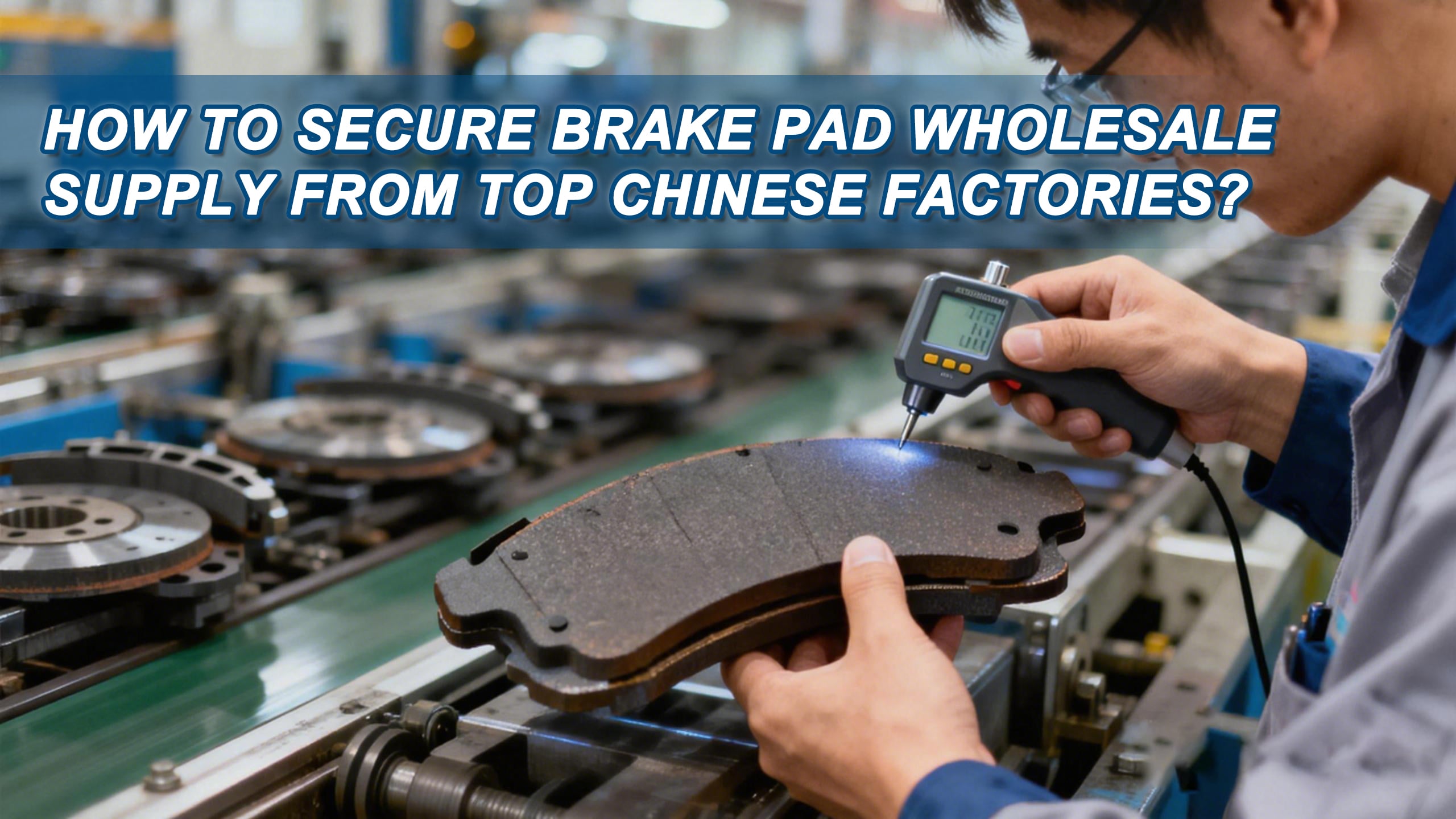
Identify Verified Brake Pad Manufacturers in China
Use B2B Platforms and Industry Directories with Supplier Verification Filters
Using specialized B2B platforms such as Global Sources along with industry directories can be very helpful when looking for reliable suppliers. These platforms typically check things like business licenses, export documentation, and actual production facilities before listing companies. This vetting process cuts down on unreliable vendors from the start, which according to some recent data from 2023 reduces procurement risks by around 60%. When evaluating potential partners, it's wise to cross check them against customs export records to see what kind of shipping history they have towards specific markets. Suppliers who maintain long term relationships with original equipment manufacturers, especially those working with major European or North American auto brands, generally show better adherence to standards and regulations. Such partnerships tend to indicate solid operational practices, and research suggests this approach helps avoid about three quarters of suppliers found lacking compliance during international trade inspections.
Validate Export History, OEM Partnerships, and Core Certifications (ISO 9001, IATF 16949)
Prioritize manufacturers with documented international export experience and verifiable OEM collaborations—evidence of mature quality systems and real-world performance validation. Confirm certifications directly through official registrar databases:
- ISO 9001: Validates implementation of standardized quality management processes
- IATF 16949: The globally recognized automotive standard requiring defect prevention, process control, and continuous improvement
- GB 5763–2018: China’s mandatory brake pad safety regulation covering fade resistance, bonding integrity, and environmental compliance
Brake pad factories that have IATF 16949 certification tend to produce parts with about 40% fewer defects according to Automotive News from last year. When looking at potential suppliers, don't stop at checking their certificates. It's actually better practice to ask for recent audit reports from recognized organizations like TÜV SÜD if possible. These documents will give a clearer picture of whether they're still following standards properly. Most suppliers who maintain relationships with original equipment manufacturers end up investing in sophisticated testing gear for friction materials. This helps them keep formulations consistent across batches. And guess what? Consistency in these materials accounts for roughly 70% of how well brakes perform based on independent tests conducted by third parties.
Evaluate Brake Pad Supplier Capabilities and Compliance
Assess Production Scale, R&D Capacity, and Raw Material Traceability
To check if a supplier can handle large orders, look at their monthly production numbers and take a good look around their manufacturing facilities. Factories larger than 10,000 square meters with separate lines just for brake pads usually mean they can scale up operations when needed. When it comes to innovation, we want to see actual proof like registered patents or proper lab certifications such as those from CNAS. Particular attention should be paid to developments in ceramic compounds and technologies that reduce noise during operation. For raw materials, insist on complete tracking documents covering items like steel fibers, copper free abrasives, and various types of resin binders. This ensures compliance with important regulations like REACH and RoHS standards. Top tier suppliers actually maintain detailed records at the batch level, which makes a big difference in reducing contamination problems that lead to early part failure and unpredictable friction performance across different batches.
Confirm Adherence to Global Brake Pad Standards: ECE R90, SAE J431, GB 5763–2018
Only engage suppliers whose products are certified against internationally accepted benchmarks:
- ECE R90: Ensures stable friction performance across temperature ranges (50–500°C), validated via dynamometer heat-cycle testing
- SAE J431: Governs mechanical integrity—including shear strength and structural durability under thermal stress
- GB 5763–2018: Mandates fade resistance, bonding strength, and formaldehyde emissions limits specific to China-sourced brake pads
Always cross-check certification claims with third-party lab reports (e.g., TÜV, SGS) rather than accepting self-declared compliance. Non-compliant brake pads carry an average recall cost of $740k (Ponemon Institute, 2023) and can increase emergency stopping distances by 15–30%, compromising vehicle safety and brand reputation.
Key Compliance Checks
| Standard | Critical Focus Area | Testing Method |
|---|---|---|
| ECE R90 | Friction stability | Dynamometer heat cycles |
| SAE J431 | Shear strength | Pressure/thermal stress |
| GB 5763–2018 | Fade resistance | High-speed deceleration |
Conduct Rigorous Due Diligence Before Committing
Secure your supply chain through evidence-based verification—not marketing claims.
Require Independent Lab Reports (TÜV, SGS) for Sample Brake Pad Testing
Insist on pre-shipment testing by accredited third-party labs—including TÜV and SGS—using representative production samples. Tests must simulate real-world conditions, measuring:
- Friction coefficient consistency across 50–500°C
- Wear rate after ≥10,000 braking cycles
- Shear strength at bonding interfaces
- Noise emission levels (dB(A)) under variable load
The test outcomes clearly show that standards ECE R90 and SAE J431 are met. To check if a report is genuine, look up its special certification number on the lab's online records. Fake documents continue to be a problem when buying large quantities of materials. Finding problems with how materials are made or signs they've been overheated before things get too far along can save money on fixing mistakes later and avoid expensive breakdowns once products are out in the field.
Prioritize On-Site Audits or Trusted Third-Party Factory Inspections
Physical verification is irreplaceable. On-site audits should assess raw material traceability systems, calibration logs for molding presses and curing ovens, and QC checkpoint frequency—especially final inspection sampling rates. When travel isn’t feasible, engage experienced inspectors specializing in automotive components to evaluate:
- Dust containment during friction material mixing (critical for batch uniformity)
- Temperature uniformity across curing oven zones (±2°C tolerance required)
- Final inspection protocols—including use of digital profilometers for surface finish verification
A 2023 industry review found unaudited factories exhibited 34% more non-conformities in safety-critical parts like brake pads. Observing ISO 9001 implementation in action—not just reviewing certificates—is essential to confirm that production consistently mirrors tested samples.
Negotiate Scalable, Quality-Guaranteed Brake Pad Procurement Terms
Balance cost efficiency with enforceable quality safeguards from day one. Anchor pricing in tiered models tied to order volumes—suppliers commonly offer 12–18% discounts for commitments above standard MOQs. Embed mandatory third-party inspection clauses (e.g., SGS or TÜV) validating friction composition and ECE R90 performance before shipment release.
When choosing Incoterms, match them to how mature your logistics operations actually are. For companies that know what they're doing, EXW gives total control over costs but requires significant expertise. On the flip side, going with FOB means the supplier handles all the port stuff, which can save headaches during shipping. To keep profits steady when markets swing around, it makes sense to include some kind of scaling mechanism. Automated systems that adjust order volumes based on demand fluctuations work well, as does linking prices to raw material indices so nobody gets blindsided by sudden cost spikes. And don't forget contract terms either. Make sure there's at least 24 to 36 months of warranty coverage against defects. Better yet, specify that any disputes should be handled through arbitration in a location outside mainland China where judgments are actually likely to stick if things go south.
FAQ
What are the essential certifications to look for in brake pad manufacturers?
It's important to prioritize manufacturers with ISO 9001, IATF 16949, and GB 5763–2018 certifications, as these indicate standardized quality management processes, defect prevention, and compliance with China's safety regulations.
How can suppliers' compliance claims be verified?
Cross-checking their certification claims with third-party lab reports and requesting recent audit reports from recognized organizations can help verify compliance.
Why is on-site verification crucial for assessing brake pad suppliers?
On-site verification allows for physical assessment of raw material traceability systems, equipment calibration, and quality control procedures, which are vital for ensuring consistent product quality.
What procurement terms should be considered when dealing with brake pad manufacturers?
Negotiating scalable procurement terms with quality safeguards, tiered pricing models, mandatory third-party inspections, and warranty coverage can help ensure cost efficiency and product reliability.