
 EN
EN



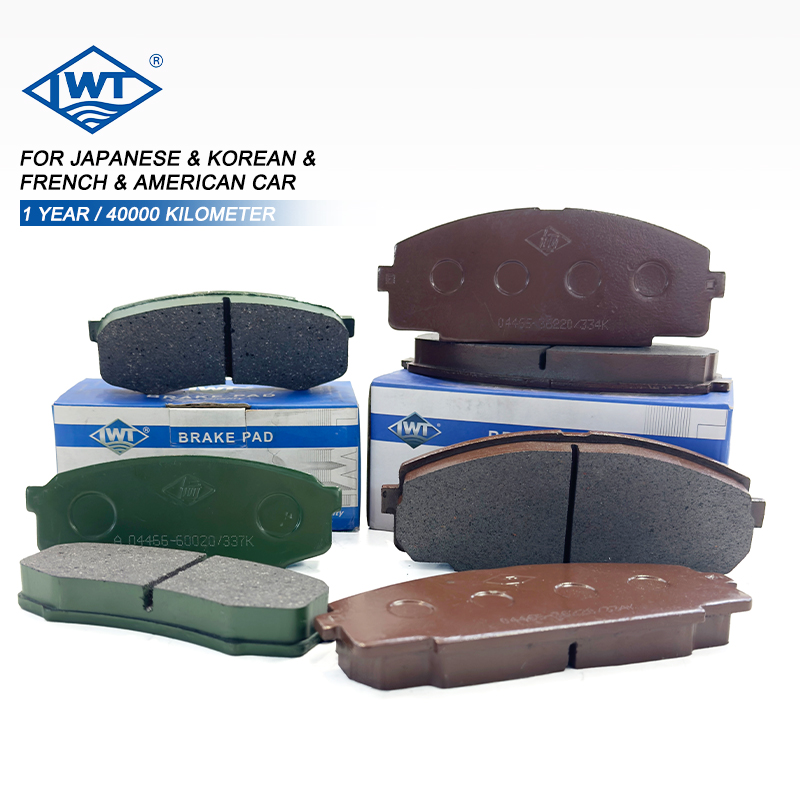
Understanding Global Brake Pad Market Dynamics and Demand Drivers
OEM vs. aftermarket demand: How vehicle age, EU/US emissions regulations, and fleet turnover shape brake pad volume needs
The brake pad industry actually operates on two main demand tracks: OEM and aftermarket markets. Both are influenced by things like government regulations, how long cars stay on the road, and what's happening with roads and highways in different regions. When it comes to OEM demand, this basically goes hand in hand with how many new cars get made. Car manufacturers have been cranking out vehicles at a much faster pace lately because of stricter emission rules from places like the EU and the United States. These environmental policies push people to trade in their old cars for newer ones that meet these cleaner standards, which means more brake pads end up being installed right when the car rolls off the assembly line.
In contrast, the aftermarket is propelled by aging vehicle fleets. In the US, the average vehicle age exceeds 12 years, and 85% of vehicles over five years require at least one brake pad replacement during their service life. Regional friction material standards further segment demand:
- EU ECE R90 mandates comprehensive performance documentation for type approval
- US NHTSA standards emphasize durability and fade resistance under real-world conditions
- China GB 5763-2018 sets strict limits on noise, wear, and asbestos content
These divergent requirements mean suppliers must tailor formulations—and supporting compliance evidence—to each market.
Regional growth hotspots: Why North America, Western Europe, and Southeast Asia lead in wholesale brake pad procurement
The wholesale procurement market is largely controlled by North America, Western Europe, and Southeast Asia because these regions have several overlapping strengths when it comes to vehicle numbers, mature regulations, and ready logistics infrastructure. In North America, the aftermarket generates around $1.2 billion each year thanks to the fact that there are 840 cars for every 1,000 residents on average. People tend to keep their vehicles longer here too, so they need replacement parts more often rather than buying whole new systems. Over in Western Europe, companies benefit from well connected supply chains and follow strict rules like ECE R90 pretty much to the letter. This makes moving goods between countries much easier than elsewhere. Just look at Germany as an example they bring in approximately 28 million sets of brake pads every single year.
The region of Southeast Asia has become one of the most dynamic areas for procurement activities lately. Take Vietnam for instance where their automotive industry continues to expand quite impressively, something like 18 percent each year according to recent reports. Meanwhile across the Gulf, Thailand remains a key player in exporting quality brake pads that meet international standards. What's really interesting though is what we're seeing in Indonesia and Malaysia. Both countries are experiencing rapid growth as cities expand and more people from the middle class start buying cars. This trend is creating strong demand for brake components throughout the entire ASEAN region. Market analysts predict that overall brake pad imports could increase by approximately 9.7 percent every year until 2028 based on current trends.
Evaluating Multinational Brake Pad Manufacturers: Quality, Compliance, and Scalability
Benchmarking Top Suppliers: R&D Investment, ISO/TS 16949 Implementation Depth, and Batch-to-Batch Consistency in Brake Pad Production
The best manufacturers stand out because they actually put money into research and development, maintain strict quality controls, and deliver products that perform consistently over time. When companies spend at least 5% of their revenue on R&D, they tend to get about 34% fewer complaints from customers about noise issues in the field. This shows how improvements in materials science really do make a difference when products are used in real life situations. Getting ISO/TS 16949 certified is becoming standard these days, but what truly counts is whether the company follows through with those standards in practice, not just keeping paper records. Factories that undergo regular audits and stick to their quality protocols see around 28% fewer defects than other certified facilities that don't bother with actual verification.
Batch-to-batch uniformity hinges on precision blending and automated thermal curing. Leading producers maintain coefficient-of-friction variance within ±0.05 across production runs—a threshold validated by third-party SAE J2522 dynamometer testing under extreme thermal stress. Such consistency ensures predictable pedal feel, reduced warranty claims, and stronger brand trust.
Due Diligence Essentials: Factory Audits, Material Traceability, Friction Compound Validation, and Third-Party Lab Testing Protocols
Effective supplier evaluation goes beyond certifications—it requires hands-on verification across four pillars. Factory audits must inspect calibration records for critical production cells, environmental controls for adhesive application (temperature/humidity stability), dust suppression systems (to prevent contamination), and documented worker safety protocols aligned with OSHA/ISO 45001 standards.
Material traceability is non-negotiable. Blockchain or RFID tracking—from raw mineral ore sourcing to finished pad—ensures REACH and RoHS compliance while blocking counterfeit inputs. Friction compound validation follows a three-stage protocol:
- Baseline performance per SAE J661 (static/dynamic friction, compressibility)
- Wear resistance after 1,000 high-temperature cycles (simulating aggressive city driving)
- Shear strength retention under sustained 1,200°F heat (validating bond integrity)
Reputable labs like SATRA deliver ISO/IEC 17025-certified reports quantifying fade resistance, recovery time, and thermal degradation—metrics leading wholesalers require quarterly to uphold supply chain integrity.
Optimizing Brake Pad Wholesale Logistics: MOQs, Incoterms, and Cross-Border Efficiency
Balancing cost and speed: Air vs. sea freight trade-offs for brake pad shipments across transatlantic and transpacific routes
Choosing between different transport modes really needs looking at each specific route instead of making general assumptions across the board. Take those shipments going from Europe to North America over the Atlantic for instance. Flying them there takes around 3 to 5 days but will set businesses back 4 to 6 times what it would cost to send by ship. Most companies still go this route when they absolutely need products fast, especially things like premium ceramic brake pads that won't stay fresh long or expensive items shipped in small quantities. Now when we look at goods coming across the Pacific from Asia to North America, ocean shipping makes much more sense for regular organic and semi-metallic brake pads. The trip takes longer, about 25 to 35 days, but saves roughly 60 percent on transportation costs. This works well because brake pads generally aren't very bulky. Air transport starts to make financial sense only when dealing with shipments smaller than 2 cubic meters, since otherwise the dimensional weight charges start eating into profit margins quite badly.
Be mindful of hidden sea freight expenses: port congestion surcharges rose 12% year-over-year in 2024 (per the 2024 Global Logistics Report), eroding margin gains if not factored into landed-cost calculations.
Negotiating flexible MOQs and export-ready documentation with multinational factories to reduce inventory risk
Smart MOQ setups that adjust based on how busy different seasons get let companies cut their first orders by around 40% when business slows down, all while keeping good profit margins per item sold. Getting paperwork right from day one matters just as much though. When suppliers attach those HS codes and SDS documents directly to the invoice before shipping, it saves tons of time at customs checkpoints. We've seen this cut delays by about 72% according to recent industry reports. Another trick worth knowing? Blanket purchase orders that allow changing quantities every quarter help avoid ending up with unsold inventory. And make sure they send packing lists certified under INCOTERMS 2020 standards along with bills of lading ready for freight forwarders. This simple step alone has been shown to slash documentation mistakes by roughly 34%, according to trade experts last year.
Building Your Own Brake Pad Brand Through OEM/ODM Partnerships
From Sourcing to Shelf: Securing IP Rights, Custom Formulation Options, Packaging Compliance, and Certification Transfer for Private-Label Brake Pads
Building a trustworthy private label brake pad brand really depends on finding good OEM or ODM partners first, not just having someone who can manufacture the product. Start by protecting what makes your brand unique. Get those NDAs signed with clear clauses about where they apply legally, and make sure there are exclusivity agreements so competitors can't copy designs in different regions. Work closely with partners who have research capabilities too. They can help tweak the actual friction material formulas based on what works best for specific markets. Maybe adjust how much ceramic goes into the mix, change up the binder system components, or modify filler ratios until everything meets local requirements like European noise regulations or US safety standards for wear resistance over time.
When shipping products abroad, packaging needs to meet all sorts of local requirements. Think about things like labels in multiple languages showing potential dangers, those little recycling icons everyone looks for these days, and specific disposal guidelines depending on where it ends up. For instance, the EU has this directive called 2000/53/EC that covers what happens to old cars at the end of their life cycle. Getting products to market fast depends heavily on certificate transfers rather than starting over with testing each time. Make sure whatever OEM or ODM company handles production knows how to properly pass along ISO 9001 and IATF 16949 certifications to the brand name. They should also have all the necessary paperwork ready if auditors show up unannounced. When companies handle this right, overseas manufacturers stop being just another supplier and start becoming valuable allies in building a strong brand presence globally.
FAQ
What are the main demand tracks in the brake pad industry?
The brake pad industry operates on two main demand tracks: OEM (Original Equipment Manufacturer) and aftermarket markets. OEM demand is linked to new car production, while the aftermarket demand is driven by aging vehicle fleets.
How do regional standards affect the brake pad market?
Regional friction material standards like EU ECE R90, US NHTSA standards, and China GB 5763-2018 create segmented demand by requiring suppliers to tailor formulations and compliance evidence for each market.
Why do North America, Western Europe, and Southeast Asia lead in brake pad procurement?
These regions excel due to high vehicle numbers, mature regulations, and developed logistics infrastructure, driving the wholesale procurement market.
How can suppliers ensure quality and consistency in brake pad production?
Top suppliers invest in R&D, obtain ISO/TS 16949 certification, and implement batch-to-batch consistency protocols, such as maintaining coefficient-of-friction variance within ±0.05.
What logistics considerations are crucial for brake pad shipments?
Balancing cost and speed by choosing between air and sea freight is essential; understanding hidden expenses such as port congestion surcharges is also important.
How can one build their own brake pad brand?
Building a private-label brand involves collaborating with OEM or ODM partners for IP protection, custom formulation options, packaging compliance, and certificate transfers.
Table of Contents
- Understanding Global Brake Pad Market Dynamics and Demand Drivers
- Evaluating Multinational Brake Pad Manufacturers: Quality, Compliance, and Scalability
- Optimizing Brake Pad Wholesale Logistics: MOQs, Incoterms, and Cross-Border Efficiency
- Building Your Own Brake Pad Brand Through OEM/ODM Partnerships
-
FAQ
- What are the main demand tracks in the brake pad industry?
- How do regional standards affect the brake pad market?
- Why do North America, Western Europe, and Southeast Asia lead in brake pad procurement?
- How can suppliers ensure quality and consistency in brake pad production?
- What logistics considerations are crucial for brake pad shipments?
- How can one build their own brake pad brand?