
 EN
EN



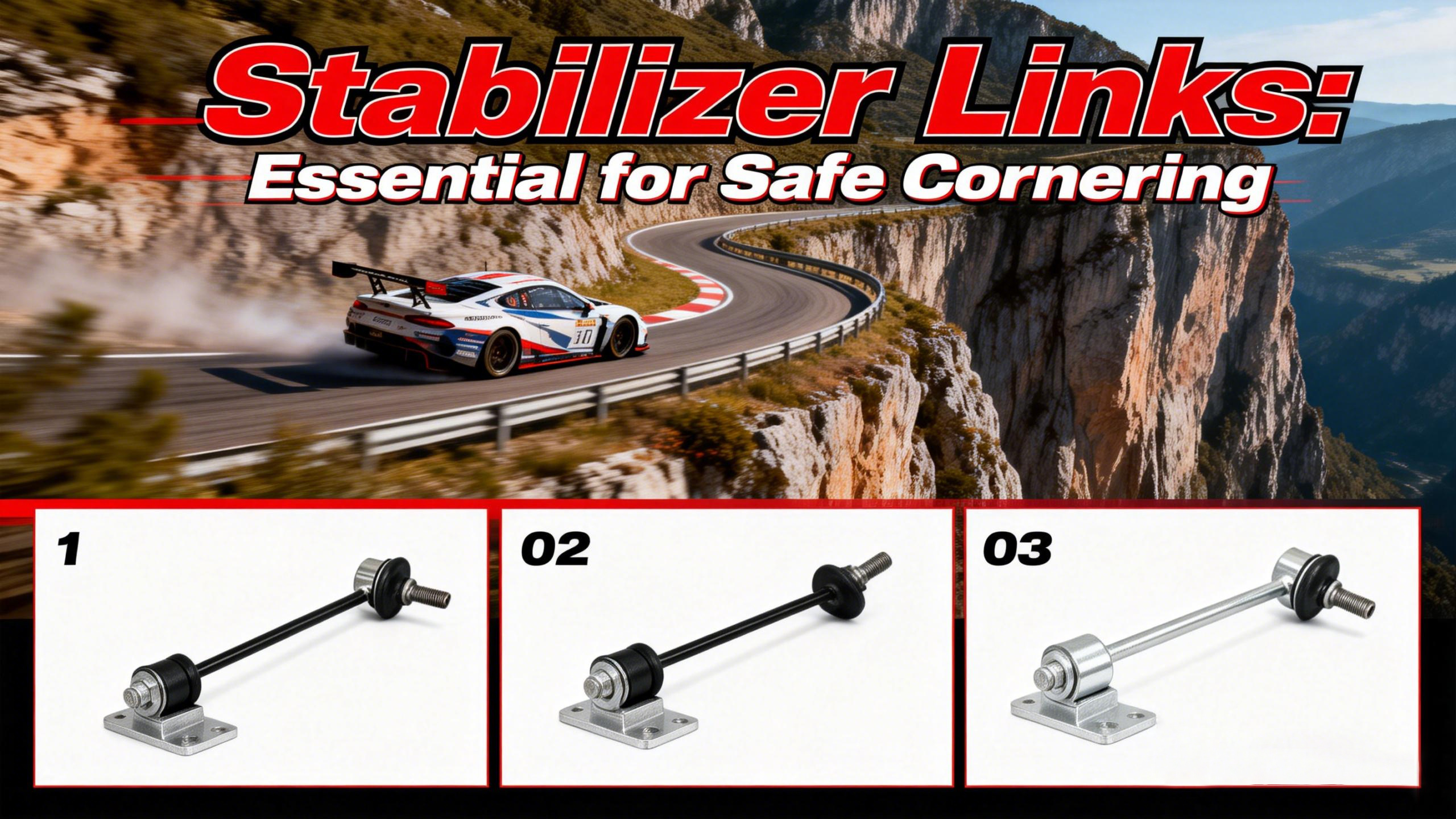
How Stabilizer Links Control Body Roll and Maintain Lateral Stability
The Physics of Body Roll: Why Unchecked Lean Compromises Tire Contact and Steering Response
As a car takes a turn, the force pushing against it causes something called body roll, which makes the vehicle lean sideways toward the outer wheels. What happens next? The inner tire loses quite a bit of its contact area with the road surface during hard turns, sometimes as much as a third of what it normally has. Less rubber touching means the steering feels slower to respond and the grip isn't so reliable anymore. At the same time, when this rolling occurs, the way the suspension works changes how the wheels are positioned relative to each other. This messes with things like camber and toe settings, making the car harder to control straight ahead. Body roll that gets out of hand isn't just uncomfortable for passengers either. It actually throws off how weight is spread between the wheels, which can lead to dangerous situations where the car doesn't handle corners properly anymore.
Stabilizer Link Function: Transferring Lateral Force Between Wheels to Keep the Sway Bar Engaged
The stabilizer link connects the sway bar to the suspension control arms, acting as a critical component in vehicle dynamics. When a car goes around corners, this part sends sideways forces from the compressed outer suspension to the stretched inner side through the torsion bar, which then activates the sway bar's twisting resistance. What happens next is pretty important for handling - the system balances how weight shifts across the axle while keeping wheels aligned properly even during aggressive driving maneuvers. When everything works right, drivers experience better stability and control without those annoying body rolls we all hate.
- Instantaneous force transmission between left and right wheels
- Optimal sway bar preload for rapid roll correction
- Stable tire contact pressure throughout weight shifts
Without this linkage, the sway bar decouples from the suspension, rendering it inert—and allowing body roll to escalate unchecked.
Safety Risks of Worn or Failed Stabilizer Links
Early warning signs: Clunking, wandering steering, and delayed turn-in response
Stabilizer links don't usually give out without some kind of warning sign first. When driving over bumps, metal clunking sounds often indicate too much play in the joints. Steering that feels loose or uncertain when changing lanes points to problems with side-to-side stability. The biggest red flag comes from delayed turn-in responses where the steering seems slow or unresponsive to input. All these issues together make the car handle less predictably way before anything actually breaks apart. Drivers start losing confidence behind the wheel, which means they react slower when trying to avoid obstacles on the road.
Critical consequence: Reduced sway bar effectiveness – diminished contact patch stability in corners
When those links fail, they basically cut off the sway bar from working with the suspension system at all, which means it can't help balance how weight shifts sideways when cornering. According to some tests done by SAE International in their paper number 2022-01-0829, cars will actually roll much more during sudden turns, sometimes as much as 40% more than normal. What happens next is pretty bad for handling. The car leans so far that the inside wheel actually comes off the ground somewhat, reducing the area where it touches the road surface while putting way too much pressure on the outside tire. This creates what mechanics call an "unstable grip situation" where one side isn't gripping properly anymore. And if roads are wet or slippery? Well, let's just say drivers face a real danger of sliding out or completely losing control when making sharp steering adjustments suddenly.
Stabilizer Links’ Direct Impact on Tire Contact Patch and Cornering Grip
Weight transfer imbalance: How compromised links cause inside tire lift and uneven grip distribution
Stabilizer links that start wearing down or actually snap completely cut the sway bar loose from the suspension setup. This basically takes away what the sway bar does best, which is fight against sideways forces when cornering. What happens next? The car starts leaning over more than it should, pushing extra weight onto those outside wheels while the inside ones lift right off the pavement. When this weight distribution gets really out of whack, sometimes the inside tire loses contact with the road surface by around 40%. That means significantly less grip both when turning and going straight ahead. Plus, the way weight gets distributed unevenly across the tires causes them to wear out in strange patterns and makes stopping harder especially when trying to brake through a turn. Keeping those stabilizer links working properly maintains good balance between front and rear axles so all four rubber meets the road consistently, even when driving aggressively or needing sudden evasive action.
Choosing the Right Stabilizer Link Type for Safety-Critical Performance
Rubber vs. polyurethane vs. Heim-joint stabilizer links: Tradeoffs in durability, precision, and real-world cornering safety
The materials used for stabilizer links along with their overall design have a big impact on how long they last and how well the car handles when driving hard. Rubber bushed links are known for lasting a good amount of time and keeping road noise down, but these bushes tend to squish out when there's lots of sideways force applied. This makes the steering feel less connected and can actually cause the inner wheel to lift just slightly when taking corners aggressively. Polyurethane versions don't compress as much about 30 percent less than regular rubber according to testing data from SAE in 2023. They give better response from the road surface and maintain more predictable weight distribution across the tires while still providing decent ride quality most drivers would find comfortable. If someone wants absolute precision though, going with Heim joints or ball joints completely removes any flex in the system. These setups allow for maximum articulation similar to what racing cars need and deliver instant feedback through the suspension components which becomes really important for keeping all four tires planted firmly on the ground even at high speeds.
| Link Type | Durability | Precision | Cornering Safety |
|---|---|---|---|
| Rubber | Moderate (5–7 years) | Limited deflection | Adequate for normal conditions |
| Polyurethane | High (8–10 years) | Consistent response | Enhanced grip during lane changes |
| Heim-joint | Extreme (10+ years) | Surgical accuracy | Race-proven high-speed stability |
For track or performance-oriented use, Heim-joint links are strongly recommended to prevent inside-wheel lift and preserve steering fidelity. Polyurethane provides the optimal balance of responsiveness, longevity, and daily drivability for spirited street driving. Rubber remains appropriate for standard replacement in non-performance applications where cost and comfort take priority.
FAQs on Stabilizer Links
What is the main purpose of stabilizer links?
Stabilizer links connect the sway bar to the suspension control arms, transferring lateral forces and enhancing vehicle stability by managing body roll during cornering.
How can I identify worn stabilizer links?
Common indicators include metal clunking sounds over bumps, wandering steering, and delayed turn-in response.
What are the benefits of polyurethane stabilizer links?
Polyurethane links offer enhanced durability and consistent response, maintaining better weight distribution and grip compared to rubber.
Are Heim-joint stabilizer links suitable for everyday driving?
Heim-joint links provide maximum articulation and precision, ideal for performance-oriented driving but may offer less comfort than rubber or polyurethane options.