
 EN
EN



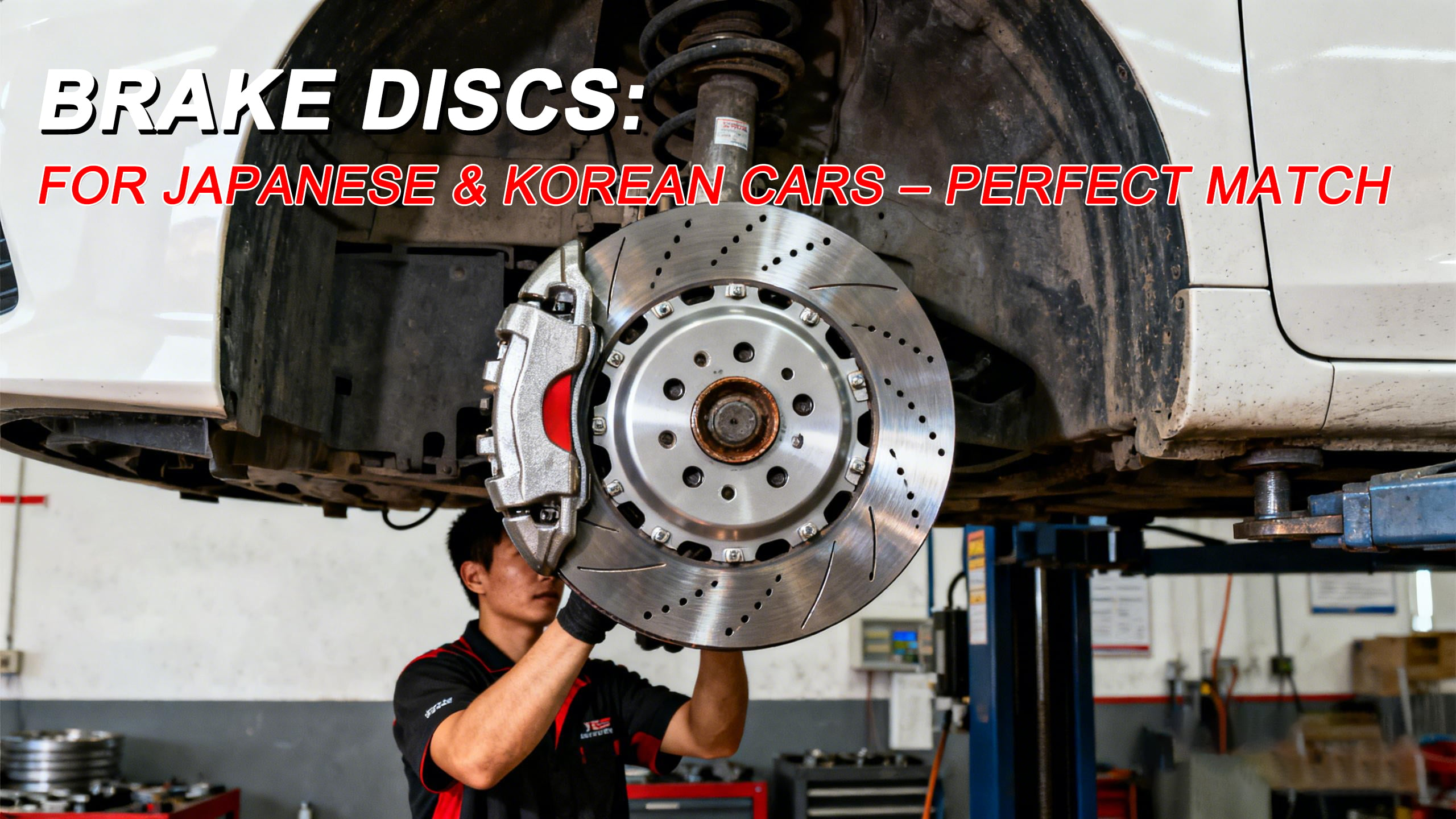
OEM-Specific Brake Disc Fitment: Why Exact Match Matters
Decoding OEM Part Numbers and Model-Year-Trim Mapping
Car makers give each brake disc its own special number based on what kind of car it goes in. Things like when the car was made, which trim level it has, how it drives around, and if it came with fancy brakes all get coded into those numbers. Just changing one digit in Toyota or Lexus part codes (like going from 43512-XXXXX to 43512-YYYYY) usually means something different about the car itself, maybe the length between wheels, how the anti-lock brakes work, or even the bearings inside. With Honda and Acura cars, the letters at the end tell us about weight limits and how hot things get during stops. Take the Civic Type R versus regular Civic for instance. The sportier version needs rotors that handle more heat and work better with stiffer suspension, even though they look almost the same at first glance. Hyundai and Kia make things trickier too. Sometimes cars from the same year need completely different rotors just because one had normal brakes while another got upgraded ones. Mechanics really depend on VIN decoding software to sort all this out. When parts don't match up right, about 78% of the time the car will throw a fake ABS warning light according to NASTF data from 2022. And let's not forget that even tiny issues matter. If the mounting surface isn't perfectly flat by just 2mm, it creates vibrations that wear down brake pads and discs faster, which isn't good for anyone's safety or wallet.
Critical Dimension Variations: Rotor Diameter, Hat Depth, and Bolt Circle Across Toyota, Honda, Hyundai, and Kia
Japanese and Korean automakers specify microscopic dimensional tolerances calibrated to each platform's mass, braking force distribution, and suspension kinematics—tolerances many aftermarket suppliers overlook. These variances are not arbitrary; they reflect decades of OE engineering validation:
| Dimension | Toyota/Lexus Variance | Honda/Acura Variance | Hyundai/Kia Variance |
|---|---|---|---|
| Rotor Diameter | ±0.25mm per axle | ±0.15mm | ±0.30mm |
| Bolt Circle | 5x114.3mm exact | 5x120mm + hub rings | 5x114.3mm tapered |
| Hat Depth | 55.2mm (FWD) / 59.8mm (AWD) | Uniform 53.5mm | 48.7mm (N) / 51.1mm (T) |
When parts don't match specs, there are real world effects we can measure. Take Kia Stinger GT models for instance. Those fitted with non OEM bolt circles tend to have about 23% more lateral runout issues. And look at Honda Odyssey vans with undersized rotors recording stopping distances that stretch out by 18% longer when roads get wet according to SAE J2521 standards. The way materials expand with heat matters too. Original equipment grade cast iron alloys aren't randomly chosen they're specifically matched to how heavy the vehicle is and what kind of work it does day after day. We've seen cases where a Hyundai Palisade rotor ends up failing much sooner when put on a lighter Santa Fe model. Even though the bolt patterns match perfectly, the difference in thermal properties causes problems. This shows that getting parts to fit isn't enough. They need to work properly together as well for safety and performance reasons.
Brake Disc Design & Material Science for Asian Vehicle Platforms
Vented, Slotted, and Drilled Configurations: OEM Intent vs. Aftermarket Assumptions
Car manufacturers often sell slotted or drilled rotors as must-have performance parts, but this isn't really the case for cars made in Japan and Korea. The engineers there design these rotor features with specific needs in mind. For instance, the venting patterns help dissipate heat when cars get stuck in traffic jams typical of crowded Asian cities. Slots actually do something useful too - they clear out debris in humid coastal regions. This makes brakes work better in wet conditions because they push water and brake dust away from where the pads meet the rotor surface. Those drilled holes aren't just for looks either. They channel water off the rotor during heavy rains, reducing the risk of hydroplaning. Problems happen when people install generic rotors that don't match the original equipment's thermal properties and vane shapes. Uneven wear becomes a big issue, particularly on sedans that don't have enough cooling vanes built in. Studies show thermal fatigue goes up around 27% compared to properly matched designs. Getting the slot depth and angle right matters too since it affects how quickly the brake pads grab. If these measurements are off, the car takes longer to stop at highway speeds, which is obviously dangerous.
Thermal Performance: Cast Iron Alloys, Vane Geometry, and Platform-Specific Cooling Demands
When choosing cast iron alloys, OEM engineers look at specifics like vehicle weight, powertrain specs, and local weather conditions rather than just going by general performance ratings. Take most Japanese and Korean budget cars for instance they typically go with G3000 grade cast iron because it hits that sweet spot between conducting heat well, dampening vibrations, and keeping manufacturing costs down. For turbo models or those with all wheel drive, manufacturers often switch to chromium molybdenum alloys since these materials can hold their shape even when temperatures climb past 650 degrees Celsius during operation. And let's not forget about the internal vanes inside these components their shapes are carefully designed to work with how air moves through the factory installed ducts and around the wheel wells, making sure everything functions as intended without creating unnecessary turbulence or drag.
- Straight vanes maximize packaging efficiency in compact sedans
- Curved directional vanes increase airflow velocity by 19% in SUVs
- Pillar-style vanes provide structural rigidity under sustained mountain braking
Take the curved vanes on a Hyundai Sonata as an example they actually move air about 12% faster compared to generic replacements because their ducts are properly aligned. Most after market parts boast about better cooling but don't consider how original equipment was calibrated from the factory. Tests show that nearly 7 out of 10 non OEM rotors hit ABS activation points sooner when tested under stress conditions. Why? These cheaper alternatives have different thermal properties and can't reject heat as effectively. The result? Drivers experience unpredictable brake pedal feedback and reduced stopping power in emergencies situations.
Safe Brake Disc Upgrades: Compatibility Boundaries for Japanese & Korean Cars
Clearance, Hub Centricity, and Wheel Fitment: Non-Negotiable Constraints
When it comes to upgrading brake discs, there are three key physical limitations that absolutely cannot be ignored if safety is going to remain intact. First off, the caliper clearance needs to work with whatever thickness and diameter we're installing. Just 2mm too much and the caliper gets stuck, which leads to all sorts of problems like dragging brakes, overheating components, and pads wearing down way too fast. Then there's hub centricity for smooth running. Aftermarket discs need to fit exactly into the center bore of the vehicle or else vibrations will start happening when driving hard. And finally, getting the wheel to fit properly matters a lot too. Japanese and Korean cars tend to have really tight spaces between the wheel spokes and caliper body, particularly on those performance oriented models. Skip over any of these requirements and drivers risk serious issues down the road.
- Premature pad wear and uneven disc scoring from misalignment
- Steering wheel vibration onset above 50 mph
- Wheel seizure during hard braking due to thermal expansion interference
Always verify all dimensions—including hat depth, bolt circle, and offset—against factory service documentation before installation. No upgrade is “safe” if it violates these mechanical fundamentals.
OEM vs. Aftermarket Brake Discs: Real-World Trade-offs in Performance and Durability
Friction Pairing Risks: How Mismatched Brake Discs Accelerate Pad Wear and Reduce Stopping Consistency
Using non-OEM brake discs can actually create problems with how they interact with brake pads, not just whether they fit properly. The surface roughness, metal makeup, and how much they expand when heated are all designed specifically to work well with factory pads. When aftermarket rotors don't match these specs exactly, it creates an imperfect contact area between pad and rotor. This leads to faster pad glazing issues and those annoying score marks on the disc surface typically showing up around 15k to 20k miles driven. That's about 40 percent earlier than what happens with genuine OEM parts according to recent testing by SAE in their 2024 Brake Systems Report. These kinds of inconsistencies really affect braking performance over time.
- Pulsation during highway-speed stops
- 20–30% longer wet-condition stopping distances
- Premature ABS activation in emergency scenarios
Vehicle-specific brake calibration relies on tightly controlled friction coefficients across the entire system. Third-party discs disrupt this balance—reducing the safety margins engineered into Japanese and Korean platforms. For daily-driven vehicles—where predictable, repeatable deceleration is essential—preserving OEM friction pairing remains non-negotiable.
FAQ Section
Why is an exact OEM brake disc match important?
An exact OEM brake disc match is crucial for ensuring proper fitment and maintaining the performance and safety standards set by the vehicle manufacturer. Mismatched discs can lead to issues such as false ABS warnings, vibrations, and compromised braking capabilities.
What are the common dimension variations across brake discs?
Common dimension variations across brake discs include differences in rotor diameter, bolt circles, and hat depth. Precision in these dimensions is essential for optimal performance, as highlighted by the specific tolerances set by manufacturers like Toyota, Honda, Hyundai, and Kia.
How do aftermarket brake discs affect vehicle performance?
Aftermarket brake discs can alter vehicle performance by disrupting intended friction pairing with brake pads. Improper fitment can lead to increased wear, longer stopping distances, and inconsistent braking results. The article details the critical performance differences between OEM and aftermarket discs.