
 EN
EN



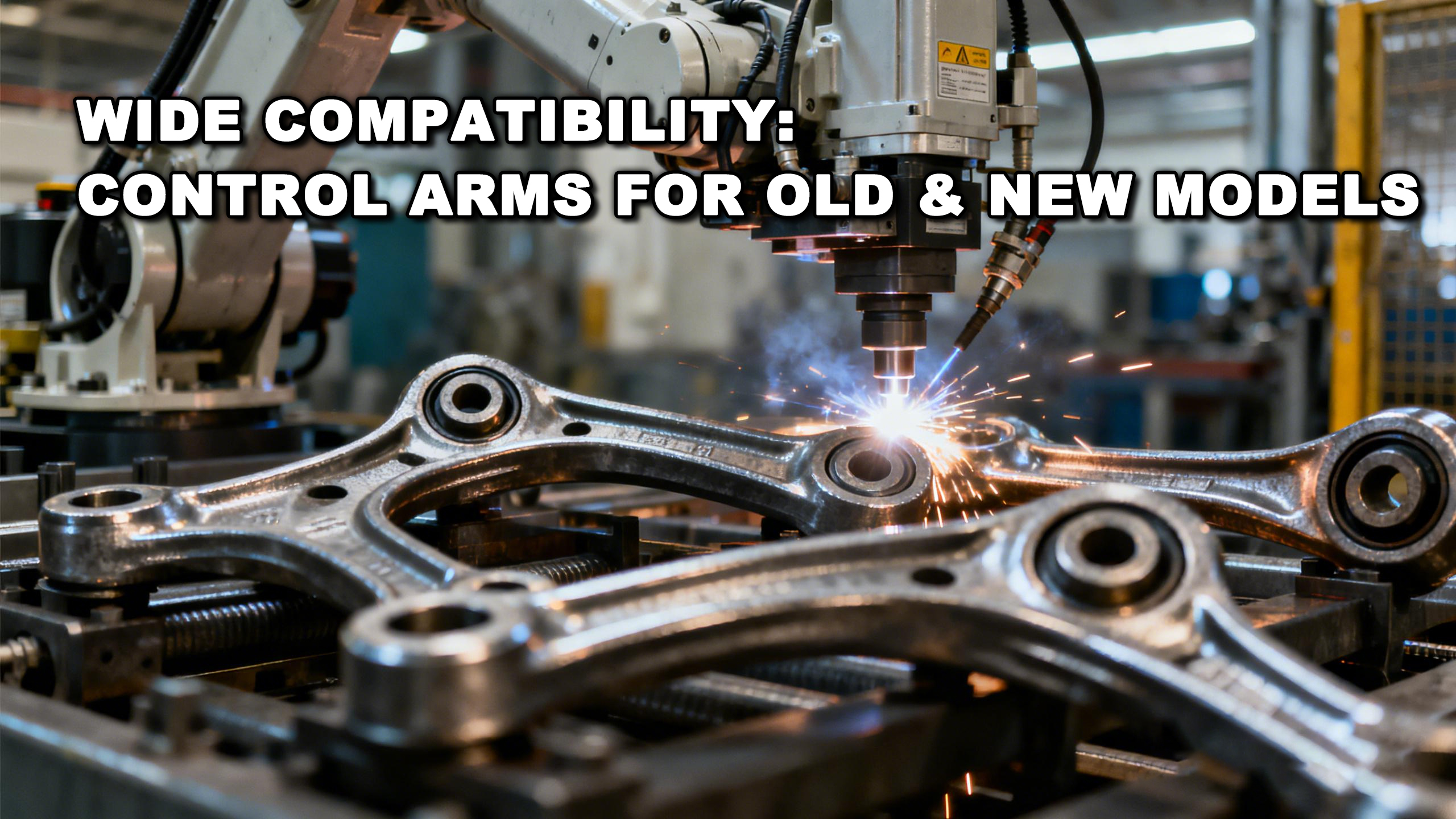
Why Control Arm Compatibility Spans Generations
Design Continuity vs. Evolution: GM Silverado (2007–2024) and Toyota Tacoma (2005–2024) Case Studies
Car companies really focus on suspension designs that last through several vehicle models because it cuts down on expensive R&D work and makes manufacturing easier. Take the GM Silverado from 2007 all the way up to 2024 as a good example. They kept using the same basic double wishbone setup in front for pretty much the whole time, just tweaking things here and there. Because of this stability, parts makers could create control arms that worked for seventeen different model years without any problems fitting or working properly. Same story with the Toyota Tacoma since 2005 right through 2024. Even though they upgraded materials and bushings over time, those lower control arm mounting points stayed exactly where they were. Makes sense when you think about it since changing fundamental chassis geometry would mean going through expensive retesting and certification processes again. That's why most manufacturers stick with what works instead of constantly reinventing the wheel.
The Chassis Myth: When Shared Platforms Don’t Guarantee Control Arm Interchangeability
Shared platforms do not guarantee interchangeable control arms—a common misconception. While underpinnings may be similar, real-world variables like weight distribution, powertrain mass, braking system upgrades, and payload capacity drive subtle but critical revisions in arm geometry, wall thickness, and bushing durometer. For instance:
- The Silverado HD’s 3.5-ton GVWR demands forged steel arms with reinforced pivot zones, whereas half-ton variants use lighter aluminum designs.
- Larger brake rotors on newer models often require revised arm clearances to prevent interference at full suspension travel.
These engineering responses reflect functional necessity—not arbitrary differentiation—underscoring why precise fitment trumps platform assumptions.
How Aftermarket Manufacturers Achieve Broad Control Arm Application
Multi-Year Control Arm Kits: Precision Engineering for GM 1500 and F-150 Platforms
The best manufacturers don't rely on luck when it comes to wide-ranging applications. Instead they use serious reverse engineering techniques instead of just making educated guesses. High resolution 3D scanners help engineers spot those tiny differences in how suspension mounts change from one model year to another. Take the GM 1500 between 2014 and 2023 or the Ford F-150 from 2015 through 2024 as good examples. These experts look at what tolerances work best so small dimensional changes still keep everything functioning safely. What happens next is pretty clever. A single control arm gets designed with adjustable bushings and modular ball joints built right in. This allows for adjustments to track width, caster settings, and even ride height without needing separate parts for each vehicle. And before anything hits the market, every kit goes through well over 250 thousand simulated load cycles. This ensures both structural strength stays intact and proper geometry is maintained throughout all the different models covered.
Material & Manufacturing Choices: Cast Aluminum, Forged Steel, and Cross-Generation Durability
Material selection is foundational to cross-generational reliability—not just performance. The right choice balances strength, weight, corrosion resistance, and service life across varying operating conditions:
| Material | Advantages | Ideal Applications |
|---|---|---|
| Forged steel | Superior impact resistance and fatigue life | Off-road trucks, lifted vehicles |
| Cast aluminum | 40% weight reduction vs. OEM steel | Performance street vehicles |
| Billet alloys | Precision CNC customization for restorations or geometry corrections | Restorations with geometry mods |
Hydroforming allows for specific reinforcement where needed most. Take variable wall steel tubing as an example it can actually make parts about 15% stiffer against twisting forces in spots prone to rust, all while keeping things lightweight. On the other hand, those polyurethane bushings we see these days come with special ceramic lined interiors. They last roughly three times longer than regular rubber ones when exposed to really harsh conditions from super cold minus 40 degrees Fahrenheit right up to scorching hot 250 F. What this means is better performance over time and less road noise too, no matter if someone put them on cars made back in 2010 or brand new models hitting dealerships now.
Lift, Alignment, and Geometry: Ensuring Control Arm Functionality Across Modifications
Maintaining Suspension Geometry with 2-Inch Lifts: Why Upper Control Arm Design Is Critical
A 2-inch lift alters upper control arm geometry significantly—increasing negative camber by ~1.5° and reducing caster, which accelerates inner tire wear and compromises cornering stability. Properly engineered upper control arms mitigate these effects by:
- Extending pivot points to restore factory alignment angles
- Reinforcing bushing materials and mounting interfaces to manage increased leverage forces
- Incorporating arched profiles that maintain component clearance during full droop
Without these design adaptations, lifted vehicles suffer up to 40% faster tire degradation and 25% reduced steering responsiveness, per independent industry testing.
Camber and Caster Adjustability: Eccentric Bolts, Heim Joints, and OEM-Compatible Solutions
Restoring proper alignment after lifting requires hardware designed for precision—not compromise:
| Solution Type | Adjustment Range | Installation Complexity | Best For |
|---|---|---|---|
| Eccentric bolts | ±0.75° | Low (OEM-compatible) | Minor lift corrections |
| Heim joints | ±2.5° | Moderate (requires welding) | Extreme off-road setups |
| Adjustable arms | ±1.8° | Medium (bolt-on) | Balanced performance |
Heim joints maximize articulation for technical terrain but demand periodic maintenance; eccentric bolts preserve factory NVH and durability for daily-driven trucks. OEM-compatible solutions strike the optimal balance—retaining original refinement while enabling repeatable, shop-friendly alignment correction.
FAQ
Why are control arm designs maintained across generations in vehicles?
Maintaining control arm designs across generations streamlines manufacturing processes and reduces R&D costs. Manufacturers find it economical to keep the same design for easier production and part compatibility.
Do shared platforms guarantee control arm interchangeability?
No, shared platforms do not always guarantee interchangeable control arms. Variables like weight distribution and powertrain mass necessitate revisions in arm design to suit specific models.
How do aftermarket manufacturers ensure compatibility with multiple vehicle years?
They use reverse engineering and high-resolution 3D scanning to identify the differences in suspension mounts across model years. Kits are designed to adjust to these variations, ensuring broad compatibility.
What materials are preferred for control arms across different vehicle applications?
Forged steel is preferred for off-road trucks, aluminum for performance street vehicles, and billet alloys for restoration projects, each offering distinct advantages in terms of strength, weight, and durability.
How do modifications like lifts affect control arm functionality?
Lifts can alter control arm geometry, affecting camber and caster. Properly engineered arms restore factory alignment angles, ensuring vehicle stability and tire longevity.
Table of Contents
- Why Control Arm Compatibility Spans Generations
- How Aftermarket Manufacturers Achieve Broad Control Arm Application
- Lift, Alignment, and Geometry: Ensuring Control Arm Functionality Across Modifications
-
FAQ
- Why are control arm designs maintained across generations in vehicles?
- Do shared platforms guarantee control arm interchangeability?
- How do aftermarket manufacturers ensure compatibility with multiple vehicle years?
- What materials are preferred for control arms across different vehicle applications?
- How do modifications like lifts affect control arm functionality?