
 EN
EN



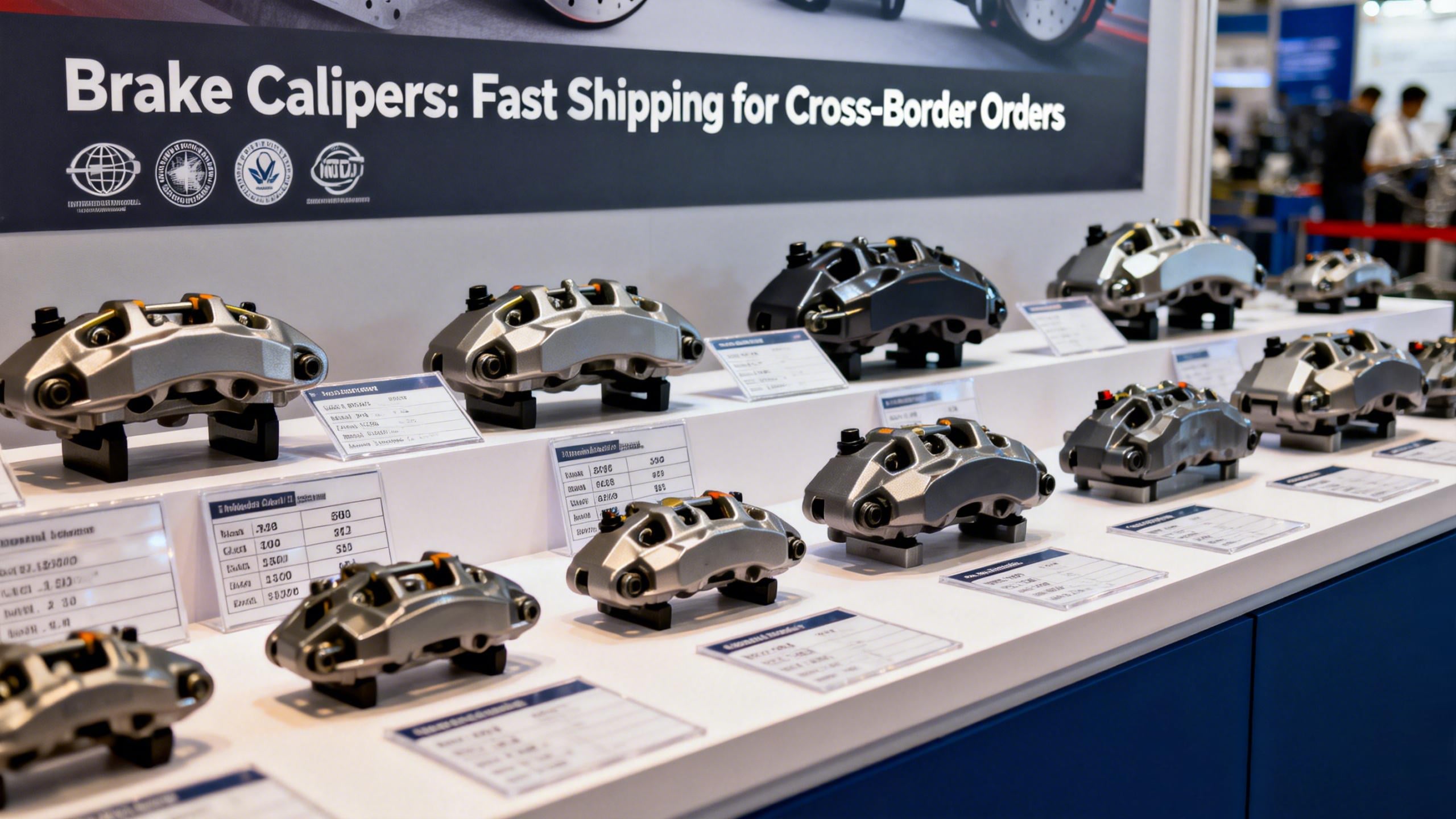
Why Fast Brake Caliper Shipping Wins Global B2B Orders
The speed at which brake calipers arrive in global automotive supply chains really matters when it comes to business to business buying choices and keeping operations running smoothly. When shipments get delayed, factories lose money fast - sometimes around $20,000 every hour when assembly lines have to stop. Brake calipers aren't like regular parts because they fit so closely into those just-in-time manufacturing plans. A single day's delay can cause all sorts of problems throughout the entire supplier network. That's why suppliers who promise delivery within 50 hours or less tend to get the contracts. These companies usually have their paperwork sorted out for customs clearance and maintain good distribution centers in key regions too. Price alone just doesn't cut it anymore.
Customized brake caliper configurations—common in performance and OEM replacement markets—intensify this urgency. Interchangeability limitations mean production halts occur without exact replacements. Buyers now prioritize suppliers with:
- Regional distribution hubs that minimize transit distances
- Carrier networks pre-vetted for automotive part handling, temperature control, and dimensional compliance
- Real-time shipment tracking with proactive delay alerts—not just passive status updates
The importance of fast delivery goes way beyond just saving money upfront. A recent look at industry data shows that around 68 percent of companies buying parts for manufacturing will stop working with a supplier forever if they get late shipments twice in a row, especially when talking about essential items such as brake calipers. When businesses can ship quickly, what was once seen only as another expense becomes something that really sets them apart from competitors. This kind of reliability helps keep existing clients happy, brings new customers onboard much faster, and builds genuine trust among those who handle purchasing decisions day after day.
Streamlining Brake Caliper Fulfillment Across Borders
Real-Time Multi-Hub Inventory Sync for Brake Caliper Availability
The availability of brake calipers around the world really depends on how well different parts of the supply chain work together instead of looking at warehouses as separate islands. When companies track inventory in real time across all their regional storage facilities, they can spot potential shortages before these problems spread throughout the system. If there's even a small mistake in counting stock, this isn't just about delaying a single customer order anymore. Factories making cars might actually have to shut down production lines because they can't get the parts they need. Some big name manufacturers claim they hit nearly 99.5 percent accuracy in fulfilling orders thanks to systems that connect enterprise resource planning software, warehouse management solutions, and shipping company interfaces. These kinds of integrated systems bring several advantages to day-to-day operations.
- Automated redistribution between warehouses during regional demand spikes
- Reduced lead times through pre-positioning of high-turnover caliper SKUs (e.g., common floating caliper variants)
- Elimination of redundant safety stock via predictive modeling calibrated to production schedules and recall history
Dynamic Carrier Routing Using Customs Risk Scoring
When it comes to delaying those precious time-sensitive auto shipments, nothing beats customs holds for causing headaches that could have been avoided. The latest brake caliper routing tech actually incorporates these fancy real-time customs risk algorithms these days. These algorithms look at about 12 different factors like how often ports seize stuff historically, how frequently carriers get inspected, and patterns where HS codes go wrong specifically for brake parts. According to something published in the Supply Chain Quarterly back in 2023, companies saw around a two-thirds drop in customs delays when they started using this dynamic rerouting strategy. What happens next? Well, basically the system starts sending shipments down routes that are statistically less likely to hit those annoying customs snags based on all that data analysis.
- Less than 10% probability of physical examination
- Document pre-clearance partnerships at key border crossings (e.g., Laredo, Dover, Shenzhen Bay)
- Certified automotive freight handlers trained in brake caliper packaging integrity and regulatory documentation
Brake Caliper-Specific Customs Compliance: DOT, ECE R90 & CNCA
Getting through customs with brake calipers means following specific safety rules for different regions. The main ones are DOT from the US Department of Transportation, ECE R90 set by the UN Economic Commission for Europe, and CNCA which is China's mandatory certification. These standards check important things like what materials make up the friction surfaces, how well they resist heat buildup during braking, and whether they can handle repeated stress without breaking down. When companies don't meet these requirements, it creates problems. According to the Trade Efficiency Report released last year, around one out of every five delayed shipments of auto parts worldwide happens because products fail to comply with these regulations.
When it comes to calipers that need to meet DOT standards for the North American market, manufacturers have to provide proper paperwork showing they pass the FMVSS 135 stopping distance tests both when roads are wet and dry. For products heading into Europe under ECE R90 regulations, things get even stricter. These calipers aren't just checked as individual parts anymore. They actually need to go through complete system testing on dynamometers to prove they work properly with all the other components in real world situations. And then there's China's CNCA requirements which bring their own set of challenges. Factories get audited regularly, every batch needs to be traceable back to its source, and companies must submit detailed technical documentation to recognized certification authorities within China itself.
| Key Compliance Consideration | Impact Analysis |
|---|---|
| Certification Markings | Laser-etched or permanently affixed identifiers required for customs verification; missing or illegible markings trigger mandatory re-inspection |
| Test Documentation | Independent lab reports proving wet/dry performance, thermal cycling, and corrosion resistance per applicable standard |
| Material Declarations | REACH/RoHS substance compliance proofs required for EU shipments; non-declared restricted substances result in automatic detention |
When companies fail to follow these regulatory frameworks, they end up paying for expensive inspections. About 42 percent of brake parts that get held up in shipping face storage costs above fifteen thousand dollars. To avoid this headache, manufacturers need to build compliance checks right into their packing processes. This means getting HS codes correct from the start (like 8708.30 for those brake calipers), preparing safety information in multiple languages, and keeping all necessary certificates digitally accessible. The biggest mistake businesses make? Thinking that standards in one region automatically apply elsewhere. Smart logistics teams are starting to match each product's specs against what's required in specific markets before anything leaves the warehouse. These days, making sure documentation matches across borders isn't just good practice anymore—it's basically required if anyone wants their goods to arrive on time without extra charges piling up.
Trade Agreement Impacts on Brake Caliper Import Costs & Timelines
USMCA and Post-Brexit Tariff Rules for Brake Caliper Shipments
Trade agreements have a big impact on how companies source brake calipers and manage their supply chains. The USMCA agreement means brake calipers can move tariff free across borders between the US, Canada, and Mexico as long as at least 75% of their value comes from within the region. That calculation covers everything from raw materials to actual assembly work done locally. When products don't meet these requirements, importers get hit with duties going up to 4.5%. For large volume purchases where every penny matters, this makes a significant difference in overall costs. Things got even trickier after Brexit. Now all goods moving between the UK and EU need proper documentation proving where they were made. Without this paperwork, shipments face regular WTO tariffs ranging from 3 to 7 percent plus potential delays at customs lasting over two days. According to what we're seeing in the field, these kinds of holdups typically raise total landed costs somewhere between 20 and 30 percent because of things like storage fees, last minute air shipping charges, and sudden gaps in inventory levels.
Customs clearance delays now account for 34% of total transit time for EU-bound automotive parts—making treaty compliance not just a cost-savings lever, but a proven lead-time accelerator when managed strategically. Proactive shippers mitigate exposure by:
- Pre-validating HS codes (8708.30.10 for hydraulic brake calipers; 8708.30.90 for others) across all treaty markets
- Maintaining digital, audit-ready certificates of origin linked to specific production batches
- Building tariff buffers and customs contingency timelines into bulk pricing and delivery commitments
Frequently Asked Questions
Why is fast shipping crucial for brake calipers in the B2B market?
Fast shipping is essential in the B2B market because delays can halt assembly lines, resulting in significant financial losses. Suppliers offering rapid delivery within 50 hours often secure contracts due to their ability to keep operations running smoothly.
What are the key compliance challenges for brake calipers in international trade?
Key compliance challenges include adhering to regional safety standards such as DOT, ECE R90, and CNCA. Non-compliance can lead to shipment delays and increased costs due to mandatory inspections.
How do trade agreements like USMCA and Brexit impact brake caliper shipments?
Trade agreements affect the cost and timelines of shipments. For instance, USMCA allows tariff-free movement between the US, Canada, and Mexico, while Brexit introduces documentation requirements for UK-EU trade, impacting costs and customs clearance times.