
 EN
EN



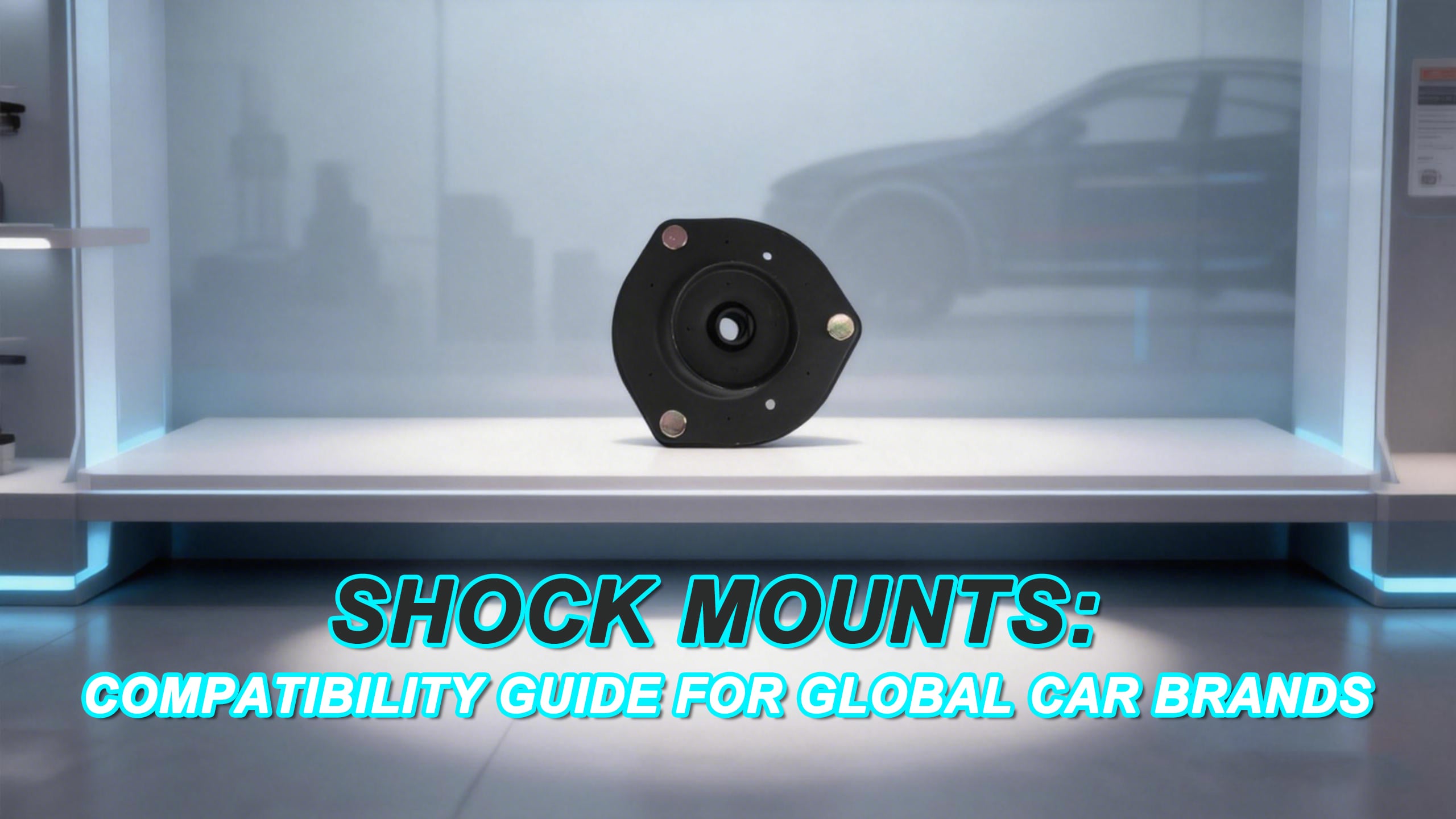
Understanding Shock Mount Fundamentals: Types, Functions, and Critical Fitment Criteria
A shock mount serves as the critical junction between a vehicle's suspension system and its chassis—absorbing high-frequency road vibrations while transferring vertical loads smoothly. Its performance directly influences ride comfort, cabin noise (NVH), and long-term structural integrity.
Two primary types exist:
- Isolator-style mounts, typically using rubber or polyurethane bushings, excel at damping high-frequency vibrations and are standard in light-duty passenger vehicles.
- Load-bearing mounts, incorporating reinforced metal sleeves or spherical bearings, are engineered for higher axial and lateral forces—common in heavy-duty trucks, performance applications, and vehicles with aggressive suspension tuning.
All shock mounts must endure millions of stress cycles without degradation; failure risks alignment shifts, uneven tire wear, and compromised handling.
Three non-negotiable fitment criteria determine compatibility:
- Bolt pattern dimensions (e.g., 3'80 mm vs. 4'100 mm)
- Strut shaft diameter tolerance (±0.5 mm is typical for precision retention)
- Material durometer ratings, such as 70A rubber for compliance or 90A polyurethane for reduced deflection under load
Mismatched specifications accelerate wear—using a bushing that's too soft, for instance, can transmit up to 30% more impact energy to the chassis. Always cross-reference OEM schematics against regional standards like ISO 16750 (environmental testing) or SAE J267 (suspension component durability) before installation.
Regional Shock Mount Compatibility by Vehicle Origin: Japanese, Korean, European, and American Platforms
Japanese Vehicles: Tight Tolerances and OEM-Specific Shock Mount Design
Japanese car makers really focus on getting those shock mounts just right, often setting specs tight enough at around plus or minus 0.1 mm. They also develop special bushing shapes that work best for absorbing vibrations at specific frequencies. Take some Toyota SUV models for instance. These vehicles have steel sleeves bonded with rubber that bend differently when weight is applied. If the shape isn't exactly correct, it creates all sorts of problems with how stress spreads through the system, leading to parts wearing out way too soon. Most generic aftermarket mounts simply can't match this level of detail. As a result, they tend to create unwanted vibrations that wear down bearings much faster than factory originals. Studies looking at vehicle suspension behavior show bearing damage increases between 40% to 60% with these cheaper alternatives, according to tests following industry standard procedures.
True compatibility requires matching not only bolt patterns but also bushing angle, material thickness, and interface curvature—where even a 1° deviation alters load transfer paths and compromises suspension kinematics.
Korean & European Models: Bolt Pattern Diversity and Strut Tower Interface Variability
Korean and European platforms exhibit exceptional diversity in strut tower configurations—Hyundai and Kia alone employ over 15 distinct bolt circle diameters across shared architectures. This stems from platform flexibility: VW's MQB, for instance, adapts across body styles (hatchbacks, sedans, SUVs), each demanding unique mounting interfaces.
Critical variables include:
- Top-hat bearing seat diameters, ranging from 55 mm to 60 mm
- Torque cone angles, varying from 72° to 90°â€”affecting how axial loads translate into radial bearing stress
- Flange thickness, spanning 8 mm (compact sedans) to 12 mm (performance variants), influencing clamping rigidity
German OEMs often specify single-use stretch bolts with exact torque-and-angle tightening sequences. Using generic hardware—or skipping torque-angle procedures—can reduce shock absorber service life by up to 30%, according to multi-cycle durability simulations aligned with DIN 70020 standards.
American Vehicles: Eyelet-to-Eyelet vs. Integrated Strut Mount Configurations
Domestic vehicles rely on two dominant architectures:
- Eyelet-to-eyelet mounts, common in trucks and SUVs, feature robust steel housings and high-load bushings to withstand off-road impacts and towing stresses.
- Integrated strut mounts, found in modern sedans and crossovers, combine bearing, spring perch, and upper mount into a single sealed assembly—prioritizing compactness and weight savings.
| Design Type | Load Capacity Range | Common Failure Points | Critical Dimensions |
|---|---|---|---|
| Eyelet-to-eyelet | 1,200–2,200 lbs | Bushing shear at cross-axis | 3/4"–1" bolt diameters |
| Integrated strut | 800–1,500 lbs | Bearing seizure from moisture ingress | 50–70 mm spring perch spacing |
Truck applications demand corrosion-resistant, reinforced steel sleeves; performance sedans require urethane bushings to minimize lateral deflection during cornering. Installing mismatched mounts has led to documented cases of suspension collapse at highway speeds—highlighting why architecture-specific validation is essential.
OEM vs. Aftermarket Shock Mounts: Reliability, Certification, and Real-World Fitment Risks
When 'Universal Fit' Leads to Premature Bearing Failure: Case Study on EU VW Passat Strut Mounts
A 2023 field study of European midsize sedans revealed aftermarket shock mount failures occurring at 40% higher rates than OEM units within 18 months. The root cause was consistent: universal-fit designs prioritized broad compatibility over precise dimensional fidelity—compromising radial alignment, environmental resistance, and material consistency.
Key discrepancies included:
- Radial bearing misalignment exceeding OEM specs by 0.5–1.2 mm
- Salt-spray resistance falling short of the OEM 200-hour benchmark—failing after just 80 hours (per ASTM B117 testing)
- Polyurethane bushing compression variance leading to persistent NVH complaints
Premature Failure Analysis
| Failure Mode | OEM Occurrence | Aftermarket Occurrence |
|---|---|---|
| Bearing seizure | 8% | 34% |
| Bushing degradation | 5% | 28% |
| Mount separation | 3% | 19% |
FAQ
What is a shock mount?
A shock mount is a component that connects a vehicle's suspension system to its chassis, designed to absorb vibrations and transfer vertical loads, thereby influencing ride comfort and structural integrity.
Why is fitment criteria important for shock mounts?
Fitment criteria such as bolt patterns, strut shaft diameter tolerances, and material durometer ratings are crucial for ensuring compatibility, preventing accelerated wear, and maintaining optimal performance.
What are the risks of using aftermarket shock mounts?
Aftermarket shock mounts may lead to premature failures due to misalignment, subpar environmental resistance, and material inconsistencies, resulting in compromised handling and increased stress on the vehicle.
What are the types of shock mounts used in American vehicles?
American vehicles primarily use eyelet-to-eyelet mounts in trucks and SUVs and integrated strut mounts in sedans and crossovers, each with specific load capacities and critical dimensions.