
 EN
EN



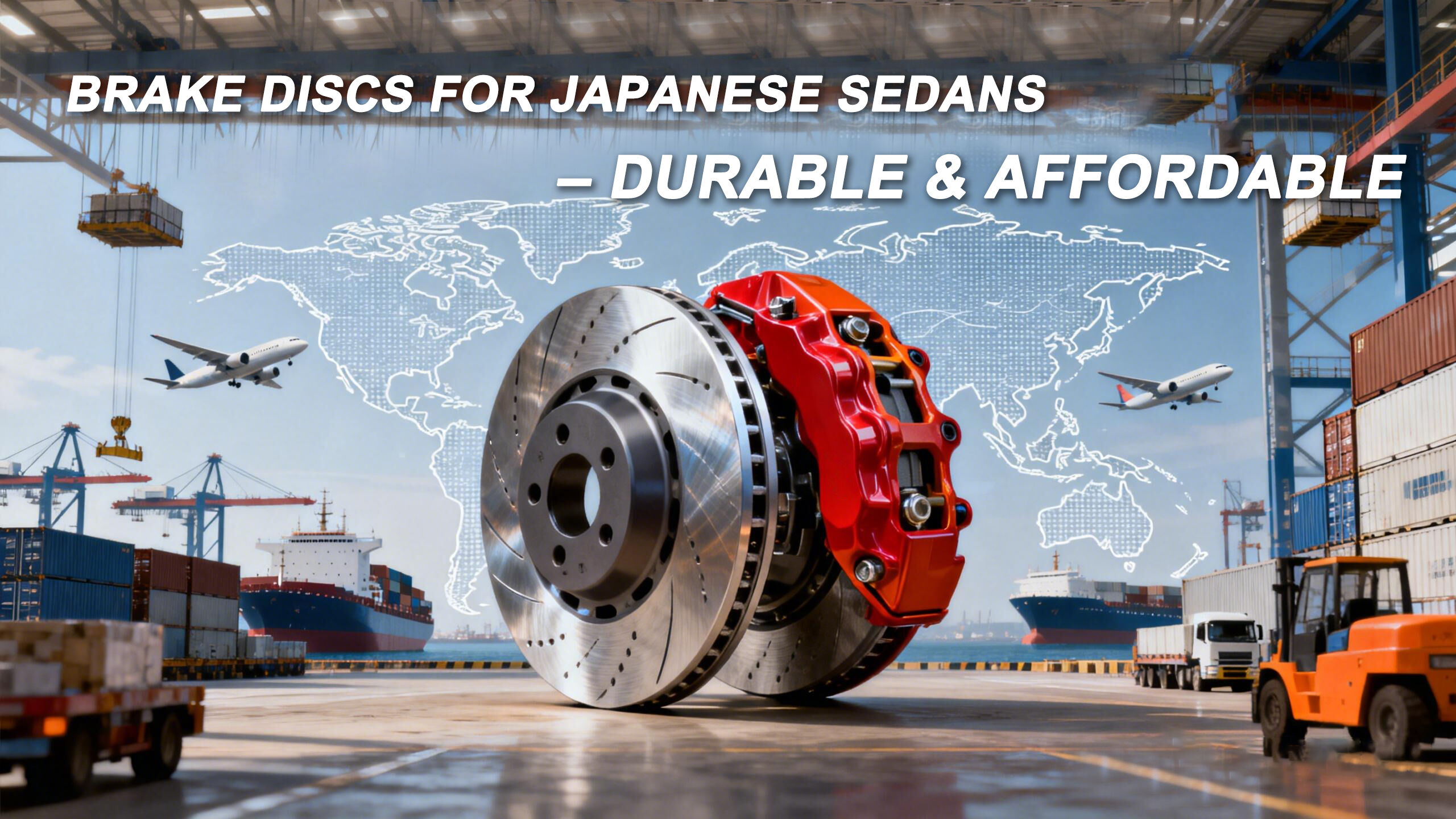
Why Brake Disc Longevity Matters for Japanese Sedans
Urban Driving Demands: How Stop-and-Go Traffic Accelerates Brake Disc Wear
City driving with all those constant stops puts serious strain on brake discs as they convert kinetic energy to heat time after time. The back and forth between hot and cold really takes a toll on the surface of these components much faster than what happens during highway cruising. Studies indicate that rotors tend to last around 30 to maybe even 40 percent less in urban environments compared to country roads. This matters a lot for popular Japanese models such as the Toyota Camry or Honda Accord since they're everywhere in city traffic. All this stop start stuff leads to inconsistent pad material buildup on disc surfaces too. When this happens, the brakes just don't work as well anymore, so folks end up replacing them sooner than expected.
OEM Engineering Alignment: Thermal Management and Metallurgical Compatibility with JDM Braking Systems
Japanese Domestic Market (JDM) brake systems rely on precisely engineered metallurgy—such as G3000 flake graphite cast iron—designed for controlled thermal dissipation and long-term stability. Aftermarket discs must replicate these properties to avoid premature failure or system incompatibility. Key OEM-aligned requirements include:
- Heat tolerance: Factory-spec discs withstand 1,200°F stress tests without warping under repeated hard stops.
- Corrosion resistance: Chromium-enhanced alloys mitigate rust acceleration in coastal or high-salt environments.
-
Vibration harmonics: Disc thickness variation (DTV) exceeding 0.0003 inches triggers pedal pulsation, demanding tight manufacturing tolerances.
Leading manufacturers use controlled quenching to optimize crystalline structure for wear resistance. Mismatched materials risk “hot spots” or micro-cracks—raising replacement frequency by 22%, per material fatigue studies.
Brake Disc Materials: Matching Performance to Real-World Japanese Sedan Use
Cast Iron (G3000) vs. Heat-Treated Nodular Iron: Durability, Cost, and OEM Fitment Trade-Offs
For Japanese sedan owners, brake disc selection hinges on aligning material performance with real-world usage:
- G3000 cast iron meets basic OEM specs and offers affordability ($80–$120 per axle set), but wears 30% faster than nodular alternatives under urban stop-and-go conditions.
- Heat-treated nodular iron delivers superior thermal stability—reducing warping risk by 40% during sustained highway braking—and matches JDM metallurgical calibrations more closely.
- Though 25–35% more expensive, nodular iron typically lasts 70,000 miles versus 50,000 for standard cast iron—making it cost-effective for high-mileage drivers who prioritize longevity over upfront savings.
Carbon-Ceramic Brake Discs: Overkill or Future-Proofing for Non-Performance Applications?
Carbon-ceramic discs offer exceptional heat resistance (up to 1,800°F) and 60% weight reduction—but their $2,000+ per axle price point renders them economically impractical for most commuter sedans. Reserve them only when:
- Frequent mountain descents demand extreme fade resistance,
- Vehicle retention exceeds eight years, or
- Budget allows for premium safety margins without compromising value.
For typical urban and suburban use, advanced iron composites deliver optimal safety, durability, and cost efficiency—without over-engineering.
Smart Sourcing Strategies for Affordable, Reliable Brake Disc Replacement
Three-Tier Approach: OEM-Replacement, Value-Engineered, and Certified Aftermarket Brake Disc Options
Japanese sedan owners need durable, compatible brake discs—not just the lowest price. A structured three-tier sourcing strategy balances performance, safety, and value:
- OEM-Replacement Discs: Match original metallurgy, dimensions, and thermal management specifications exactly. Best for drivers prioritizing factory-calibrated response, seamless integration with JDM braking systems, and predictable service life (50,000–70,000 km under normal conditions). Expect a 10–15% premium over generic options—justified by guaranteed compatibility and reduced risk of premature failure.
- Value-Engineered Discs: Built using standardized materials and streamlined processes to reduce cost. Offer 20–30% savings versus OEM but may compromise on heat dissipation or long-term wear resistance—particularly under aggressive urban driving. Suitable only for budget-conscious owners operating in light-duty, low-stress environments.
- Certified Aftermarket Discs: Independently validated by ISO, TÜV, or JASO to meet rigorous automotive performance and safety standards. Deliver 90–95% of OEM performance at 15–20% lower cost—making them the strongest value proposition for most drivers seeking reliability without overpaying. Always verify certification marks directly on packaging or supplier documentation.
| Tier | Cost vs. OEM | Best Use Case | Key Consideration |
|---|---|---|---|
| OEM-Replacement | +10–15% | Precision performance, longevity | Guaranteed system compatibility |
| Value-Engineered | -20–30% | Budget-conscious, light-duty use | Potential trade-offs in durability |
| Certified Aftermarket | -15–20% | Balanced reliability & value | Verify certification standards |
Cross-referencing prices across trusted suppliers remains essential. Reputable automotive parts platforms combine competitive pricing, rapid fulfillment, and transparent certification details—enabling informed, safety-first procurement decisions.
FAQ
Why do brake discs wear out faster in urban environments?
Brake discs wear out faster in urban environments due to the frequent stop-and-go traffic that demands constant braking and leads to increased thermal strain.
What is the importance of OEM alignment in JDM braking systems?
OEM alignment ensures that brake discs match the original specifications, providing compatibility with JDM systems and maintaining optimal performance.
Are carbon-ceramic brake discs necessary for Japanese sedans?
Generally, carbon-ceramic brake discs are not necessary for most Japanese sedans due to their high cost, making them impractical unless under specific, demanding conditions.
What should be considered when choosing brake discs for Japanese sedans?
When choosing brake discs, consider material performance, cost, environmental conditions, and the specific use case of the vehicle.