
 EN
EN



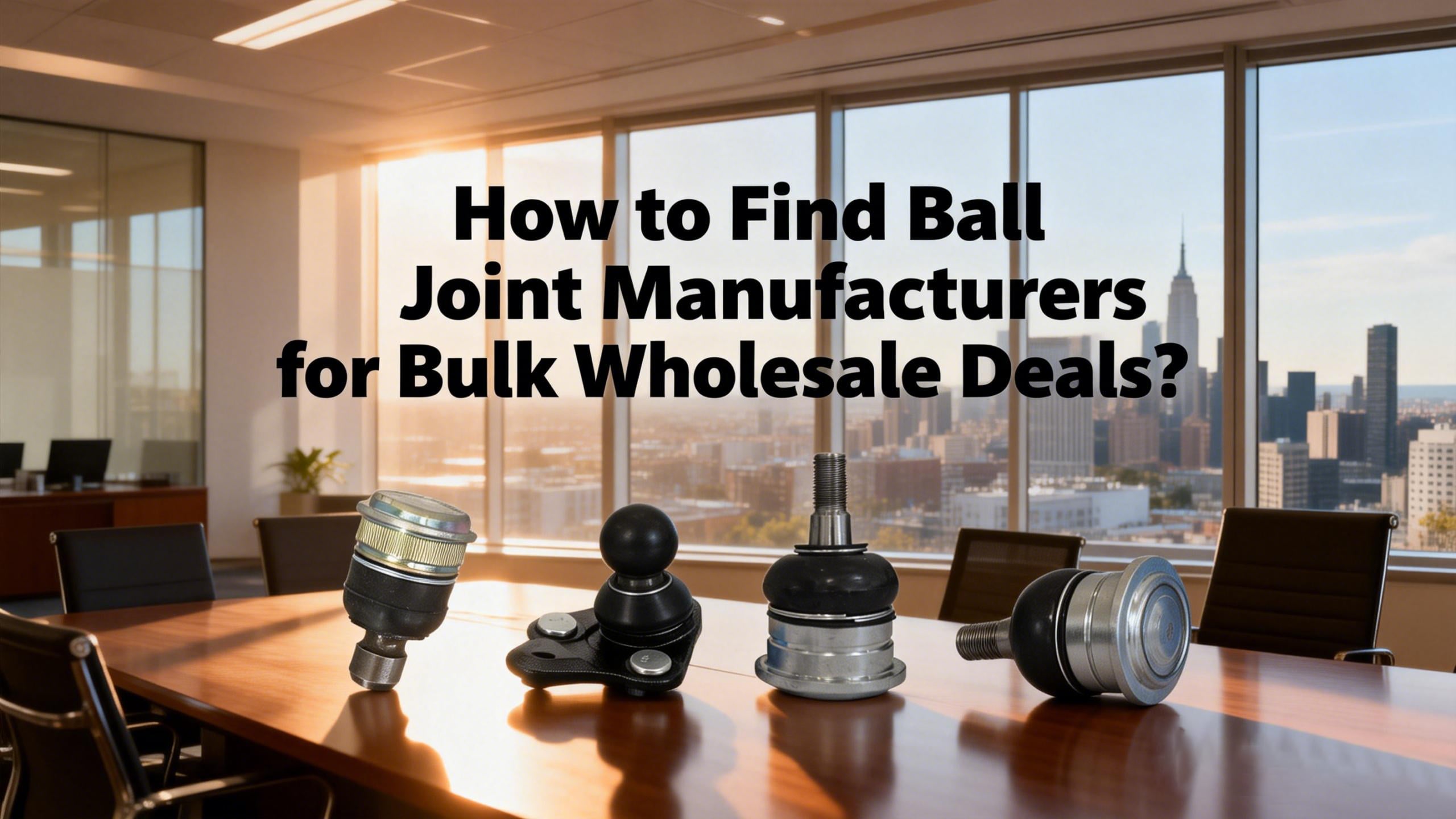
Identify Verified Ball Joint Manufacturers with Proven Industry Credibility
Confirming Legal Registration, Export Licenses, and Tier-1 Supply Chain Integration
Start with checking if manufacturers meet all the legal requirements for exporting their goods. The basic papers needed are business registrations and proper international trade licenses these show they know what's required when shipping across borders. Being part of Tier-1 automotive supply chains actually matters more than just having standard certifications. This status means there must be actual written agreements with big car makers, plus proof they passed tough quality inspections, got their tracking systems approved, and had their production lines checked out. Plants connected to global Tier-1 networks often face around 200 quality inspections each year (sometimes even more) which goes way beyond what most companies need to do. Look for suppliers who provide digital access to their ISO documents so anyone can check them anytime. Stay clear of companies that make fuzzy claims about their certifications or rely too much on middlemen for getting products where they need to go.
Distinguishing Genuine OEM Ball Joint Manufacturers from Repackaged Aftermarket Sources
What really defines an OEM isn't just about putting their name on something, it's about who actually owns the engineering behind the product. Real manufacturers have control over their own special tools, unique metal mixtures, and maintain research facilities internally. Companies that just repackage stuff don't possess these resources, they typically buy off-the-shelf parts and slap their label on them. Anyone serious about quality should ask to see actual design patents still being used, documentation showing exactly what materials went into each part, and reports from where the real manufacturing happens, not just warehouses. Salt spray tests done by independent labs keep revealing that cheaper alternatives start corroding around 30% quicker than genuine parts because they use inferior metals and their coatings aren't applied properly. For anyone checking out how things get made, don't settle for glossy promotional clips. Demand access to live factory walkthroughs or detailed inspection reports from outside auditors if possible. These steps help verify whether a company truly controls every step of production or if they're just playing at being authentic.
Assess Ball Joint Manufacturing Quality Systems and Validation Rigor
IATF 16949 Certification: Why It’s Essential for Consistent Ball Joint Performance
IATF 16949 certification is the definitive benchmark for automotive-grade ball joint manufacturing. Unlike ISO 9001, this standard mandates industry-specific controls—including advanced failure mode analysis (FMEA), statistical process control (SPC), and zero-defect culture protocols—applied directly to critical production parameters:
- Heat treatment hardness consistency (±2 HRC variance)
- Thread tolerance adherence (<0.05mm deviation)
- Surface finish uniformity (Ra ≤1.6µm)
Facilities certified to IATF 16949 demonstrate 30% fewer production deviations in independent audits, ensuring mechanical property uniformity across high-volume batches. Procurement teams must verify active certification status through the official IATF Online Directory—uncertified suppliers show five times higher field failure rates in suspension load testing, per SAE J2477-compliant evaluations.
Real-World Testing Data: Load Endurance, Pivot Cycle Life, and Salt-Spray Corrosion Resistance
Certifications alone are insufficient—validated test data under standardized conditions confirms real-world reliability. Leading manufacturers supply third-party verified reports aligned with globally accepted benchmarks:
| Test Type | Industry Standard | Performance Benchmark |
|---|---|---|
| Axial Load Endurance | SAE J492 | 50kN static load, ≤0.2mm deformation |
| Pivot Cycle Life | ISO 14272-1 | 500,000 cycles at ±30° articulation |
| Salt-Spray Resistance | ASTM B117 | 720 hours without red rust |
Ball joints meeting all three thresholds deliver double the service life in winter road environments—validated by fleet maintenance analytics across North American and Nordic regions. Crucially, prioritize suppliers that conduct 100% batch-level testing—not sample-based validation—to eliminate variability-driven premature wear.
Optimize Bulk Procurement Terms with Ball Joint Suppliers
MOQ Negotiation, Volume-Based Pricing Tiers, and Lead-Time Flexibility
Negotiating minimum order quantities requires finding the sweet spot between keeping inventory lean and maintaining steady production flow. Suppliers establish these MOQs primarily to get the most out of their manufacturing lines, but there are ways around them. Some companies offer staggered delivery schedules for one purchase order, matching what buyers actually need when they need it without blowing up cash reserves. When it comes to pricing, bigger orders generally mean better deals. Orders hitting around 5,000 items usually bring about 10 to 15 percent off the total price tag, whereas anything over 10,000 units tends to cut costs by roughly 20 to 25 percent. Don't forget about lead time flexibility either. This becomes crucial during busy seasons or when unexpected supply chain issues pop up, letting businesses tweak their schedules without facing extra charges. Make sure to put everything agreed upon into official contracts so both sides know exactly what's expected and can hold each other accountable if things go sideways.
Evaluate Factory-Direct Sourcing vs. Distributor Channels for Ball Joint Wholesale
The decision between buying directly from factories or working with distributors really comes down to what kind of business we're talking about here. When companies order over 10,000 ball joints straight from manufacturers, they can save anywhere from 18 to 30 percent per unit. Plus there's room for customization, better quality checks during production, and even chances to work together on product development. But let's be honest, this approach needs some serious planning ahead of time. Lead times usually stretch out to 60 or 90 days, and businesses need good systems in place to inspect all those parts when they arrive. Distributors offer something different entirely for smaller operations. They handle minimum orders starting at just 500 units, combine shipments from multiple suppliers, get things delivered roughly half as fast as direct buys, and include helpful tech support plus warranty management services. Sure, distributors charge extra between 15 and 25 percent, but that covers their costs for storing inventory, doing inspections, and vetting suppliers. Big companies with steady demand tend to do best going direct. For businesses dealing with unpredictable market conditions, distributors provide that safety net. Some smart companies actually mix both approaches these days. They might rely on distributors for quick restocking needs while keeping their main volume purchases through direct contracts. This gives them the best of both worlds without sacrificing too much on either side.
FAQs
What are the key steps to verify a ball joint manufacturer's credibility?
Ensure the manufacturer meets all legal registration and export licenses, verify if they are part of Tier-1 automotive supply chains, and ensure they provide digital access to their ISO documents.
How can you differentiate between genuine OEM manufacturers and repackaged aftermarket sources?
OEM manufacturers own their design patents and control special tools and materials, unlike repackagers who typically apply their labels on generic off-the-shelf parts.
Why is IATF 16949 certification important for ball joint manufacturing?
This certification ensures industry-specific controls, such as advanced failure mode analysis and a zero-defect culture, which are crucial for consistent ball joint performance.
How can businesses optimize procurement in terms of ball joint suppliers?
Negotiate MOQs, leverage volume-based pricing tiers, and focus on lead-time flexibility to optimize procurement.
What are the benefits of factory-direct sourcing compared to distributor channels?
Factory-direct sourcing offers cost savings and customization but requires extensive planning, whereas distributors provide faster delivery and technical support, beneficial for smaller operations or unpredictable markets.
Table of Contents
- Assess Ball Joint Manufacturing Quality Systems and Validation Rigor
- Optimize Bulk Procurement Terms with Ball Joint Suppliers
- Evaluate Factory-Direct Sourcing vs. Distributor Channels for Ball Joint Wholesale
-
FAQs
- What are the key steps to verify a ball joint manufacturer's credibility?
- How can you differentiate between genuine OEM manufacturers and repackaged aftermarket sources?
- Why is IATF 16949 certification important for ball joint manufacturing?
- How can businesses optimize procurement in terms of ball joint suppliers?
- What are the benefits of factory-direct sourcing compared to distributor channels?