
 EN
EN



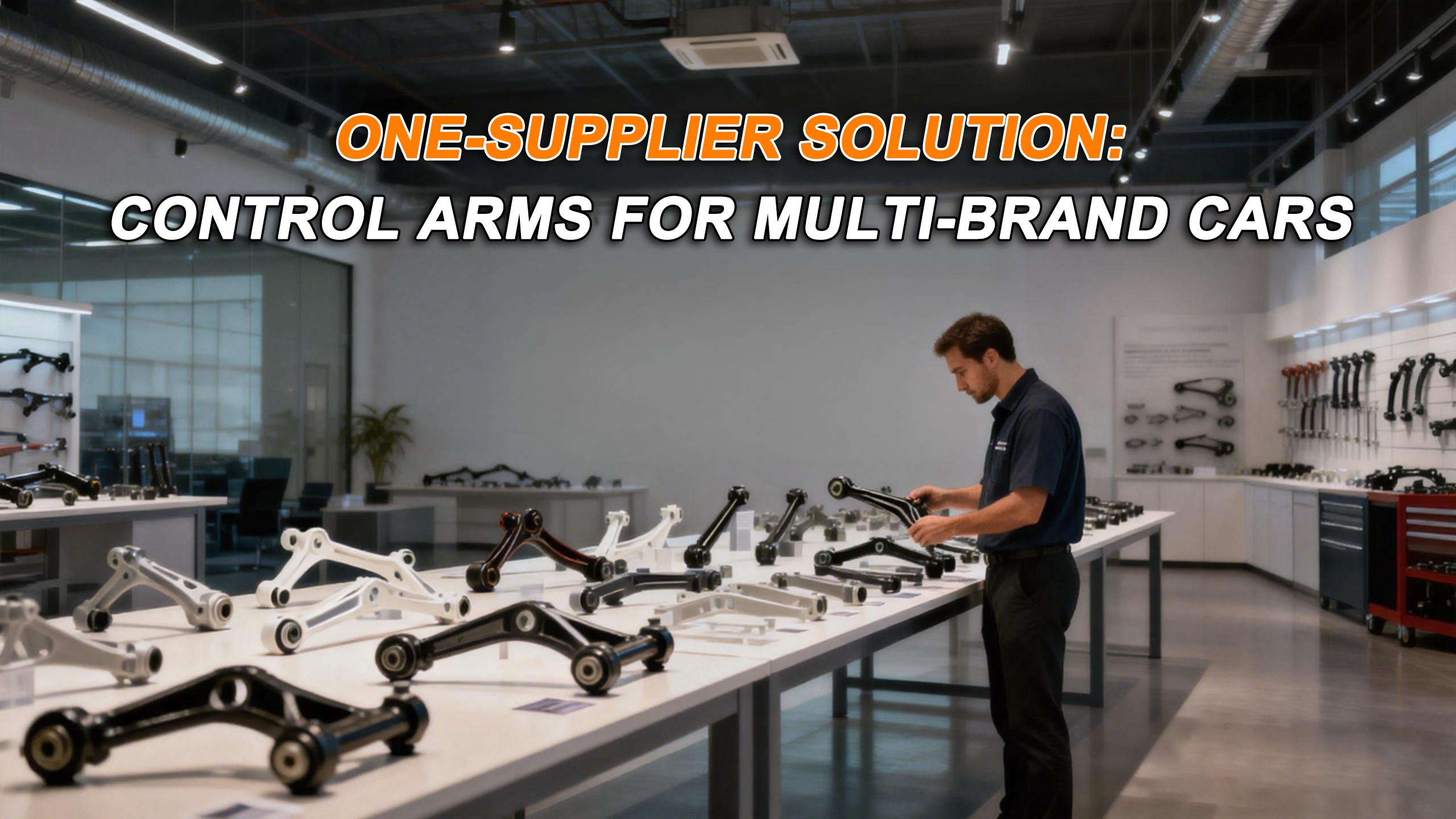
Why a Unified Control Arm Solution Benefits Multi-Brand Fleets and Repair Shops
The Growing Need for Cross-Platform Control Arm Compatibility
Vehicle fleets dealing with all sorts of makes and models are really struggling to keep suspension maintenance costs down these days. The problem gets worse because original equipment manufacturer parts just don't fit across different brands. Shops that work on multiple car types tell us they spend about 27 percent more time figuring out what parts go where when looking for those brand specific control arms, based on recent maintenance reports from last year. All this variation means shops end up buying way too many different parts. Take a look at any medium sized repair facility and they'll probably have around 47 different versions of front lower control arms sitting on their shelves. What's helping some businesses cut through this mess? Parts that work across platforms. These standardized components maintain important measurements like ball joint taper sizes and bushing diameters but still let mechanics handle brand specific shapes. We're seeing this trend grow as the auto repair business consolidates, with faster repairs becoming more important than sticking strictly to brand preferences.
How Modular Design and VIN-Driven Application Mapping Enable True Multi-Brand Fitment
Modern control arm systems are moving toward modular designs these days. The main parts such as forged steel arms stay pretty much the same across different brands, but what changes are those special adapters that fit onto specific mounting spots on various cars. This setup cuts down on inventory numbers significantly, sometimes around 60%, yet still maintains accurate fits for vehicles. Technicians no longer need to second-guess which parts go where thanks to VIN-based databases. Just enter the car's identification number and poof! Compatible parts pop right up on screen. Field tests indicate mechanics make about 34% fewer mistakes during installations when using these digital tools instead of flipping through old paper catalogs. What's really impressive is how one basic platform works for nearly 92% of all light duty vehicles made by Asian, European, and American companies alike. What was once a nightmare for shops dealing with multiple brands has turned into something that actually gives them an edge over competitors.
OEM-Quality Control Arms vs. Aftermarket Alternatives: Balancing Precision, Cost, and Coverage
Convergence of OE Engineering Standards and Aftermarket Scalability
Modern control arms are closing the distance between what manufacturers specify and what's available on the aftermarket. Top tier aftermarket makers have started matching OE specs pretty closely these days. They're working with similar materials and following blueprint dimensions so their products hit around 0.05mm accuracy for those ball joints and bushings. The result? Control arms that cost roughly 25 to 60 percent less than factory originals without sacrificing important strength properties. But there's still quite a difference in quality across different brands. Testing according to ASTM F1140 standards shows some components last over 40 thousand miles longer than cheaper alternatives. That's why proper testing is absolutely necessary before installation to make sure everything lines up properly with how the car was originally designed.
Vertical Integration as a Catalyst for Consistent Control Arm Quality Across Brands
Single-source manufacturing ecosystems eliminate quality fragmentation inherent in multi-vendor supply chains. By controlling metallurgy, forging, and validation under one roof, vertically integrated producers achieve:
- Dimensional uniformity across 200+ vehicle applications through automated optical scanning
- Predictable service life, with under 0.5% early failure rates in fleet trials
- Cross-platform compatibility, powered by centralized VIN-mapped engineering databases
| Integration Model | Quality Consistency | Cost Efficiency | Scalability |
|---|---|---|---|
| Vertical Integration | 98% batch compliance | 22–30% savings | 300+ platforms |
| Traditional Multi-Supplier | 65–80% compliance | 15% savings | <100 platforms |
This consolidation allows repair networks to standardize inventories while eliminating fitment compromises—a strategic advantage for shops servicing diverse vehicle makes.
Control Arm Design Variations: Matching Material, Geometry, and Joint Technology to Vehicle Duty Class
Designing the right control arm demands precise alignment with a vehicle’s operational demands. Passenger cars, SUVs, and light trucks impose distinct stress patterns, requiring tailored engineering across three core dimensions: material science, structural geometry, and pivot joint integrity.
Passenger, SUV, and Light-Truck Platforms: How Duty Cycles Dictate Control Arm Specifications
- Passenger vehicles prioritize ride comfort and noise dampening. Their control arms use lighter materials like stamped steel or aluminum alloys, with geometries optimized for predictable asphalt handling.
- SUVs face higher torsional forces from uneven terrain. Reinforced bushings, thicker cross-sections, and multi-link designs distribute impact loads while maintaining wheel alignment.
- Light trucks endure extreme cyclical stress during towing and hauling. Their control arms employ forged steel or tubular steel assemblies, with fortified ball joints rated for sustained payloads exceeding 7,500 lbs, per SAE J2562 durability protocols.
Aluminum vs. Forged Steel Control Arms: Performance Claims vs. Real-World Service Life Data
Material choice directly influences longevity and failure modes. Aluminum arms reduce unsprung weight by ~35% versus steel, enhancing fuel efficiency and handling agility. However, fatigue testing reveals critical tradeoffs:
| Material | Avg. Service Life (Miles) | Fatigue Limit (MPa) | Common Failure Mode |
|---|---|---|---|
| Cast Aluminum | 60,000–80,000 | 90–120 | Stress cracks near joints |
| Forged Steel | 120,000–150,000 | 250–350 | Bushing wear |
While aluminum suits urban commuter vehicles, forged steel proves indispensable for high-stress applications. Field data from fleet operators shows 68% lower replacement rates for steel arms in commercial vans after 100,000 miles, per the Commercial Vehicle Component Reliability Report, 2023.
Selecting the Right One-Supplier Control Arm Program: Key Evaluation Criteria
Implementing a unified control arm solution demands rigorous supplier evaluation beyond basic cost comparisons. First, verify certifications like IATF 16949 and ISO 14001, which validate adherence to automotive quality management and environmental standards—ensuring consistent material integrity and manufacturing precision across all variants.
Looking at technical capability means checking how deep the application coverage really is. Top quality suppliers need to show they have those VIN specific compatibility databases that actually cover around 95 percent or better across all sorts of passenger cars, SUVs, and light trucks. This matters a lot for fleet operators who deal with vehicles from different manufacturers every day. When evaluating these databases, it's smart to also look at what happens in practice with parts that get stressed out over time. Take ball joints and bushings for example. We've seen cases where cheaper alternatives fail way too soon, sometimes as high as 18% failure rate within just a few months of installation. That kind of breakdown costs money and headaches down the road.
Finally, prioritize partners offering integrated technical support and inventory management. Consolidated suppliers reducing procurement complexity by 40% typically deliver faster turnaround while maintaining %0.5% defect rates. Evaluate their logistics infrastructure for same-day shipping capabilities and regional distribution reach, as these directly impact repair shop throughput and fleet uptime.
Frequently Asked Questions (FAQ)
Why is a unified control arm solution important for multi-brand fleets?
A unified control arm solution significantly reduces inventory complexity, maintenance time, and costs, allowing repair shops to efficiently manage a wide range of vehicle brands.
What is the advantage of modular control arm designs?
Modular designs reduce inventory requirements by approximately 60% while maintaining compatibility across various vehicle models through adaptable components that fit specific mounting spots.
How do OEM and aftermarket control arms compare in terms of quality and cost?
Top-tier aftermarket control arms closely match OEM specifications, offering 25% to 60% cost savings without sacrificing structural integrity, though quality can vary significantly between brands.
How does material choice affect the service life of control arms?
Material choice impacts longevity and failure modes. Forged steel control arms offer longer service life and durability under high-stress conditions compared to cast aluminum, which is more suitable for lighter, urban vehicles.
Table of Contents
- Why a Unified Control Arm Solution Benefits Multi-Brand Fleets and Repair Shops
- OEM-Quality Control Arms vs. Aftermarket Alternatives: Balancing Precision, Cost, and Coverage
- Control Arm Design Variations: Matching Material, Geometry, and Joint Technology to Vehicle Duty Class
- Selecting the Right One-Supplier Control Arm Program: Key Evaluation Criteria
- Frequently Asked Questions (FAQ)