
 EN
EN



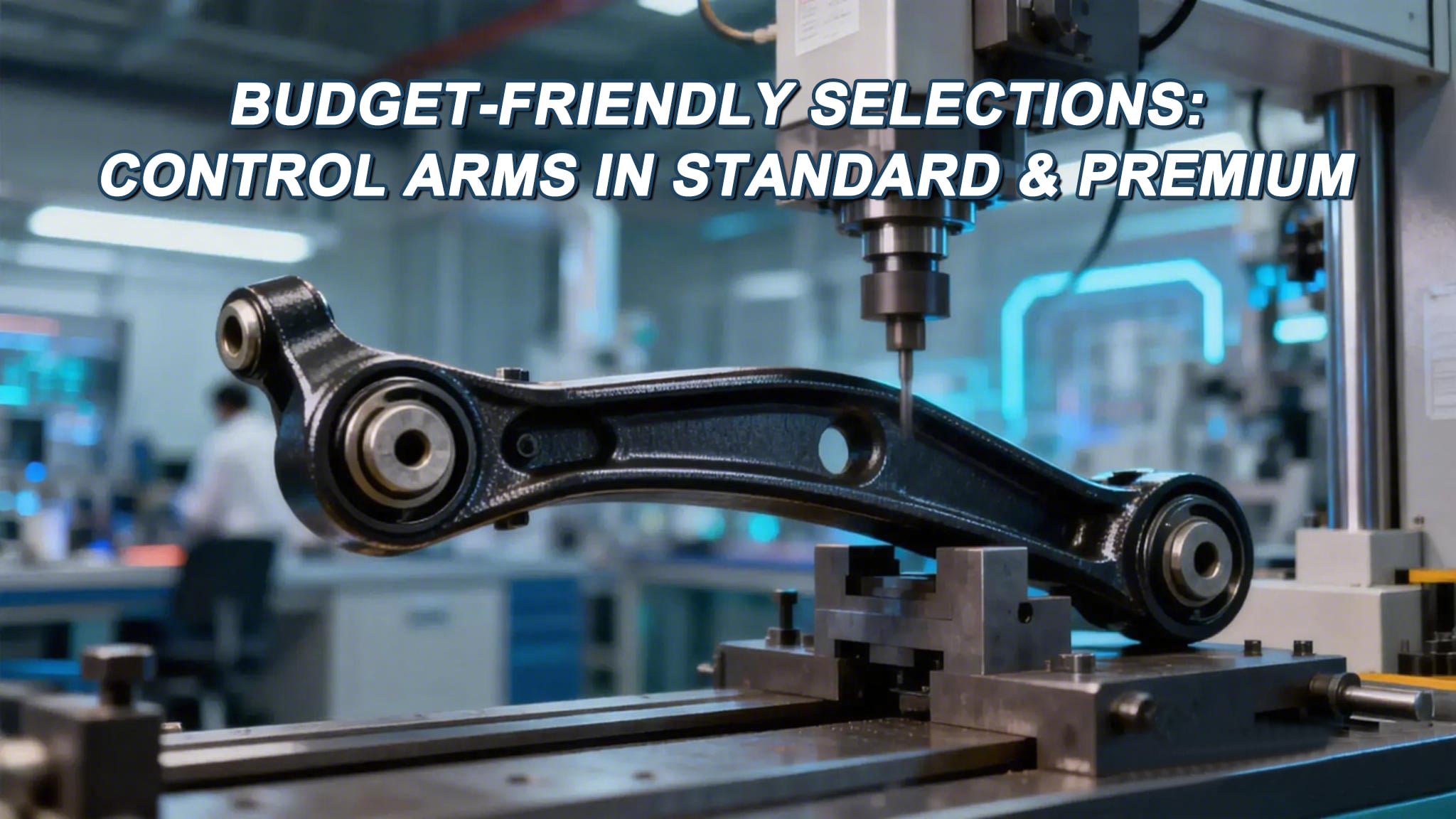
Control Arm Materials: How Composition Drives Cost and Durability
Forged Steel and Tubular Steel: Entry-Level Strength with Proven Reliability
People watching their budgets often go for steel control arms because they offer great strength for the money spent. Forged steel stands up well to heavy loads without bending out of shape, and the tubular versions cut down on weight without sacrificing how solid they are. Tests from the Materials Engineering Journal show these parts can handle between 500 to 800 million pascals of stress before breaking down, which makes them pretty good for regular street use. Steel does have one downside though it tends to rust when exposed to road salt, losing about half a millimeter of thickness each year according to NACE International standards. Still, most drivers find steel arms last anywhere from 70 thousand to 100 thousand miles before needing replacement. What makes steel so appealing boils down to three main benefits:
- Cost efficiency: 40–60% cheaper than premium alternatives
- Repairability: Straightforward welding for impact damage
- Compatibility: Direct fitment for 90% of OE replacement applications
Billet Aluminum and Uniball Joints: Premium Weight Reduction and Precision — at a Premium Price
Car fanatics love billet aluminum control arms because they cut weight by around 30 to 45 percent compared to regular steel parts. That lighter weight makes the suspension respond much quicker when driving aggressively. The precision machined uniball joints basically get rid of all the rubber bushing flex that messes with steering feel. SCCA testers actually measured about 0.1 degree better steering accuracy with these setups. But let's talk money - aluminum parts typically cost 2.5 to 4 times what steel ones do. On the plus side, aluminum naturally resists road salt damage without needing special coatings. However, it doesn't last as long under constant hard impacts even though lab tests show it can handle pressures up to 80,000 psi when just sitting there. Putting these on usually needs professional alignment work too. For most people, this kind of upgrade only makes sense on heavily modified cars where every ounce counts and perfect geometry matters more than budget constraints.
Standard vs. Premium Control Arms: Evaluating Real-World Price-Performance Tradeoffs
OE Replacement Standards: Moog, Dorman, and Delphi — Balancing Affordability and Trust
Original equipment replacement control arms hit factory specs but come in at around 30 to 50 percent cheaper than those fancy premium alternatives. They work great for regular cars that get driven every day without any modifications. Brands such as Moog, Dorman, and Delphi have pretty good track records too. Most folks report problems less than 2% of the time during warranty periods if everything gets put on right. The standard design makes finding these parts easier and installation goes much smoother. Mechanics typically save about an hour and a half on labor costs compared to adjustable systems. Drivers who want something dependable without all the extra bells and whistles will find these components hold up just fine against original manufacturer standards while still performing consistently over time.
Premium Upgrades: Mevotech Pro, Cognito, and JBA — When Adjustability, Geometry Correction, and Extended Warranty Justify Higher Investment
Premium control arms command 2–3× the price of OE units—but deliver measurable long-term value through engineering advantages:
- Precision adjustability: Corrects camber and caster after lifts or drops, preventing $400+ in annual tire wear from misalignment
- Enhanced materials: Forged joints and chromoly construction withstand up to 3× greater impact loads than standard arms
- Extended coverage: Lifetime warranties (e.g., Mevotech PRO) versus 1–3 years on OE parts reduce lifetime ownership costs by 22%, per aftermarket lifecycle analyses
This investment pays off most clearly for lifted or heavily used trucks, off-road builds, or owners targeting decade-plus service life. A field study tracking 200+ lifted trucks found premium arms required 73% fewer replacements over 100,000 miles compared to economy upgrades.
Cost-Effectiveness Beyond Sticker Price: Alignment Retention, Labor Efficiency, and Warranty Protection
When picking control arms, what really matters goes way past just how much they cost at first glance. The better quality ones tend to hold their alignment much better over time. We're talking about maintaining those important camber and toe settings for almost half again as long as regular arms according to some recent tests from AutoLab in their 2023 chassis dynamics study. And this actually makes a real difference in practice. Fewer trips to get alignments done means tires last longer before needing replacement. Plus, parts connected to the steering system such as tie rods and wheel bearings don't wear out so quickly either.
How Longer Alignment Longevity and Lower Failure Rates Reduce Total Ownership Cost
When alignment needs constant tweaking and components fail too soon, there are real hidden costs beyond just replacing parts. These include expensive labor charges and lost productivity from vehicle downtime. Better quality arms built with tighter manufacturing specs actually stand up better when weight is applied, so the suspension stays properly aligned even through rough roads and different driving conditions. Looking at what mechanics charge these days, around $240 per arm according to ASE tech reports, how long something lasts really matters for wallet health. Less wear on joints means fewer big ticket repairs down the road too. We're talking about fixing things like tie rods that can run anywhere from four hundred to seven hundred bucks, or wheel bearings that break because of stress from misalignment. After putting on about 60 thousand miles, all those savings from not having to fix stuff constantly basically cancel out the extra money paid initially for premium parts, which tend to cost about 35% more than standard options.
Warranty Coverage as a Value Indicator: Claim Rates, Transferability, and Service Support
The warranty terms actually show how confident engineers are about their products, and they also act as real money protection for consumers. Most basic models come with just one year of coverage, but premium brands such as Mevotech PRO go all out with transferable lifetime warranties that can be passed on when someone sells their equipment. Looking at claim statistics paints an interesting picture too. The best manufacturers see less than 5% claims according to industry data collected by the Auto Aftermarket Industry Association, whereas cheaper alternatives face between 12% and 18% claims rates. What matters just as much is what happens when something does go wrong. Good companies stand behind their promises with actual help from technicians who know their stuff, which means no arguing over what caused problems and faster fixes overall. When everything works smoothly like this, those fine print details in warranty documents stop being just words on paper and start working hard to protect people's wallets in practice.
FAQ
Q: Why do steel control arms rust?
A: Steel control arms rust because they are exposed to road salt and moisture, which cause oxidation.
Q: How long do aluminum control arms typically last?
A: Aluminum control arms resist road salt damage but can struggle under constant hard impacts. With proper care, they can last a significant amount of time, but not typically as long as steel in harsh conditions.
Q: What are the advantages of premium control arms?
A: Premium control arms often offer precision adjustability, enhanced materials that withstand greater impact loads, and extended lifetime warranties.
Q: Do premium control arms justify their high cost?
A: Premium control arms justify their cost through long-term savings on alignment, reduced part replacements, and better performance, especially in specialized applications.
Q: How do warranties differ between standard and premium control arms?
A: Standard control arms typically come with 1–3 years warranties, whereas premium ones may offer transferable lifetime warranties, which provide greater long-term protection.