
 EN
EN


How Tie Rod Ends Achieve Precision Vehicle-Specific Fitment
Thread pitch, taper angle, and ball joint geometry: The three non-negotiable fitment parameters for every tie rod end
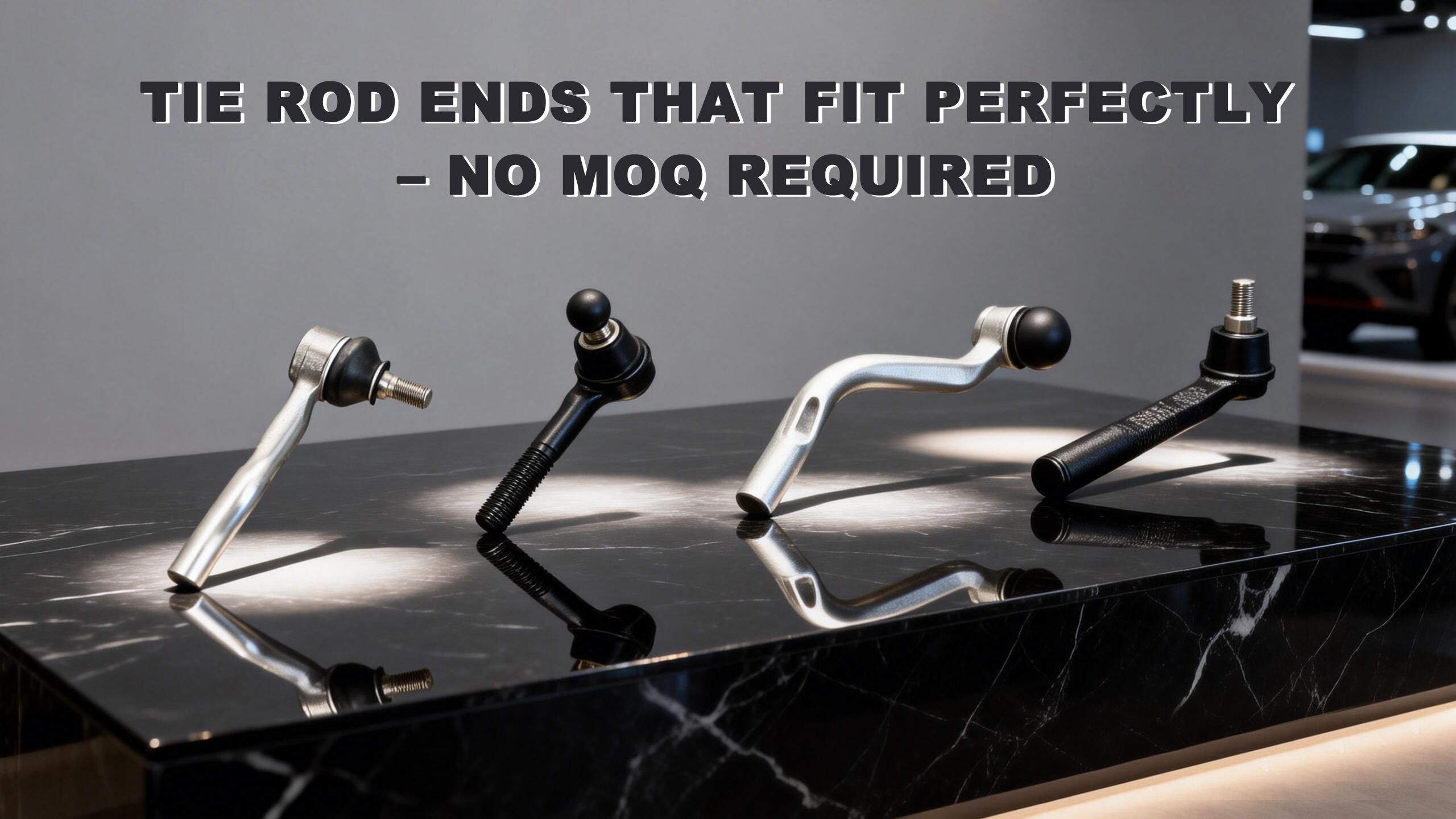
Getting the right fit for tie rod ends depends on three key factors that engineers never compromise on: thread pitch, taper angle, and how the ball joint is shaped. The thread pitch determines how deep it engages with the steering rack components. When it comes to the taper angle, this feature creates that secure connection with the steering knuckle that basically locks itself in place. And then there's the ball joint geometry which affects both how much movement is possible and where forces travel through the system. If the taper angle goes off by more than half a degree or thread measurements vary even slightly beyond 0.1 mm tolerance, problems start showing up fast. We've seen boots fail early, toe alignment drift out of spec, and drivers experience strange steering responses when something isn't quite right. These days most shops check all these specs against original equipment manufacturer blueprints using those fancy coordinate measuring machines (CMMs). This helps maintain reliability even when vehicles hit rough roads or face heavy cornering forces.
Inner vs outer tie rod ends: Structural roles, replacement patterns, and why fitment requirements differ by position
- Inner tie rod ends connect directly to the steering rack and must accommodate constant rotational movement—fitment prioritizes spline count, boot clearance, and axial compliance to prevent binding.
- Outer tie rod ends mount to the steering knuckle and bear direct impact loads—fitment emphasizes angular precision, impact resistance, and taper interface integrity to preserve toe alignment.
The way people replace these parts shows how they work differently in practice. Outer tie rod ends take about three times as much punishment from bumps and potholes on the road, but they tend to break down quicker when exposed to water and road salt. Inner ones don't need replacing as often though, making up around forty percent of all replacements because they suffer slower wear inside where there's less mechanical strain. When it comes to vehicle designs, suspension setups matter a lot too. Front wheel drive cars actually need their inner joints to move about fifteen percent more than what's required for rear drive vehicles. This extra movement space is necessary just so everything fits properly with the engines positioned sideways and the whole suspension system geometry working correctly.
OEM-Grade Performance Meets Aftermarket Accessibility in Tie Rod Ends
SAE J2975 validation and fleet durability data: What proves true OE-equivalent performance in tie rod ends
When talking about genuine OE equivalent performance, we look at whether products meet SAE J2975 standards which are widely accepted across the automotive industry for steering parts. The spec requires specific tests including checking how much force they can handle axially (at least 18 kilonewtons), making sure the torque stays consistent within plus or minus 5% after 100 thousand cycles, and seeing how they hold up when subjected to repeated pothole like impacts. Big name manufacturers back up their quality promises with actual field data from commercial vehicles. These companies run extensive tests on fleets covering well over half a million miles and find failure rates hovering around just 0.2%. What this means in practice is that properly tested aftermarket tie rod ends perform just as reliably as original equipment manufacturer parts, keeping drivers safe and extending component lifespan without any compromises.
Material science breakdown: High-carbon steel stems, PTFE-infused polymer boots, and sealed grease retention in premium tie rod ends
High quality tie rod ends use specially designed materials that either match or sometimes even beat what comes from the factory. The stems are made from forged high carbon steel with a Rockwell hardness between 50 and 55. This gives them just the right mix of strength and flexibility so they won't bend out of shape when subjected to lateral forces around 12 kN. The polymer boots infused with PTFE cut down on moving parts friction by about two thirds compared to regular EPDM rubber, according to tests done across temperatures from minus 40 degrees Celsius all the way up to 120 degrees. These triple lip labyrinth seals hold onto the factory grease for nearly 98 percent longer than basic single lip versions, which means dirt stays out much longer and components don't start wearing down as quickly. All these improvements work together to give real world performance that lasts well over 100 thousand miles, right in line with original equipment standards.
No MOQ Fulfillment Without Compromise: How Modern Supply Enables Single-Unit Tie Rod End Orders
Digital inventory orchestration and modular kitting: The infrastructure behind guaranteed fit + no minimum order quantity
Modern inventory systems have made it possible to handle single unit fulfillment reliably these days. They work by keeping track of stock levels in real time across different distribution centers and supplier networks. Smart algorithms can match specific vehicle needs like thread pitch measurements, taper angles, and ball joint shapes to what's actually available in warehouses, so companies don't have to guess how much stuff they need to keep on hand. Modular kitting goes hand in hand with this system. Standard parts such as high carbon steel stems and universal joint housings get combined with vehicle specific pieces like tapered sleeves or different types of boot seals right when an order comes in. According to recent logistics reports from 2024, this method cuts down excess inventory by around 37 percent while still hitting nearly 99.8% accuracy rates for orders. What does all this mean? Mechanics can fix just one broken part instead of buying whole kits, and specialty fleet orders get handled just as quickly. No more waiting for bulk shipments or dealing with leftover parts gathering dust.
Frequently Asked Questions
What happens if tie rod ends don't fit correctly?
Incorrect fitment can lead to premature wear, alignment issues, and erratic steering responses.
How do inner and outer tie rod ends differ?
Inner tie rod ends connect to the steering rack, emphasizing rotational movement, while outer ones mount to the steering knuckle, focusing on impact resistance and alignment.
Why are SAE J2975 standards important?
They validate OE-equivalent performance in tie rod ends, ensuring durability and reliability under stress.
How does modern supply chain affect the availability of tie rod ends?
Advanced inventory management allows for single-unit orders without excess stock, improving efficiency and reducing costs.