
 EN
EN



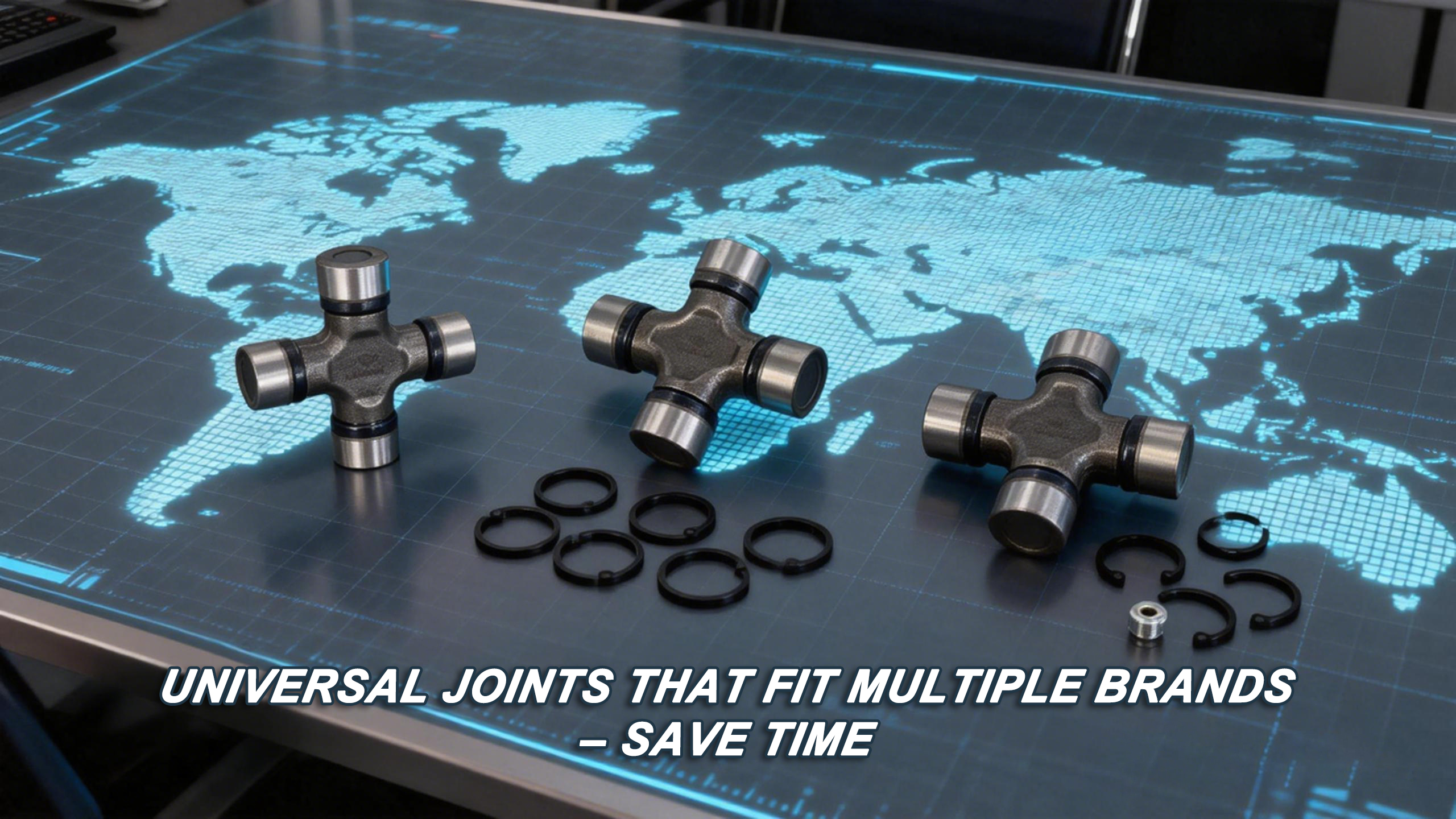
Why True Universal Joint Compatibility Matters Across Brands
The Downtime Cost of Brand-Locked U-Joints: Data from Field Maintenance Teams
According to field studies, industrial facilities typically lose around $740,000 each year because of equipment downtime (Ponemon 2023). A big part of this comes from problems with universal joints that don't work across different brands. When these joints fail, maintenance crews often spend anywhere from three to five hours trying to find replacement parts specific to their brand. They waste time flipping through catalogs or waiting for shipments to arrive. If manufacturers could actually make cross-brand compatible parts, it would cut down on all this hassle. Technicians could just grab standardized universal joints off the shelf whenever needed instead of dealing with the whole search process.
Dimensional Standards vs. Real-World Fit: Why SAE/ISO Doesn’t Guarantee Interchangeability
SAE and ISO standards set out what the dimensions should be for universal joints, but we still see problems when trying to make different brands work together in practice. Tolerance stacking happens all the time, materials aren't always consistent between manufacturers, and those little differences in how seals are designed can cause big headaches. The variations in yoke and shaft sizes from one company to another just make fitting them together harder. Some parts might be harder than others, which means they wear down differently when under stress. And if the grooves where seals sit aren't exactly right, dirt and grime get in there. A recent industry report from 2022 showed something pretty telling: about 22 percent of universal joints that met all the dimensional specs still didn't pass installation tests in mixed fleet environments. So basically, just because something measures up on paper doesn't mean it will actually work when installed alongside other brands.
How to Verify Genuine Universal Joint Interchangeability
5 Critical Verification Steps Before Procurement (Including Cross-Brand Shaft Alignment Checks)
Getting proper universal joint compatibility isn't just about matching dimensions. Start by checking cap size, bearing width, and total length against what the manufacturer specifies rather than relying solely on standard SAE or ISO measurements. Next look at material hardness since poor heat treatment will lead to premature wear when things get loaded during operation. Check how well the lubrication system works too because seals from different brands need to hold grease even when there's lots of vibration and temperature changes happening. Use lasers to check shaft alignment between different brands looking for any angle issues over half a degree that cause those annoying vibrations down the line. Do a real world test fit with actual loads applied and watch out for temps going past 85 degrees Celsius (around 185 Fahrenheit) as this usually means something doesn't quite mesh right. Companies that skip these basic checks tend to see around 30-35% more failures after just six months of service. Work with vendors who provide 3D models and let you actually handle samples before ordering so everyone gets what they expect.
Time and Cost Savings from Multi-Brand Universal Joint Adoption
Quantifying Efficiency Gains: 27% Faster Fulfillment & 41% Downtime Reduction in OEM Fleets
Adopting multi-brand universal joints delivers measurable operational improvements. Fleet operators achieve 27% faster parts fulfillment by eliminating brand-specific procurement bottlenecks—reducing idle time and accelerating repairs. OEM fleets report 41% shorter maintenance downtimes after standardizing on cross-compatible joints. Mechanical crews benefit from simplified inventory management and experience 28% fewer incorrect part shipments.
These efficiencies translate directly into cost savings:
| Efficiency Metric | Single-Brand Average | Multi-Brand Solution | Improvement |
|---|---|---|---|
| Procurement Lead Time | 14 days | 8 days | 43% faster |
| Fleet Downtime per Repair | 3.2 hours | 1.9 hours | 41% reduction |
| Annual Inventory Costs | $18,500 | $11,200 | 39% savings |
Gains stem from eliminating redesign efforts when replacing legacy equipment, reducing compatibility testing overhead, and enabling strategic bulk purchasing across brands—lowering per-unit costs by 15–22%, per supply chain studies.
Selecting the Right Universal Joint for Cross-Brand Applications
When looking for a universal joint that works across different brands, there are several important things to consider beyond just matching dimensions. Start by checking how much torque and load the joint can handle compared to what's needed for actual operations. For example, industrial equipment used in agriculture typically needs joints that can take about 15% more torque than those found in cars because of all the rough ground they have to deal with. Next, think about where the joint will be used. Sealed, low maintenance joints tend to last longer in dirty places like mines where dust and debris are everywhere, cutting down on failures by around 40% in really gritty conditions. Don't forget to test how well the joint performs at different angles too. Even though there are standard measurements set by organizations like ISO, the way vibrations actually behave differs quite a bit between different manufacturer systems when pushed to their limits. Lastly, check if the manufacturer has proper certifications such as IATF. Companies with these certifications usually put their products through extensive testing over time, which means better reliability across different brands and less hassle managing multiple parts in stock.
FAQ
Why are universal joints not compatible across different brands?
Despite standardized dimensions set by SAE and ISO, manufacturers have variations in materials, designs, and tolerance that affect compatibility.
How can universal joint compatibility be verified?
Verification involves checking dimensions, material hardness, lubrication efficiency, shaft alignment, and testing under load and temperature conditions.
What are the benefits of adopting multi-brand universal joints?
Adopting multi-brand universal joints leads to faster fulfillment, reduced downtime, and cost savings by simplifying inventory management and procurement processes.
What factors should be considered when selecting universal joints for cross-brand applications?
Factors include torque capacity, location-specific conditions, angle performance, and manufacturer certifications for reliability and performance consistency.