
 EN
EN


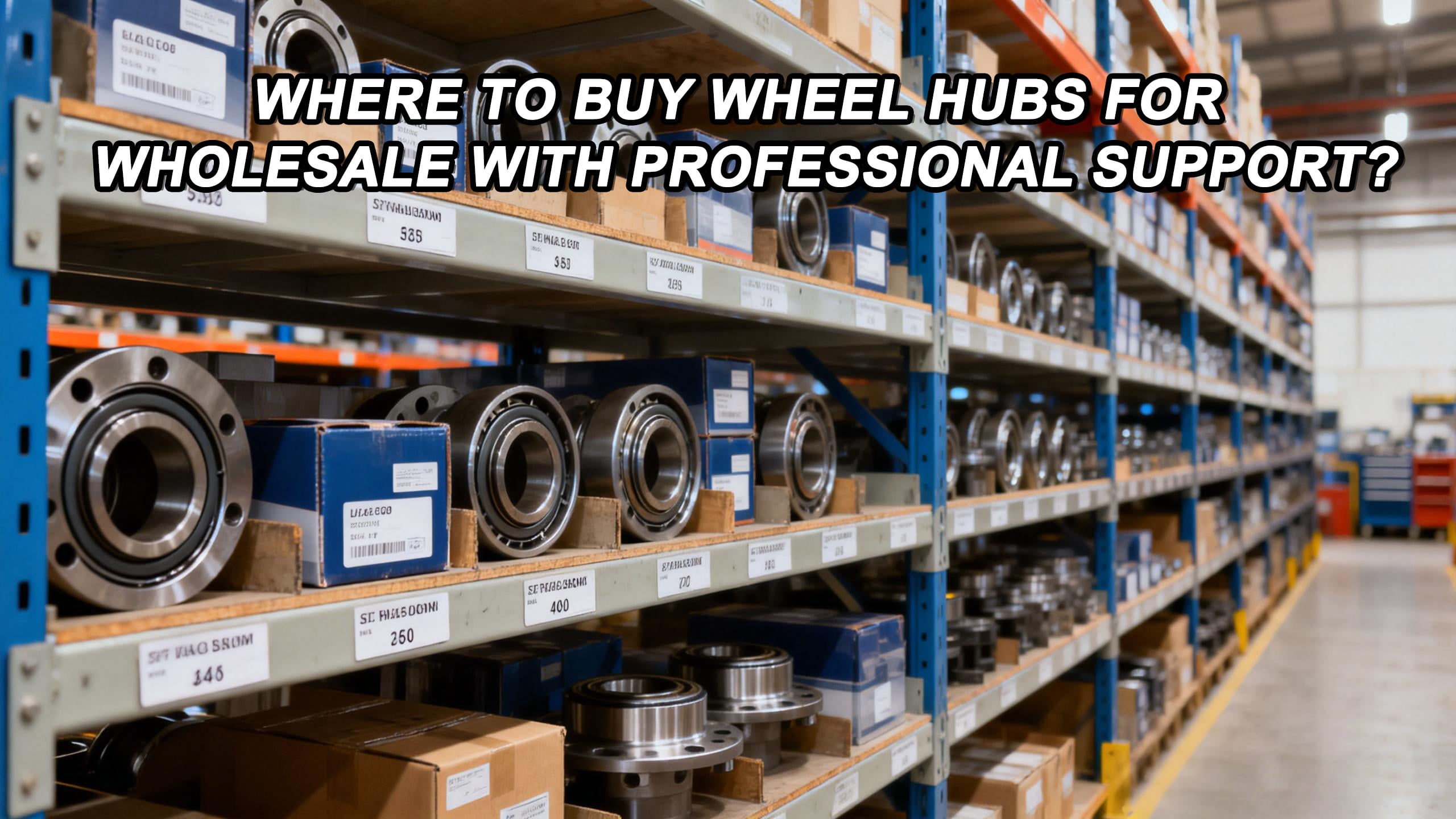
Why Professional B2B Channels Are Essential for Wheel Hub Wholesale
Limitations of Retail Platforms for Fleet and OEM-Scale Wheel Hub Procurement
Retail platforms are structurally unequipped for industrial-scale wheel hub procurement. Their consumer-first model creates three systemic gaps:
- Inventory scalability: Most retail channels stock 100 units per SKU—far below the 500+ units routinely required for a single fleet replenishment or OEM line-side pull.
- Technical guidance gaps: Only 21% of retail sites offer axle-load compatibility tools or certified CAD files—critical for integrating hubs into chassis design or retrofit programs.
- Compliance risks: Generic listings rarely include ISO 9001 documentation, material test reports (MTRs), or batch-level traceability—exposing fleets to noncompliance during DOT or commercial vehicle audits.
Sourcing hub assemblies for a 50-truck fleet via retail channels often means coordinating 15+ fragmented shipments—driving logistics costs up by 40% and introducing multi-week delays in project execution.
Advantages of Certified B2B Distributors and Direct Manufacturer Portals
Certified B2B channels eliminate these inefficiencies through purpose-built infrastructure:
- Bulk technical support: Dedicated application engineers validate load ratings against GVWR classifications, generate custom fitment reports, and cross-reference axle configurations with OEM service bulletins.
- Certified supply chains: IATF 16949-certified partners enforce full traceability—from raw forged steel billets to finished hub assemblies—including heat-treat logs, ultrasonic inspection records, and dimensional CMM reports.
- Volume optimization: Consolidated freight across regional distribution centers cuts per-unit shipping costs by 30–60% on orders exceeding $15,000—without compromising JIT delivery windows.
Direct manufacturer portals enhance this further with ERP-integrated APIs and real-time inventory visibility across 200+ distribution centers. This ensures accurate part allocation, eliminates fitment errors at point-of-order, and supports seamless integration into Tier 1 assembly schedules.
Wheel Hub Compatibility and Certification: Ensuring Fit, Safety, and Compliance
Matching Bolt Patterns, Hub Bore Diameter, and Vehicle-Specific Load Profiles
Getting parts to fit together precisely isn't something we can skip if we want safe operations and equipment reliability. When it comes to bolt patterns, they need to line up with what the manufacturer specifies, usually within about 0.25mm either way. If bolts don't match up properly, the clamping force gets distributed unevenly across the fasteners, which wears them out faster over time. The same applies to hub bore diameters too strict on these measurements matters because even a half millimeter difference can cause vibrations that mess with bearing preload and wear down the races quicker than normal. What really counts though is making sure components can handle at least 130% of the GVWR for the vehicle. Take a 10 ton truck as an example it needs hubs rated for around 13 tons. This rating covers not just sitting still weights but also all those stresses from turning corners hard, sudden stops, and bumps on the road. According to recent field reports from the Commercial Vehicle Safety Alliance, companies that stick to these standards see nearly 80% fewer instances of wheels coming loose during operation.
OEM vs. Aftermarket Validation: SAE J2530, IATF 16949, and TÜV Certification
OEM validation remains the benchmark—but rigorously certified aftermarket hubs deliver equivalent performance when backed by recognized standards:
- SAE J2530: Requires 500,000-cycle fatigue testing under simulated pothole impacts and torsional stress—validating structural integrity beyond static load ratings.
- IATF 16949: Mandates 15 PPM defect rates, statistical process control across forging, machining, and bearing pre-load operations, and full lot-level traceability.
- TÜV Certification: Verifies salt-spray resistance exceeding 720 hours and thermal stability under sustained 300°C+ brake heat—non-negotiable for European regulatory compliance.
Independent long-haul fleet trials confirm IATF 16949-certified hubs achieve 99.3% reliability through 150,000 miles—statistically indistinguishable from OEM units. While TÜV is mandatory for EU operations, SAE J2530 provides the durability benchmark for North American heavy-duty applications. Procuring to these standards delivers 40% cost savings versus OEM without compromising safety-critical validation.
Material Integrity and Manufacturing Standards Behind High-Performance Wheel Hubs
Forged Alloy Steel vs. Cast Iron: Fatigue Life, Thermal Stability, and Real-World Durability
Material choice dictates operational lifespan—not just initial cost. Forged alloy steel hubs outperform cast iron across every durability metric relevant to commercial service:
- Fatigue life: Forging refines grain flow and eliminates porosity, delivering 30–50% longer service life under cyclic loading (per SAE J2530 fatigue testing).
- Thermal stability: Forged steel maintains dimensional integrity up to 500°C—well above peak brake rotor temperatures—while cast iron begins warping at 400°C, risking hub bore distortion and bearing seizure.
- Field-proven resilience: In 200,000-mile fleet trials, forged hubs showed 40% lower replacement rates, 60% fewer thermal deformation events, and superior corrosion resistance on de-iced winter roads.
Forging works by squeezing those molecular bonds together until they form a consistent density throughout the material. This gets rid of those weak spots where cracks tend to start forming in cast iron, which has this uneven microscopic structure. Cast hubs might cost less at first glance, but they're just too brittle for real world conditions. We've seen them fail when hitting potholes or under heavy loads. The TUV tests back this up showing cast hubs deform about three times more than forged ones after similar impacts. When talking about serious applications that involve repeated heating/cooling cycles and need to withstand constant stress over time, there really isn't much debate left. Forged alloy steel simply stands out as the best option available right now.
Selecting the Right Wheel Hub for Heavy-Duty Applications
GVWR-Aligned Hub Ratings and Duty-Cycle Validation for Commercial Trucks
Picking out the right wheel hub for commercial trucks isn't just about counting bolts and matching them up. What really matters is making sure it can handle actual operating loads instead of just meeting paper specifications. The rule of thumb here is that hubs need to be rated for around 115 percent of what the truck's GVWR states because things get heavier in real world conditions. Take a truck with a 25,000 pound GVWR rating as an example. Its hubs should actually be able to take on at least 28,750 pounds. This isn't just some safety buffer they throw in there. Top tier manufacturers test these hubs by running them through simulations equivalent to over half a million highway miles while changing the weight distribution constantly. They look at how well the hubs perform along three main directions of force during all this testing.
- Impact resilience: Validated via SAE J2530-compliant pothole and curb-impact testing.
- Corrosion endurance: Salt-spray exposure exceeding 1,000 hours—ensuring integrity in coastal or winter-chemical environments.
- Torsional fidelity: Rigidity testing to match OEM torque thresholds, preventing bearing misalignment and premature wear under high-torque driveline loads.
These protocols prevent hub fractures and bearing failures during real-world overload conditions. Always prioritize hubs with documented IATF 16949 certification—this ensures consistent metallurgical quality, heat-treat repeatability, and dimensional control across every production batch.
FAQ
Why can't I use retail platforms for large-scale wheel hub purchases?
Retail platforms typically have limitations in inventory scalability, technical guidance, and compliance documentation necessary for large-scale, industrial purchases.
What certifications are important for wheel hubs?
Certifications like IATF 16949, SAE J2530, and TÜV ensure that wheel hubs meet high safety, durability, and compliance standards for commercial use.
Why is forged alloy steel preferred over cast iron for wheel hubs?
Forged alloy steel offers better fatigue life, thermal stability, and resilience compared to cast iron, making it more durable for heavy-duty applications.