
 EN
EN



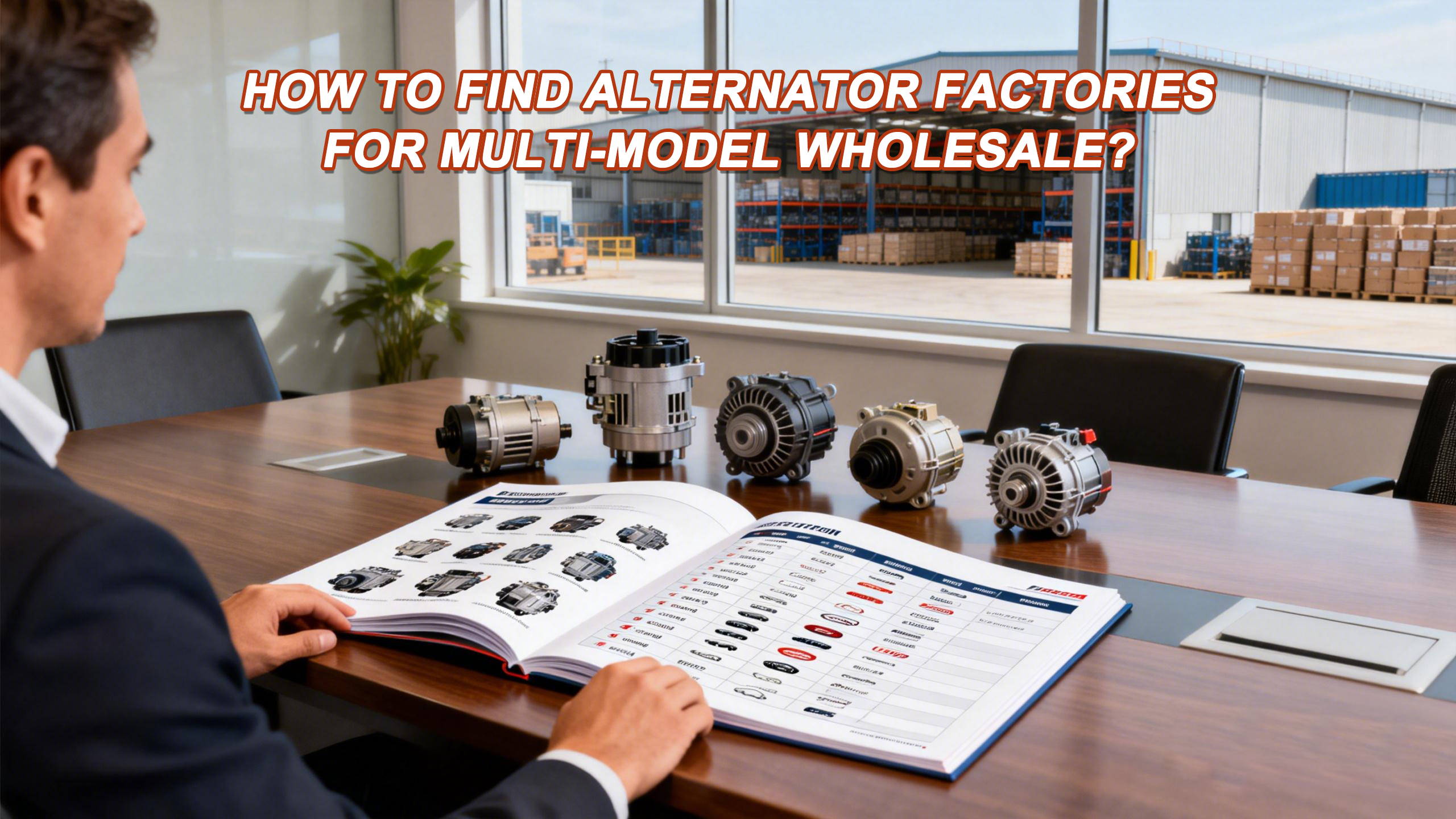
Assess Global Alternator Factories by Production Scale and Model Coverage
Regional Manufacturing Hubs: China, Mexico, and Eastern Europe for High-Capacity Alternator Production
China is clearly at the top when it comes to making alternators worldwide, responsible for around 40 percent of all production these days. Most of this happens in big manufacturing centers located in Guangdong and Zhejiang provinces. What makes China so successful? Well, they've got everything from end to end in their supply chains, lots of automated systems running smoothly, and sheer volume allows them to handle massive orders sometimes over 50 thousand units each month without breaking a sweat. Across the pond, Mexico has become a key player in North America thanks to benefits from USMCA agreements. This lets manufacturers ship products across borders without tariffs and get parts exactly when needed to American and Canadian car companies and their first tier suppliers. Looking eastward, factories in Poland and Romania are gaining ground too. These operations meet all EU regulations like CE markings and follow REACH standards while still keeping costs down through efficient workforce management. That combination makes them attractive choices for European auto makers who need flexibility with different product mixes but not necessarily huge volumes.
Verifying Multi-Model Capability: OEM-Compatible Alternator Lines for Toyota, Ford, VW, and Hyundai Platforms
True multi-model capability goes beyond catalog listings—it requires documented engineering validation across major platforms. Leading factories maintain dedicated production cells for Asian (Toyota, Hyundai), North American (Ford), and European (VW Group) specifications, eliminating cross-contamination and tooling delays. Request test reports confirming:
- Voltage regulation within ±0.5V across the full RPM range (idle to 7,000 RPM)
- Full compatibility with Toyota’s standardized 70A/120A terminal configurations
- Verified interoperability with Ford’s Smart Charge system—including CAN bus signal recognition and adaptive field control
All validations must include physical sample testing under extreme thermal stress (-40°C to 125°C), with ≥98% first-pass yield—a benchmark aligned with IATF 16949 process capability requirements.
Evaluate Alternator Factory Credibility Through Certifications and Quality Validation
IATF 16949 and ISO 9001 Compliance as Non-Negotiable Benchmarks for Alternator Manufacturers
The IATF 16949 certification stands out as a key benchmark for companies making parts for cars. It requires manufacturers to think about risks ahead of time, conduct regular checks on their processes, and develop strong relationships with suppliers. Combine this with ISO 9001 standards, and businesses get comprehensive quality management covering everything from initial design analysis right down to the last inspection before shipping products. Real world results back this up too. Research indicates that factories producing alternators with proper certifications see around a 32 percent drop in problems reported after installation when compared to those without certification according to Quality Progress magazine from last year. Before trusting any claims about certification status, always double check through official registries like ANAB or UKAS instead of just taking what someone says at face value. Expired or revoked certifications often point to bigger issues within a company's ability to manage changes properly and maintain rigorous internal auditing practices.
Real-World Quality Testing: Load Performance, Voltage Regulation Accuracy, and 500+ Hour Lifetime Benchmarks
Certifications alone are insufficient. Demand empirical evidence through three-stage, real-world performance validation:
- Load endurance: Sustained 150-amp output at 105°C ambient for ≥200 hours—simulating worst-case under-hood conditions
- Voltage stability: ±0.2V deviation from nominal 14.4V during rapid RPM transitions (e.g., 1,000 – 6,000 RPM in <2 seconds)
-
Lifespan validation: 500+ hour continuous operation under dynamic load cycling, replicating 100,000-mile duty cycles per SAE J1211
Top-tier suppliers publish third-party test summaries—typically from TÜV SÜD or UL—showing ≥98% performance retention after 500 thermal cycles. Require signed destruction reports for pre-shipment samples to confirm traceability and prevent batch substitution.
Optimize B2B Alternator Sourcing with Scalable Procurement Models
When companies adopt scalable procurement methods, they turn alternator sourcing from something done reactively into a real strategic advantage. It's all about finding the right balance between working with original equipment manufacturers, keeping profit margins healthy, and making sure supplies stay steady even when things get shaky. With tiered ordering arrangements and actual insight into what factories can produce, wholesalers don't have to keep renegotiating contracts every time seasons change. This approach cuts down waiting periods by around 30 percent and helps avoid those costly stockpiles nobody wants. At certified manufacturing centers, modular production setups let them switch models in less than four hours most of the time. That's roughly half the speed of older production lines. The result? Parts arrive just when needed, which means warehouse expenses drop somewhere around 25 percent for businesses that implement these systems properly.
Modern e-procurement systems come equipped with real time dashboards that display factory capacity levels, compliance details for standards like IATF 16949, RoHS, and REACH regulations, plus OTIF performance indicators from different manufacturing sites. These platforms automate RFQ processes which can slash the time needed to vet suppliers by roughly half. When it comes to managing stock levels, smart demand forecasting tools analyze past orders along with OEM production plans to keep inventory at just the right level. This works particularly well for automotive parts stocked by major brands including Toyota, Ford, Volkswagen, and Hyundai where maintaining proper SKU quantities makes all the difference in supply chain efficiency.
| Scalability Feature | Impact on Alternator Sourcing |
|---|---|
| Modular production | 50% faster model changeovers |
| Dynamic order tiers | 30% lower inventory carrying costs |
| Automated RFQ systems | 60% faster supplier vetting |
This integrated approach shifts procurement from transactional cost management to value-driven partnership—ensuring reliable, specification-accurate supply while protecting wholesale margins.
FAQ
What are the key factors to consider when choosing an alternator manufacturer?
Consider manufacturers that have IATF 16949 and ISO 9001 certifications, robust supply chain management, and documented engineering validation capabilities. Ensure they offer quality testing and performance validation along with compliant production standards.
Why is China's alternator production so dominant?
China's dominance is due to its integrated supply chains, high automation, and ability to handle massive orders efficiently, contributing to around 40% of global alternator production.
What role do certifications like IATF 16949 and ISO 9001 play in alternator manufacturing?
These certifications ensure risk management, process validation, and effective supplier relationships, leading to a 32% reduction in reported issues post-installation.
How does scalable procurement benefit alternator sourcing?
Scalable procurement uses tiered ordering and modular production to reduce waiting periods and warehouse expenses while ensuring a strategic advantage in alternator sourcing.