
 EN
EN


Why Most Ball Joint Factories Enforce MOQ — and What It Means for Buyers
MOQ as a Risk Mitigation Strategy in Precision Ball Joint Manufacturing
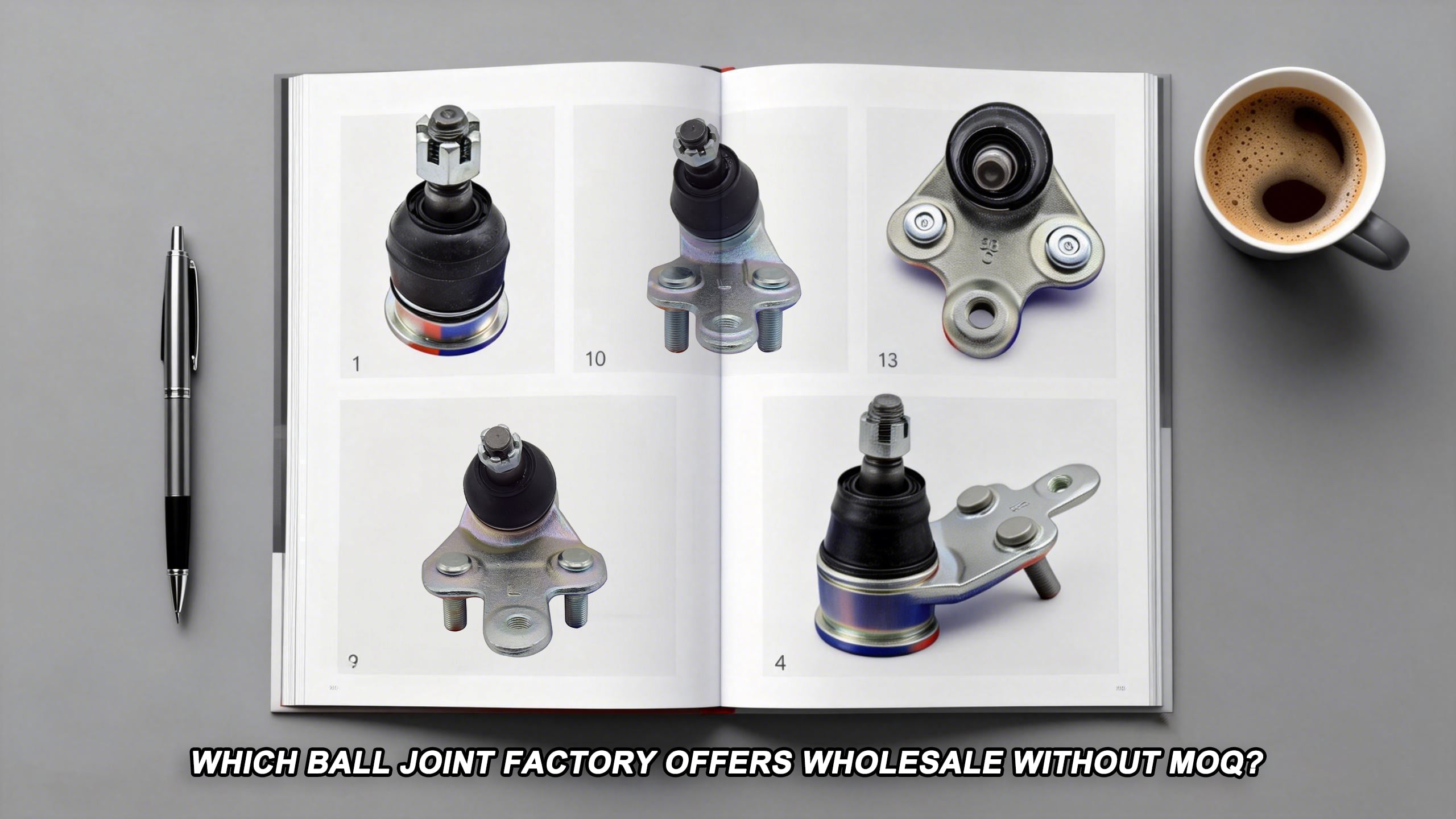
Manufacturers set minimum order quantities (MOQs) mainly because making precision ball joints carries big risks both operationally and financially. When companies want small batches, it throws off the whole workflow, makes setup costs go through the roof, and messes with quality consistency especially since these parts need to be accurate down to 0.01mm. If there are no MOQ requirements, each unit ends up costing way more money. The tools sit idle too much, workers get split up doing different tasks all day long, and quality checks become a nightmare compared to what should be normal overhead. These MOQ rules help keep money coming in steadily, prevent warehouses from getting filled with outdated stock, and let factories plan resources properly something absolutely necessary for parts that meet automotive standards. They also make sure quality stays consistent between production runs which cuts down on defects and keeps everything compliant with those tough industry specs like IATF 16949. Buyers who grasp why MOQ exists can actually work better with suppliers instead of seeing them as obstacles. After all, these requirements aren't just arbitrary restrictions but part of building a reliable supply chain that stands the test of time.
Inventory, Tooling, and QC Costs: The Real Drivers Behind Ball Joint MOQ Policies
Minimum Order Quantity policies come down to three main cost factors that just can't be negotiated: special tooling requirements, inventory costs for raw materials, and strict quality control processes. For custom parts like ball joints, creating forging dies and CNC fixtures typically means spending hundreds of thousands of dollars upfront. These costs only get recouped when producing large volumes. Then there's the issue of storing premium steel grades such as SAE 4140 or 52100, which comes with regular warehouse fees and tracking requirements. Quality control presents another challenge for small batches. Standards like ASTM F3143 for load testing, SAE J490 for fatigue checks, and ISO 9227 for corrosion resistance all work against small production runs. Production data shows that orders below 500 units actually raise per unit costs by around 40% at many Tier-2 auto suppliers. MOQs help spread out these unavoidable costs across larger quantities, keeping profit margins intact while still meeting performance standards and regulatory requirements. This approach isn't just random business rules - it's what keeps precision manufacturing economically feasible in today's tough global marketplace.
Verified Ball Joint Factories Offering True MOQ-Free Wholesale (2024)
Dongguan Yuheng Auto Parts: Case Study of a Certified Ball Joint Manufacturer with No MOQ Policy
Dongguan Yuheng Auto Parts holds both ISO 9001 and IATF 16949 certifications and provides real MOQ free wholesale options through their lean automation approach. The company's automated machining centers slash changeover time around 60 percent compared to regular production lines. This lets them handle smaller batches economically while still hitting tight tolerances of about plus or minus 0.01 mm. When shipments go out, customers get complete traceability documentation including raw material certificates from mills, thorough hardness checks on all parts, and salt spray tests that actually beat what ISO 9227 standards require. Most companies offering MOQ waivers end up locking clients into specific designs or asking for longer wait times. But Yuheng makes these flexible terms work across their entire product range, setting a new standard for precision manufacturing at scale without cutting corners anywhere.
7 Audited Ball Joint Factories Granting MOQ Waivers on Orders ≥500 Units
Facilities certified under IATF 16949 or AS9100 standards have found ways around those pesky minimum order quantities without just making special cases. Instead they've built systemic efficiencies into their operations. Think about it: shared tooling across multiple projects, bulk buying of alloys when possible, and strategic stockpiling in different regions. What does this mean for buyers? They can work with standard ball joint designs covering over 200 different SKUs featuring interchangeable tapers, which means no need to pay extra for custom tooling. The perks don't stop there either. Payment is pretty flexible too most places ask for around 30% upfront then the rest after inspecting the shipment. Want to keep tabs on production progress? Many offer secure online portals where customers can check in anytime. And testing reports are already validated for important specs like force deflection according to ASTM F3143 standards and fatigue life per SAE J490 requirements. Plus with warehouses located both in the US and Europe, smaller orders below 1,000 units actually cost less to ship overall. So contrary to what some might think, having lower minimums doesn't mean sacrificing quality control in automotive manufacturing.
How to Confirm Direct Ball Joint Factory Sourcing — Not Trader Intermediation
5 Verification Steps: From Business License to On-Site QC Reports for Ball Joint Suppliers
Making sure companies actually work directly with factories instead of going through middlemen is really important for staying away from fake products, unpredictable quality issues, and overpriced goods. According to research published by the Ponemon Institute last year, nearly two thirds (that's 65%) of all recalled counterfeit car parts came from these shady dealers who pretend to be real manufacturers. And when recalls happen because of this deception, companies end up paying around $740k on average just to fix things. Want to know if what you're getting is genuine? There's a good reason to follow a solid verification process. Here's how to check authenticity step by step:
-
Request Legal Documentation
Obtain and validate the supplier’s business license, tax registration, and active IATF 16949 or ISO/TS 16949 certification directly through official government or accreditation body portals—not PDF scans alone. -
Analyze Production Footage
Require live, unscripted video tours covering raw material receipt, CNC machining, heat treatment, assembly, and final testing bays. Prerecorded marketing reels lack evidentiary value. -
Review Quality Control Reports
Audit 12 months of internal QC logs for dimensional inspection (per GD&T), tensile strength (ASTM E8), and corrosion resistance (ASTM B117)—cross-checking sample IDs against batch records. -
Validate Import/Export Data
Use platforms like Panjiva or ImportGenius to verify shipment history, export volumes, and client names—ensuring alignment with the supplier’s stated capacity and market presence. -
Commission Third-Party Audits
Engage SGS, Bureau Veritas, or TÜV for unannounced on-site assessments focused on raw material traceability, first-article inspection protocols, and real-time defect tracking—not just certificate checks.
This disciplined approach transforms sourcing from transactional guesswork into a verifiable, risk-controlled process—where every ball joint delivered reflects direct factory capability, not intermediary markup.
FAQ
Why do ball joint factories enforce MOQ policies?
Ball joint factories enforce MOQ to mitigate risks and manage costs associated with small production batches, ensuring consistent quality and maintaining economic feasibility in a global marketplace.
What are the main cost drivers behind MOQ policies?
The main cost drivers include special tooling, inventory costs for raw materials, and rigorous quality control processes, which are necessary for precision manufacturing.
Are there factories that offer MOQ-free options?
Yes, some factories like Dongguan Yuheng offer true MOQ-free wholesale by leveraging automation and efficient processes to handle smaller batches economically.
How can buyers verify if they are sourcing directly from factories?
Buyers can verify direct sourcing by requesting legal documentation, analyzing production footage, reviewing quality control reports, validating import/export data, and commissioning third-party audits.