
 EN
EN



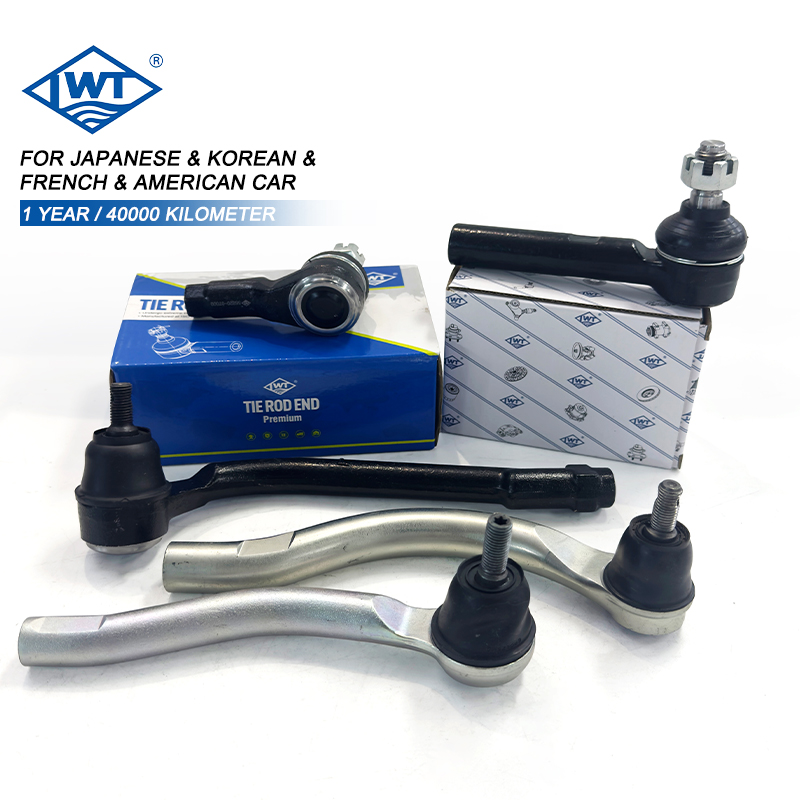
Top Tier-1 Tie Rod End Manufacturers with Verified Bulk Wholesale Capacity
Global Supply Reliability: MOQ, Lead Times, and Scalable Production for Tie Rod End
Top manufacturers show they're ready for large orders thanks to minimum order quantities that start around 500 pieces and standard lead times of about four to six weeks. The reason behind this efficiency? Many have set up vertically integrated plants with automated forging systems that can actually boost production capacity by double within three months if needed. Most major suppliers also keep regional warehouses stocked with inventory these days, which cuts down on delivery problems and makes restocking much faster when there's a rush. What matters most is how flexible these operations are during peak seasons. They handle sudden increases in demand without messing up their IATF 16949 standards, so products arrive right when needed and wholesale customers never run out of stock sitting on shelves.
OEM/ODM/OES Capabilities: From Prototyping to High-Volume Tie Rod End Production
Leading manufacturers provide all sorts of support from original equipment manufacturing right through to complete design solutions for their clients' products. When developing new tie rod ends, companies can get prototypes made quickly using advanced techniques like computer numerical control machining and three dimensional printing. The whole process usually takes around two weeks max. If someone needs really large quantities, say over half a million pieces per month, there are flexible production setups that let them switch materials easily between things like regular carbon steel and stronger forged alloys. They can also tweak dimensions as needed while keeping costs surprisingly low too. Custom parts typically come out just 8 to 12 percent more expensive than standard versions, which is way better than the 30 plus percent markups many small suppliers charge. To ensure everything meets specs, these top shops run destructive tests on about five percent of every production run. This checks if parts hold up under stress, measure correctly, and last long enough according to those original equipment manufacturer standards everyone cares so much about.
Cost Optimization Strategies for Bulk Tie Rod End Procurement
Procuring tie rod ends in bulk requires strategic approaches to maximize savings while ensuring quality and supply chain efficiency. Key methods include leveraging tiered pricing models and conducting break-even analyses to balance standardization with customization needs.
Tiered Pricing, Volume Discounts, and True Unit-Cost Savings on Tie Rod End Orders
Most manufacturers set up their pricing in tiers, so when companies buy bigger quantities they get better deals. For instance, buying 500 items might bring a 5% discount, but go past 1,000 units and suddenly that jumps to around 15%. Industry data shows these volume buys can cut what each item costs by nearly 20% overall. The savings aren't just on the product price itself either. Companies also save money on shipping, storage, paperwork and other behind-the-scenes costs that add up fast. When businesses combine multiple orders into one big shipment, freight costs drop significantly. And those who commit to regular purchases usually end up getting better payment conditions too. Here's how the math works out in practice:
| Order Quantity Range | Discount Applied | Estimated Unit Cost Reduction |
|---|---|---|
| 500 - 999 units | 5% - 10% | $0.75 - $1.50 |
| 1,000 - 2,499 units | 10% - 15% | $1.50 - $2.25 |
| 2,500+ units | 15% - 20% | $2.25 - $3.00 |
This model encourages larger orders but requires evaluating supplier reliability to avoid overstocking or quality compromises—ensuring net gains align with procurement goals.
Break-Even Analysis: When Customization Adds Value vs. Erodes Bulk Tie Rod End Savings
Modifying tie rod ends with special coatings or stronger alloys typically adds between 10 to 25 percent to the price tag. Companies need to run some serious numbers to figure out if these upgrades actually pay off in the long run. Think about things like longer lasting parts, fewer breakdowns, or meeting local safety requirements. Take corrosion resistant coatings for instance they might extend how long a part works by around 30%, yet only bump up costs about 15%. That kind of math can really cut down on warranty expenses and replacement needs over time. On the flip side, when dealing with large quantities of identical components, sticking with standard models makes much more sense financially. Custom features just don't deliver good returns in those situations. Smart businesses know this and focus their money on improvements that genuinely boost performance without breaking the bank or messing up volume discounts.
End-to-End Supply Chain Readiness for Wholesale Tie Rod End Fulfillment
Port-to-Warehouse Transit, Regional Inventory Hubs, and JIT Delivery for Tie Rod End
Getting logistics right for large tie rod end orders means having good systems in place from ports to warehouses that cut down on handling delays somewhere around 30 to 45 percent compared to when things are shipped in pieces. Setting up inventory centers in key areas close to big automotive manufacturing zones lets most of the continent get parts within 48 hours, which saves about $18 to $22 on each item for those final deliveries. The JIT delivery method works hand in hand with production schedules and warehouse restocking, keeping fulfillment rates at nearly 99 percent while also lowering what companies have to keep in stock. Warehouse space needs drop by roughly 40 percent using this method, and mid sized distributors can save around seven hundred forty thousand dollars a year just on storage costs, based on recent industry data from last year. What makes all this possible includes:
- Real-time container tracking from origin ports
- AI-driven demand forecasting for regional stocking
- Buffer stock protocols for urgent tie rod end replacements
- Customs-cleared expedited channels
Distributors leveraging this model achieve 15–22% lower total landed costs while sustaining OEM-grade part availability—ensuring consistent mechanical integrity for these safety-critical components.
Frequently Asked Questions (FAQ)
What is the typical lead time for tie rod end orders?
The standard lead time for tie rod end orders is typically four to six weeks.
Can manufacturers handle sudden increases in demand?
Yes, top manufacturers have flexible operations that allow them to handle sudden increases in demand without compromising quality standards.
What are the benefits of tiered pricing for bulk orders?
Tiered pricing offers significant discounts on bulk orders, reducing costs on the product, shipping, and other related expenses.