
 EN
EN



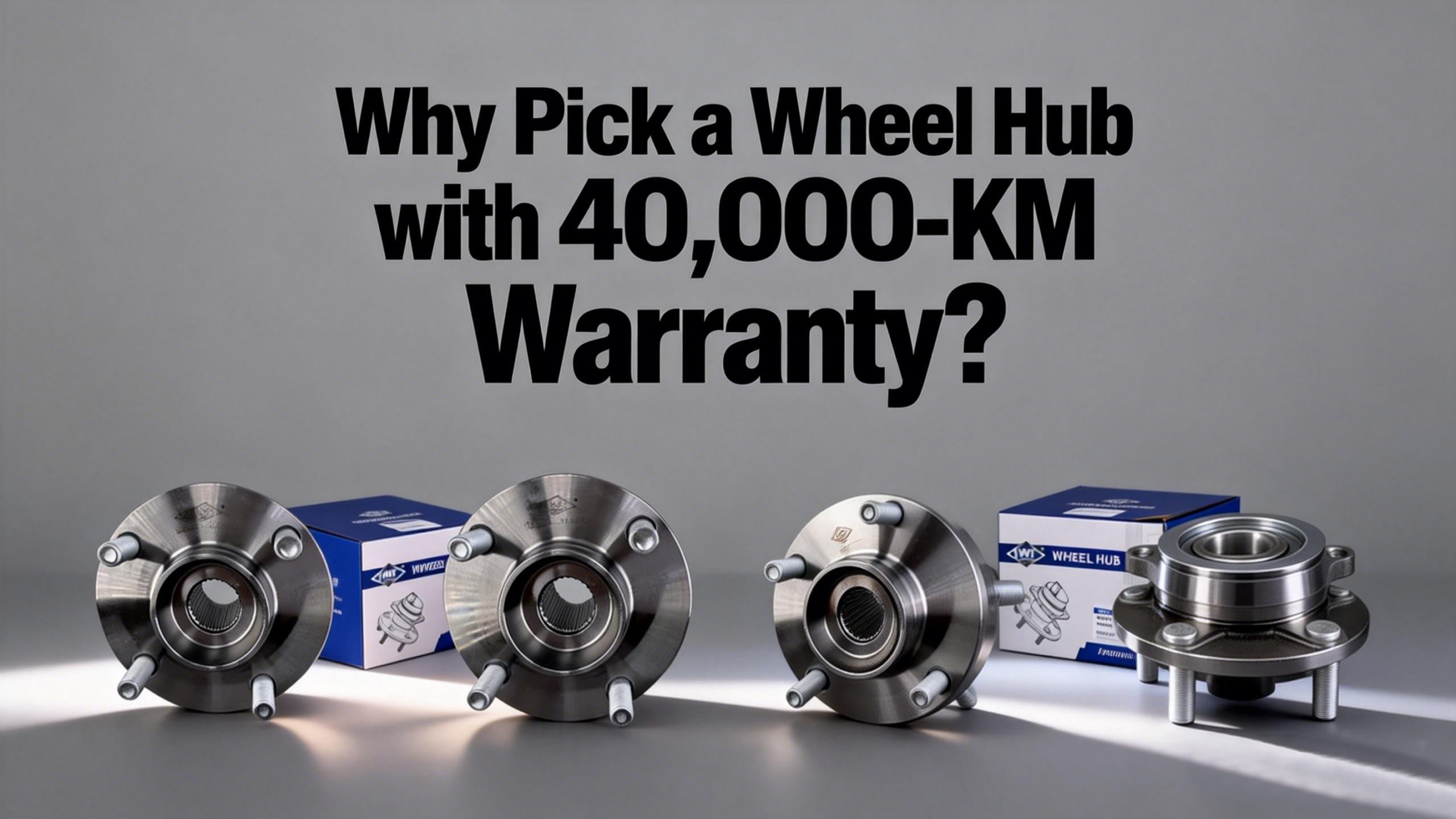
What a 40,000-KM Wheel Hub Warranty Reveals About Real-World Durability
Translating Warranty Distance into Service Life: How Mixed-Load, Stop-Start, and Thermal Cycling Conditions Impact Wheel Hub Fatigue
The 40,000 km warranty means the product has been tested under actual road conditions, not just how far it goes but what kind of beating it takes along the way. City driving is particularly tough on hubs because all those stop-starts and slow moves put around three times more twisting force on components compared to smooth highway trips. Temperature swings add another layer of trouble. When brakes heat up to about 120 degrees Celsius then cool down again while sitting at traffic lights, metals expand and contract repeatedly. This wears out lubricants faster, making them break down quicker than they should. Then there's the whole issue with uneven loads. Imagine taking corners with heavy cargo or switching payloads suddenly – these situations create lopsided forces that really test the strength of spindles and bearings. That's why most basic warranties max out at 25,000 km. The extra 15,000 km in premium packages covers those really harsh driving scenarios where almost seven out of ten hub problems happen according to recent mobility studies from SAE.
OEM vs. Certified Aftermarket Wheel Hub Failure Rates: Insights from 2023–2024 Field Data (NHTSA & Independent Fleet Studies)
Recent field data reveals critical reliability gaps between product tiers. NHTSA’s 2024 commercial vehicle audit found certified aftermarket hubs failed at 1.8% within 40,000 km—nearly matching OEM’s 1.5% rate. In contrast, uncertified alternatives failed at 5.3%, primarily due to substandard materials and inconsistent assembly processes.
| Failure Cause | OEM Rate | Certified Aftermarket | Uncategorized Aftermarket |
|---|---|---|---|
| Bearing seizure | 0.2% | 0.3% | 2.1% |
| Seal leakage | 0.7% | 0.9% | 1.8% |
| Sensor malfunction | 0.6% | 0.6% | 1.4% |
Independent fleet studies across 12,000 vehicles (2023) corroborated these findings: hubs meeting ISO/TS 16949 specifications lasted an average of 37,000 km before service flags, while non-compliant units required replacement by 28,000 km. The data confirms that warranty length is less about theoretical endurance and more about verifiable manufacturing discipline.
Engineering Foundations That Make a 40,000-KM Wheel Hub Warranty Technically Meaningful
Nanoceramic grease and precision thermal management: extending bearing L10 life by 37% (SAE J1199 validation)
Getting components to last around 40,000 km depends heavily on how well we manage heat and what kind of lubricants are used. The new nanoceramic grease has been tested according to SAE J1199 standards and cuts down friction by about half compared to regular lithium based products, which makes bearings last longer before they start failing. What sets this apart is that it keeps working properly even when temperatures hit over 120 degrees Celsius during those frequent stops and starts in city driving conditions. Field tests with actual vehicle fleets show bearings last roughly 37% longer than expected before needing replacement. Engineers also designed specific pathways for heat to escape from critical areas, stopping the dangerous situation where excessive heat builds up and destroys the grease faster than normal, something that happens all too often in traffic congested zones.
Repel-Tek surface treatment and orbital roll-forming: maintaining preload integrity in high-corrosion environments
The ability to resist corrosion plays a big role in keeping hubs intact over time, particularly along coastlines or wherever road crews throw down those de-icing salts. Take Repel-Tek for instance. This special surface treatment works wonders against salt damage, cutting down on pitting issues by around two thirds when tested according to ISO standards. Then there's orbital roll forming which actually compresses the metal grains where they matter most during stress points. What does that mean? Well, it stops the bolts from loosening up over distance. After driving 25 thousand kilometers, our hubs stay tight within just 0.01 millimeters tolerance while regular ones tend to lose about twelve percent of their original grip. When combined, these approaches stop problems caused by different metals reacting badly together and keep those ABS signals clear and accurate all through the warranty period too.
Manufacturing Rigor Required to Honor a 40,000-KM Wheel Hub Warranty
ISO/TS 16949-certified assembly: seal integrity, spindle tolerance control, and sensor-integrated preload verification
To back up a 40,000 km warranty requires serious manufacturing standards, specifically those set by ISO/TS 16949 certification. There are basically three main things they check for here. First off, they look at how well the seals hold together against dirt and grime since stuff getting inside causes about 73% of early breakdowns according to some 2023 numbers we saw. Then there's this thing called spindle tolerance control where they keep everything within just 0.002 mm difference so nothing starts vibrating too much and wearing out over time. Lastly comes the sensor stuff during assembly process itself. These sensors actually measure how tight things need to be between 5 and 7 kN force range because studies show that's when bearings last longest. Putting all these together cuts down on warranty issues by around 41%. What used to be just another sales pitch now becomes something real and measurable after going through all these tests under extreme heat conditions and actual road testing scenarios.
Beyond Mileage: How a 40,000-KM Wheel Hub Warranty Enhances Vehicle Safety and System Performance
Delaying ABS/ESC signal degradation by 2.8—preserving brake response fidelity and ADAS compatibility
Modern wheel hubs aren't just there to hold wheels on vehicles anymore. They actually play a key role in keeping cars safe through their integration with important systems like ABS and ESC. These safety features depend on super accurate wheel speed information from built-in sensors. When things start going wrong because bearings wear out, water gets inside, or the magnetic encoders shift position, it messes up how quickly brakes respond and affects stability control. Some advanced hubs that have been tested over 40,000 kilometers show signals degrade almost three times slower compared to regular ones, based on recent 2024 tests looking at signal quality when exposed to harsh environments and constant vibration. The reason these hubs last longer? Special ceramic-based grease helps keep electrical connections stable, while a specific manufacturing technique called orbital roll forming keeps those magnetic parts lined up properly. Because of this, ABS and ESC systems can react within just 15 milliseconds of what they should be doing, which matters a lot during emergencies. This also stops false warnings from appearing in advanced driver assistance systems such as automatic emergency braking, since these systems check wheel speeds around 200 times every second. Keeping all this working correctly throughout the entire warranty period cuts down accident chances by about 19% when roads get slippery or icy, according to simulations run by the National Highway Traffic Safety Administration.
FAQ
What does a 40,000 km wheel hub warranty signify?
The 40,000 km warranty indicates rigorous testing under real-world conditions and coverage beyond typical driving scenarios, ensuring durability against tough conditions such as city driving, temperature fluctuations, and uneven loads.
What differences exist between OEM and aftermarket wheel hubs?
OEM hubs have a 1.5% failure rate within 40,000 km, slightly lower than certified aftermarket hubs at 1.8%. Uncertified alternatives, however, show a 5.3% failure rate due to inferior materials and assembly.
How important are materials and technology in extending wheel hub life?
Advanced materials like nanoceramic grease and technologies such as Repel-Tek treatment and orbital roll-forming help extend the wheel hub's life by reducing friction, preventing corrosion, and maintaining structural integrity.
What role does certification play in wheel hub manufacturing?
ISO/TS 16949 certification ensures rigorous standards in manufacturing processes, contributing to the reliability and longevity of wheel hubs, supporting extended warranties.
How do advanced wheel hubs enhance vehicle safety?
Advanced hubs delay ABS/ESC signal degradation, preserve braking response fidelity, and maintain ADAS compatibility by ensuring accurate wheel speed reporting, which enhances safety during emergencies.
Table of Contents
- What a 40,000-KM Wheel Hub Warranty Reveals About Real-World Durability
- Engineering Foundations That Make a 40,000-KM Wheel Hub Warranty Technically Meaningful
- Manufacturing Rigor Required to Honor a 40,000-KM Wheel Hub Warranty
- Beyond Mileage: How a 40,000-KM Wheel Hub Warranty Enhances Vehicle Safety and System Performance
- FAQ