
 EN
EN



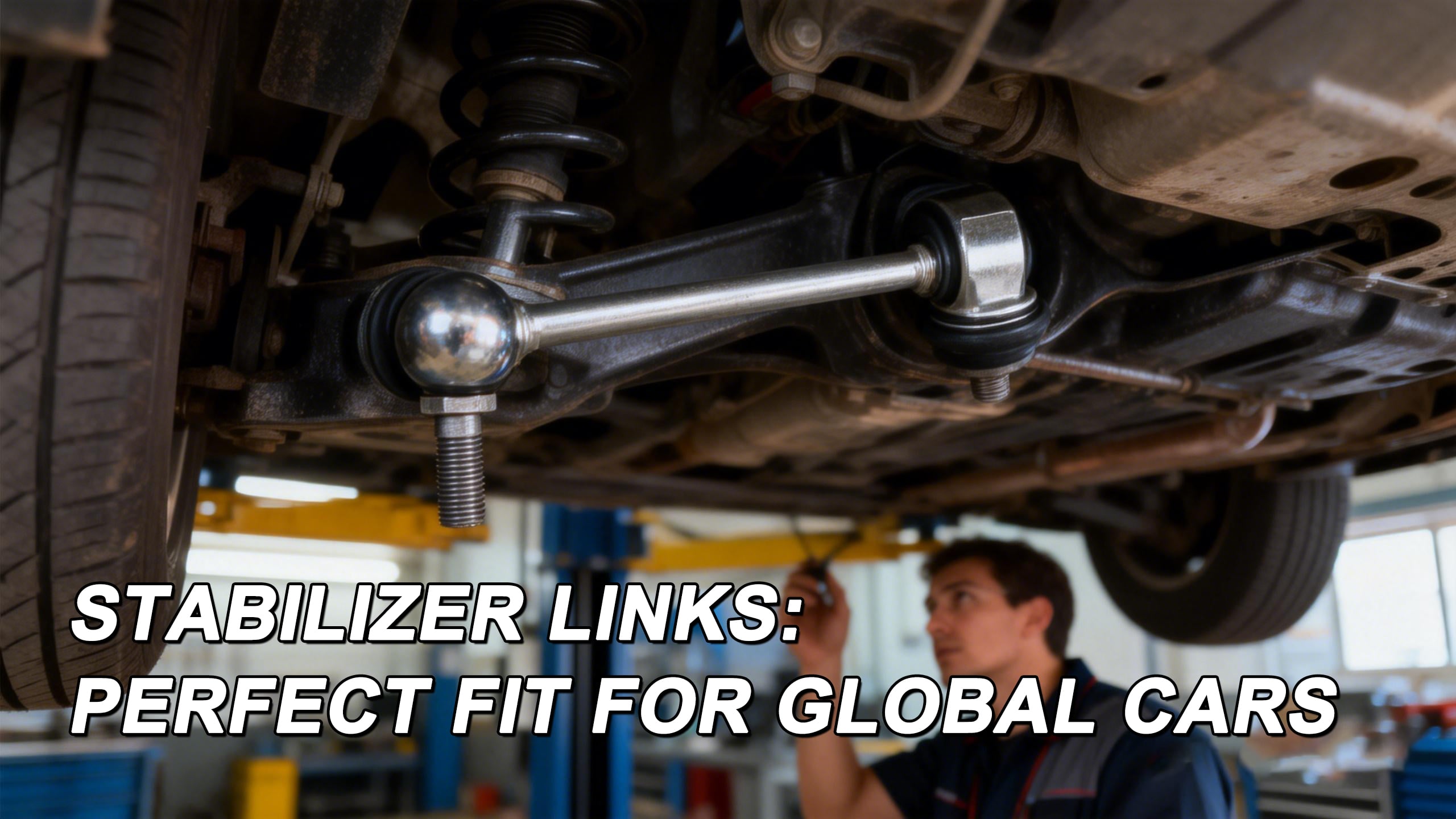
What Is a Stabilizer Link and Why Fitment Accuracy Matters for Vehicle Stability
Core Function: Controlling Body Roll and Maintaining Tire Contact During Cornering
The stabilizer link is what connects the sway bar to the suspension system in cars, helping fight off body roll when taking corners. As the car moves around bends, lateral forces push weight from one side to another. The link then helps transfer that load onto the sway bar, which balances how the suspension moves and keeps all four tires gripping the road better. According to NHTSA research from 2023, vehicles where these links are worn out or not installed correctly show about 27% more leaning towards the outside of turns. This increased lean makes skidding much more likely and takes away from how well drivers can actually control their vehicles. When everything works as it should, those links make a real difference in handling performance.
- Consistent tire-road contact during aggressive maneuvers
- Elimination of clunking or knocking noises caused by joint play
- Sharper, more predictable steering response on uneven surfaces
We recommend inspecting stabilizer links every 50,000 miles to prevent degraded handling and uneven tire wear.
The Critical Link Between Precise Geometry, Kinematics, and Real-World Handling
Stabilizer links must match OEM-specified dimensions and joint angles within tight tolerances—often ±0.5mm—to maintain kinematic harmony with the rest of the suspension. Even minor deviations disrupt force transfer paths, leading to three critical issues:
- Premature wear: Misalignment induces asymmetric stress, accelerating bushing fatigue
- Torque steer: Incorrect geometry creates unintended steering pull under acceleration
- Reduced stability: Altered roll centers increase susceptibility to oversteer or understeer
| Fitment Error | Handling Impact |
|---|---|
| 3mm length variance | Increased body roll by 18% |
| 5° joint misalignment | 22% longer stopping distances |
| (SAE International 2024) |
OEM-approved tolerances ensure seamless integration between sway bars, control arms, and struts—preserving factory-engineered handling behavior across varied road conditions and driving loads.
Global Stabilizer Link Compatibility: Navigating Make-, Model-, and Region-Specific Fitment
OEM Fitment Data Breakdown: Top 10 Global Brands (Toyota, VW, Ford, Hyundai, etc.)
Stabilizer links get made according to very specific specs for different cars. It's not just about the brand and model anymore these days, but actually looking at things like trim levels, how the power gets delivered to wheels, and what kind of suspension setup they have. Take Toyota for instance. Their rugged Hilux needs much tougher, heavier stabilizer links compared to something lighter like the Corolla because of how weight sits differently and all the off-road stuff it does. Then there's Volkswagen. The Golf GTI comes with specially tuned links that have less clearance between joints, while their Tiguan SUV focuses more on giving passengers a smooth ride and carrying heavy loads. Even though Hyundai and Kia share some parts locations, their bushings (those rubbery bits) can be quite different in hardness and how far they bend depending on what the car is meant to do. Ford's big F-150 trucks need links built to handle way more twisting force than what's found in smaller cars like the Focus. Mechanics working on these parts really should check factory diagrams and parts lists before installing anything. Getting this wrong can lead to problems when turning corners, with studies showing accident risks go up around 40% if installed improperly.
Regional Variants & Tolerance Challenges: Why a 'Universal' Stabilizer Link Doesn't Exist
The so-called universal stabilizer links just don't work well because they completely overlook how different regions approach engineering problems based on their specific climates, road conditions, and regulations. Take Europe for instance, where manufacturers coat their parts with zinc-nickel or epoxy to fight off rust from all that road salt in winter. Over in the Middle East, engineers go for heat resistant polymers that can handle temperatures above 85 degrees Celsius in desert environments. Then there's Japan, where those tiny Kei cars need components packed into spaces that simply won't fit anything designed for big American trucks. These manufacturing differences matter a lot too. Something as small as a 2mm difference in length can mess up the whole suspension setup, changing how the car rolls and causing alignment issues. Generic aftermarket parts skip over important local safety requirements such as EU's ECE R90 standard or Japan's JIS D4101 specifications. Mechanics working on vehicles regularly see around double the number of warranty claims coming back when customers install non-OEM parts instead of proper replacements.
Stabilizer Link Designs Explained: Ball Joint, Bolt-Type, and Hybrid Configurations
Design Implications for Fitment Precision, Service Life, and Replacement Workflow
Three primary designs serve distinct performance and service objectives—each demanding exact fitment to function as intended.
Bolt-type links, common in older or value-oriented platforms, use threaded rods and rubber or polyurethane bushings. Their steel construction offers robustness, but require precise torque application during installation—under-torquing causes bushing creep; over-torquing crushes them prematurely.
Hybrid links combine ball-joint articulation with lightweight aluminum housings and sealed polymer bearings. They improve responsiveness and reduce unsprung weight but require strict material compatibility checks—especially where dissimilar metals contact in humid or saline environments.
Ball joints are commonly seen in high performance cars and luxury models. These components have two specially ground sockets that allow for better movement range and even weight spreading across the suspension system. Most quality ball joints are constructed from strong forged steel or corrosion resistant stainless materials. They come already lubricated and don't need regular greasing during their lifespan. However replacing them isn't straightforward work. Mechanics need special equipment to get proper fitment right. Getting the angles just correct matters a lot too since wrong positioning can cause binding issues or lead to early component failure down the road.
All three types share one non-negotiable requirement: dimensional accuracy. Even minor deviations in length, offset, or joint angle compromise kinematic integrity, accelerating wear and degrading stability.
Trusted Global Brands: How Mevotech, MOOG, and Delphi Ensure Reliable Stabilizer Link Fitment
Validation Testing Across 12 Markets: OEM Alignment, Dimensional Tolerances, and Real-World Durability
Top-tier manufacturers like Mevotech, MOOG, and Delphi validate stabilizer links through globally coordinated testing protocols—not just lab measurements, but real-world validation across diverse markets. Each component undergoes a three-phase process:
- OEM specification matching: Every part is measured against original equipment blueprints using coordinate measuring machines (CMM) to confirm dimensional compliance within ±0.5mm.
- Tolerance stress testing: Links endure simulated pothole strikes, curb impacts, and high-G cornering cycles to verify structural integrity and joint retention.
- Environmental endurance trials: Salt-spray exposure (per ASTM B117), thermal cycling (-40°C to 85°C), and vibration testing (exceeding ISO 16750-3) validate long-term corrosion resistance and material stability.
Field validation spans over 100,000 simulated miles—from German autobahns to Brazilian rural roads—ensuring performance consistency across pavement quality, temperature extremes, and regional road vibration signatures. This rigorous approach maintains critical suspension kinematics, ensuring reliable body roll control, optimal tire contact, and uncompromised vehicle stability worldwide.
FAQ
What is the role of a stabilizer link in a vehicle?
The stabilizer link connects the sway bar to the car's suspension system, helping maintain body stability and tire contact during cornering by transferring lateral forces to the sway bar.
Why is fitment accuracy important for stabilizer links?
Fitment accuracy ensures that the stabilizer links maintain the kinematic harmony of the suspension system, preventing issues like premature wear, torque steer, and reduced stability.
How do different global conditions affect stabilizer link design?
Regions have specific requirements based on climate and road conditions, such as rust-resistant coatings in Europe or heat-resistant materials for the Middle East, affecting the design of stabilizer links.
Are universal stabilizer links effective?
Universal stabilizer links are generally not effective as they overlook regional requirements and specific vehicle designs, which can lead to issues in vehicle handling and safety compliance.