
 EN
EN



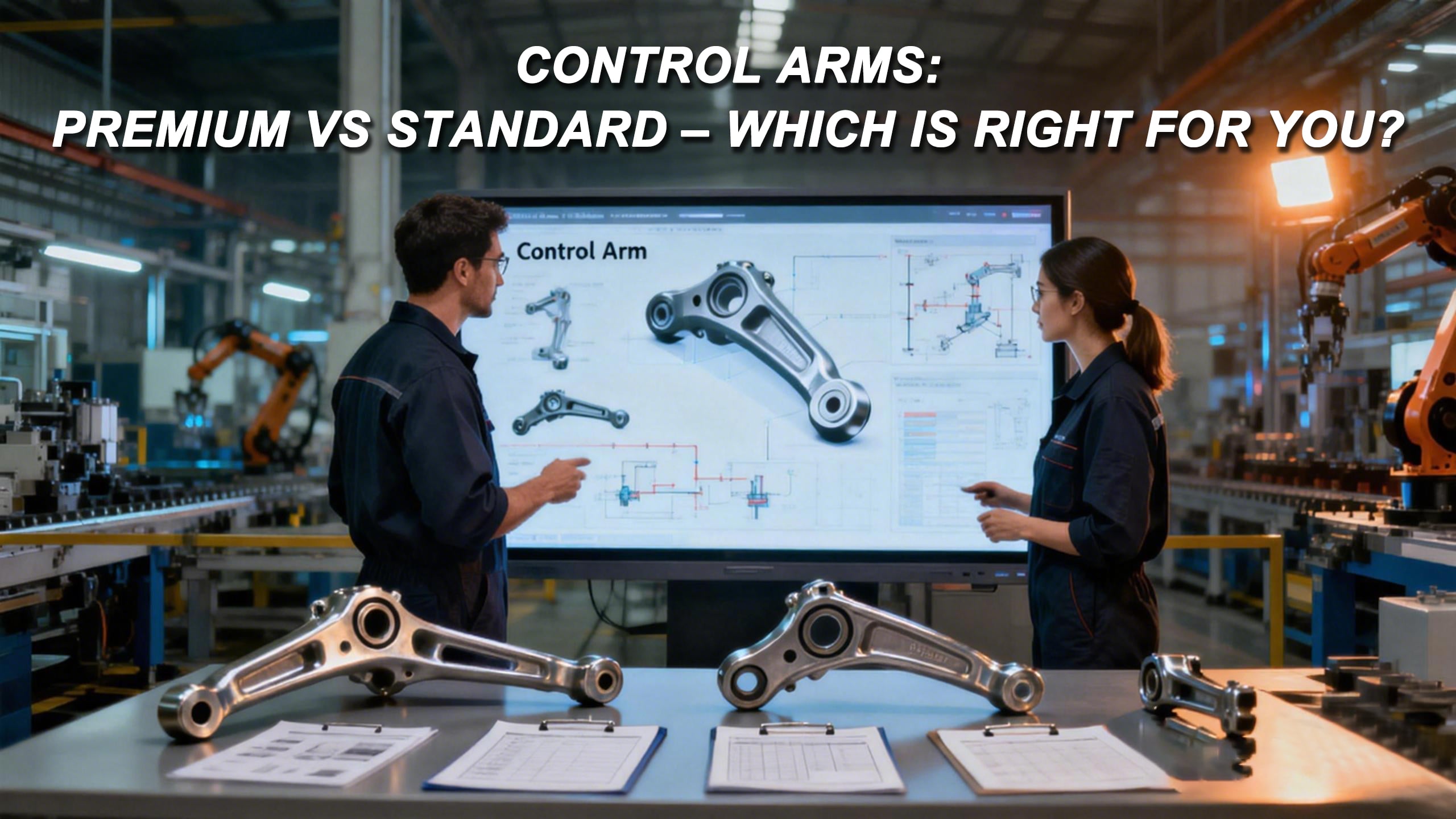
Material & Construction: How Control Arm Design Impacts Strength, Weight, and Longevity
Steel, Aluminum, and Billet Aluminum: Trade-Offs in Strength, Corrosion Resistance, and NVH
The material choice for control arms has a major impact on how long they last, what kind of noise/vibration/harshness (NVH) characteristics they exhibit, and the overall unsprung weight of the vehicle. Stamped steel is still pretty common because it packs a lot of tensile strength (sometimes going over 500 MPa) and keeps manufacturing costs down. But there's a catch: it weighs about 30% more than aluminum alternatives and tends to corrode when exposed to road salt or moisture. Aluminum alloys have come a long way though, reducing unsprung weight anywhere from 35 to 50%. This makes vehicles respond better and improves gas mileage. The downside? They don't hold up as well under really intense repeated stress, showing about 20% less fatigue resistance compared to top quality steel options. Billet aluminum stands out as a good compromise solution. Made by machining straight from solid bars, these components have a consistent grain pattern that gives them around 15% more yield strength than cast aluminum counterparts. Plus, they keep those great corrosion properties and maintain low NVH levels, which matters a lot in premium automotive applications.
| Property | Stamped Steel | Cast Aluminum | Billet Aluminum |
|---|---|---|---|
| Weight | High | Medium | Low |
| Corrosion Resistance | Low | High | High |
| Noise Transfer | High | Medium | Low |
| Cost Efficiency | $ | $$ | $$$ |
Stamped, Cast, Forged, and Tubular Control Arms: Durability, Deflection, and Real-World Service Life
How something gets made really affects how strong it is, how much it bends when loaded, and how long it will last before needing replacement. Take stamped steel arms for instance, which are usually around 2 to 3 mm thick. These tend to bend about half a degree when weight is applied, which causes problems down the road like faster wearing of bushings and misalignment issues. Cast aluminum parts handle vibrations better than steel by roughly 25%, but they aren't so great when hit hard, especially on rough terrain where cracks can form. Forged steel has denser grain structure and lasts about 40% longer against repeated stress compared to stamped versions, which makes it the go to choice for parts that see serious punishment daily. Tubular chromoly components incorporate triangular shapes that cut down on bending by approximately 60% while still keeping things light weight. The result? Stronger performance without carrying extra baggage. Most mechanics will tell you that forged and tubular arms often make it past 150 thousand miles of regular use, whereas stamped ones generally need replacing somewhere between 80k and 100k miles depending on conditions.
Joint Technology: Ball Joint, Uniball, and Heim Options for Control Arm Performance and Adjustability

OE Ball Joints vs Performance Uniballs vs Adjustable Heims: Articulation, Camber/Caster Correction, and Maintenance Needs
The type of joint used in a suspension system affects how much it can articulate, what adjustments are possible, and how long it will last before needing work. Original equipment ball joints come with sealed designs that keep out dirt and need very little attention, which makes them great for regular street driving. But these factory parts don't allow much movement and won't let anyone change the camber or caster settings. Performance uniballs take a different approach by using open spherical bearings that give about 25 to 30 percent more articulation compared to stock components. This extra range is really important when working on trucks that have been lifted or cars that sit lower than normal. Heim joints, sometimes called rod ends, offer maximum adjustability options. Some setups even let mechanics tweak caster angles by plus or minus five degrees through those threaded sleeves. The downside? Both uniballs and heims need checking every three months and rebuilding after around 15 thousand to 20 thousand miles because they get dirty so easily. There are better versions available with PTFE coatings that last longer between services, but nothing beats the hassle free operation of those sealed ball joints from the factory.
NVH, Sealing, and Lubrication Realities: Why Joint Choice Affects Daily Drivability
The way a vehicle handles noise, vibration, and harshness has everything to do with how the joints are designed. Original equipment rubber boot ball joints work pretty well at soaking up road shocks, keeping that factory feel inside the cabin intact. Uniball bearings tend to make things noisier in the cabin area, about 8 to 12 decibels louder actually, because of all that metal touching metal. Drivers will definitely notice this difference when driving on highways or over bumpy roads. Some after market versions try to fix this issue by adding nylon or rubber seals to cut down vibrations, but these modifications often limit how much movement the joint can handle. Heim joints act somewhat similarly regarding noise levels, though they come with grease fittings so folks can keep them running smoothly with regular lubrication, extending their lifespan quite a bit. Most people who drive their cars everyday find that sealed ball joints strike the best balance between performance and longevity, typically lasting well beyond 70 thousand miles with almost no maintenance needed. Those who spend time off road or on race tracks usually put up with the extra noise for better articulation control and tuning options, as long as they remember to maintain them properly.
Application Fit: Matching Control Arm Type to Your Driving Demands

Picking the correct control arm involves matching materials, build quality, and joint tech to real-world conditions instead of chasing paper improvements. For everyday drivers who just get from point A to B, basic stamped steel arms with original equipment style ball joints work best. They offer consistent noise vibration handling characteristics, last for years without issues, and won't burn through wallet money either. When someone spends weekends bouncing over rocks and dirt trails, forged or tubular arms become worth the investment. These tougher components resist bending under stress and handle repeated punishment better than cheaper alternatives, meaning less time fixing things mid adventure and more time actually enjoying the ride. Racers and serious performance tuners need something different altogether though. Adjustable billet aluminum arms let them fine tune camber settings and caster angles so tires stay planted during hard corners, giving that extra edge when seconds count on the track or back roads.
Key decision factors include:
- Driving intensity: Paved commuting vs. rock crawling vs. circuit racing
- Suspension modifications: Lift kits, lowering springs, or oversized wheels alter load paths and geometry demands
- Alignment precision needs: Correcting premature tire wear versus optimizing lap times
- Maintenance tolerance: Sealed joints last longer but sacrifice adjustability; exposed joints demand vigilance
A sports car built for track duty gains nothing from non-adjustable economy arms—just as an overlanding rig wastes budget on lightweight aluminum vulnerable to trail impacts. Match component resilience, weight, and tunability to your real-world demands.
Value Assessment: Cost, Repairability, and Long-Term ROI of Premium vs Standard Control Arms
3-Year Failure Rate Data (OEM vs Forged Steel vs Billet Aluminum) and Technician Insights
Total cost of ownership hinges less on upfront price than on failure frequency, repair complexity, and service life. Industry data shows OEM arms fail at a 22% rate within three years under heavy-duty conditions—while forged steel drops to 9% and billet aluminum to just 4%. This divergence reshapes long-term economics:
| Material | 3-Year Failure Rate | Avg. Repair Cost | Replacement Frequency |
|---|---|---|---|
| OEM Steel | 22% | $380 | 18 months |
| Forged Steel | 9% | $520 | 4 years |
| Billet Aluminum | 4% | $740 | 6+ years |
Two repairability advantages distinguish premium arms:
- Modular joint replacement: Isolating and swapping only the worn joint saves ~60% versus replacing the full assembly
- Corrosion immunity: Billet aluminum avoids the structural degradation common in budget steel arms exposed to moisture and road salts
Data collected across 270 independent repair shops shows something interesting about billet aluminum parts. Sure, they come with around 35% higher upfront costs compared to standard alternatives, but their failure rates drop by roughly 72%, which actually translates into about 19% better return on investment over five years. A seasoned ASE Master Tech put it this way during an interview last month: "Around the third year mark, most folks find themselves spending more money replacing those cheaper components than what they would have paid for quality stuff right from the start." When talking about vehicles used for performance driving, off road adventures, or just plain high mileage, going with forged or billet components isn't really a luxury item anymore. These are smart financial decisions when looking at long term value versus short term savings.
FAQ
What materials are commonly used for control arms?
Common materials include stamped steel, cast aluminum, and billet aluminum, each offering trade-offs in weight, corrosion resistance, and cost.
How does the choice of joint technology affect control arm performance?
The type of joint technology, like ball joints, uniballs, or heims, impacts articulation, adjustability, and maintenance needs, affecting overall drivability and vibration levels.
What's the long-term ROI of investing in premium control arms?
Premium arms may cost more upfront but offer lower failure rates and longer service life, ultimately providing better return on investment through reduced repair costs.
Table of Contents
- Material & Construction: How Control Arm Design Impacts Strength, Weight, and Longevity
- Joint Technology: Ball Joint, Uniball, and Heim Options for Control Arm Performance and Adjustability
- Application Fit: Matching Control Arm Type to Your Driving Demands
- Value Assessment: Cost, Repairability, and Long-Term ROI of Premium vs Standard Control Arms