
 EN
EN



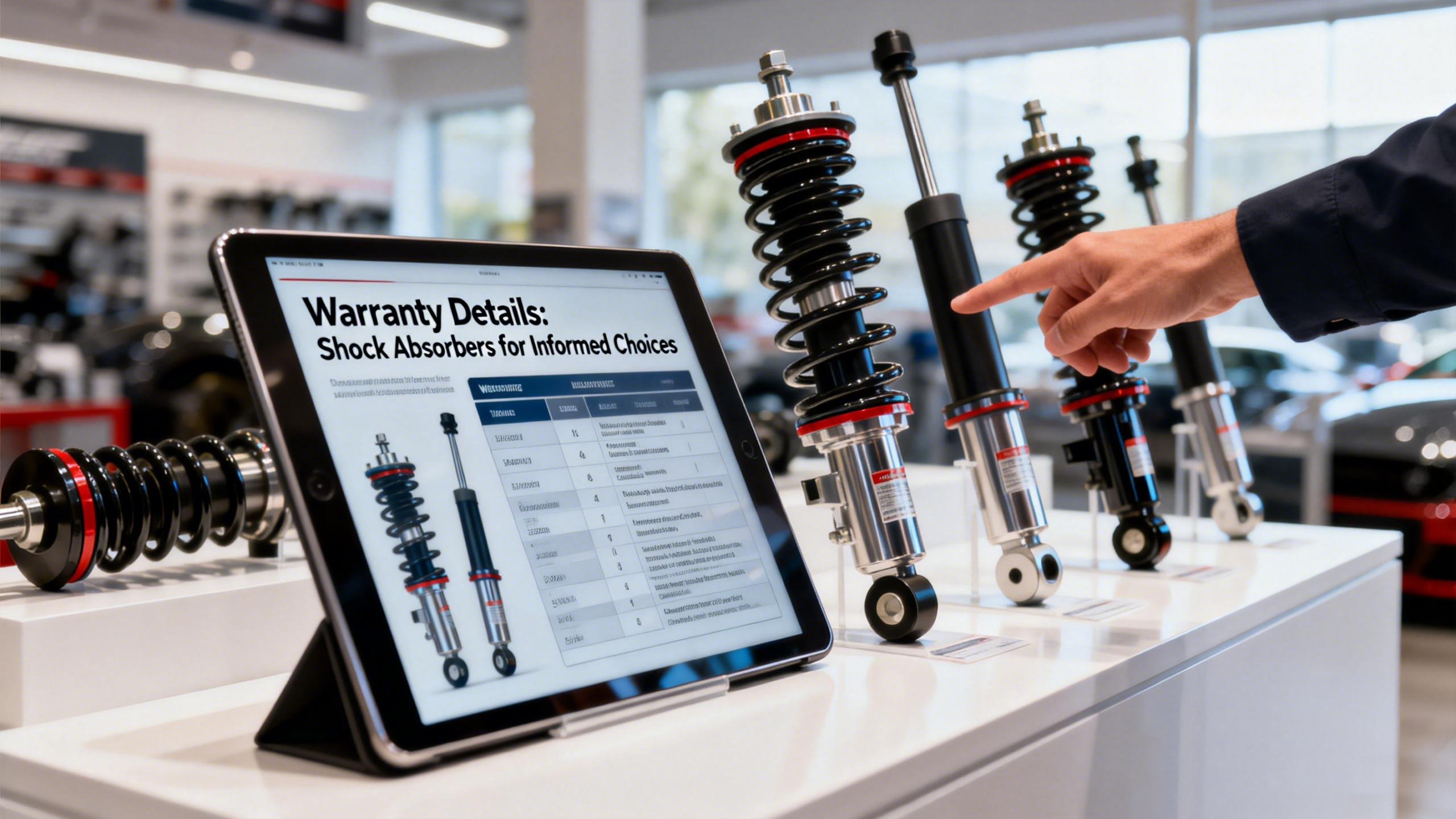
How Shock Absorber Warranties Reflect Real-World Performance and Risk
Why warranty duration (e.g., 50,000 miles) aligns with typical functional lifespan—not just marketing
Shock absorber warranties around the 50k mile mark actually tell us something real about how long these parts last before they start failing, rather than just being numbers pulled out of thin air for sales pitches. Car makers set these figures based on lab tests that speed up wear and tear, plus actual data from when people's shocks finally give up the ghost. Looking at industry stats, roughly 8 out of 10 shock absorbers show signs of getting worse over time within this mileage range because materials just can't take forever. The rubber bits get stiff after about 30 million compressions, and the oil inside loses its effectiveness bit by bit. What matters most is that these limits line up with what really affects safety on the road. When damping power drops off, tires lose grip during sudden stops, which isn't something manufacturers throw in there just to look good in ads. These numbers come straight from engineering facts, not marketing departments trying to make things look better than they are.
Key stressors that drive wear: road quality, payload cycles, and climate—validated by SAE J1211 testing
Three primary stressors accelerate wear—and all are rigorously quantified in SAE J1211 laboratory testing:
| Stressor | Impact Mechanism | Test Simulation Method |
|---|---|---|
| Road Quality | Potholes/rough surfaces cause oil cavitation | Repeated impact pulses at 2–5 Hz |
| Payload Cycles | Constant overload strains piston seals | 10,000+ compression cycles at max load |
| Climate Extremes | Salt corrosion/freeze-thaw damages valves | Salt spray chambers & thermal cycling |
When shock absorbers get tossed into tough environments, they tend to give up the ghost about 63 percent quicker compared to when they're operating in perfect conditions. Take coastal areas for instance - the salt air eats away at protective coatings at nearly twice the rate (around 2.4 times faster) we see elsewhere. And then there's the desert heat problem too. The intense temperatures actually cause hydraulic fluids to lose thickness by roughly 30%, which affects performance over time. All these findings line up perfectly with what gets measured during standard SAE J1211 testing procedures. So when manufacturers exclude certain failures from warranties based on extreme usage scenarios, it turns out they're not just making things up. There's solid evidence backing this up from actual field tests and lab measurements across various industries dealing with these same challenges day in and day out.
Critical Signs of Shock Absorber Failure—and How They Impact Warranty Eligibility
Three objective, inspection-verifiable symptoms: nose dive, uneven tire wear, and excessive rebound
Three measurable symptoms signal shock absorber failure—and each is objectively verifiable during professional inspection:
- Nose dive: Excessive front-end plunge during braking increases stopping distance by up to 20%, per industry-standard dynamic testing.
- Uneven tire wear: Scalloped or cupped tread patterns appear early and are visible without specialized tools.
- Excessive rebound: Prolonged oscillation after bumps is quantifiable via suspension response tests aligned with SAE J1211 methodology.
Technicians confirm these using hydraulic pressure gauges, visual alignment checks, and motion analysis. Early identification helps prevent secondary damage to steering and suspension components—and supports warranty claims by demonstrating proactive maintenance.
Common warranty exclusions: improper installation, misalignment, and aftermarket modifications
Most warranties void coverage under three preventable conditions:
- Improper installation, such as incorrect torque application or missing hardware, causes immediate seal stress and premature failure.
- Misalignment from bent control arms or worn bushings creates uneven load distribution—accelerating asymmetric wear.
- Aftermarket modifications, including suspension lifts beyond OEM height limits, alter engineered load paths and damping dynamics.
Manufacturers exclude these because they exceed validated operational parameters. Retaining certified installation records and pre-repair alignment reports is essential: 78% of denied claims stem from undocumented modifications, according to industry claims data.
Decoding Brand-Specific Shock Absorber Warranty Terms: Monroe, KYB, and Bilstein Compared
Monroe’s 'limited lifetime' warranty: transferability, labor coverage, and key exclusions (off-road/fleet use)
The Monroe limited lifetime warranty actually transfers to new vehicle owners, which isn't something most products offer when it comes to holding onto value over years. What people often forget though is that labor costs vary depending on where they get service done, and most places won't cover those professional installation charges either. That can really bite folks when they need to make a claim later on. The warranty also doesn't cover things like off road driving or fleet vehicles. Makes sense really because studies show dirt roads wear down shocks about 63% faster than pavement does. And if trucks carry heavy loads all day long, their shock absorbers tend to fail around 40% more according to testing standards. Anyone wanting to file a claim should definitely keep those installation receipts with dates on them plus some kind of log showing how much the vehicle gets used, particularly important stuff for businesses or anyone putting serious stress on their suspension system regularly.
KYB vs. Bilstein: prorated structures, corrosion coverage, and claims response transparency
KYB follows a pretty strict annual depreciation schedule where the money back gets smaller every year after the first one. Bilstein starts off offering better coverage initially, though their protection period doesn't last as long overall. Both companies skip covering failures caused by corrosion, which is a real problem area since cars in salty coastal areas degrade about three times faster than elsewhere. The way claims work varies between them too. For KYB, customers need pictures showing exactly how something failed. Bilstein wants a mechanic to check at a dealership within ten days instead. Most regular claims get sorted out around two weeks, but if there's some dispute involved it can drag on for almost two months. Keeping good records helps with getting approved by either company. Things like wheel alignment reports and when fluids were changed should be kept handy for smoother processing.
Maximizing Your Shock Absorber Warranty: Best Practices for Installation, Documentation, and Claims
Getting the installation right matters a lot for keeping that warranty intact. Follow those torque specs from the manufacturer exactly as written, and make sure everything lines up properly. A simple mistake like tightening mounts too much or putting bushings in the wrong orientation can wipe out all warranty protection overnight. With complex setups such as electronic adjustable shocks or remote reservoir systems, it's really worth spending extra money on a certified tech to do the job. These guys know what they're doing and can prevent issues like stressed linkages or annoying fluid leaks down the road. Keep good records throughout the process too. Save those receipts with dates, hang onto any signed checklists from installers, and measure suspension components before and after work gets done. When something goes wrong and needs fixing under warranty, send along pictures taken at the time of failure plus all maintenance history. The numbers back this up industry wide claims get sorted out about 63 percent quicker when documentation is complete. If a company denies coverage citing improper installation, don't wait around. Get those records together fast and ask for an independent inspection. Most of these disputes actually get fixed in our favor once solid proof comes forward.
FAQ
What factors contribute to shock absorber wear and tear?
Key factors include road quality, payload cycles, and climate, all of which are rigorously quantified in SAE J1211 testing.
How can I tell if my shock absorbers are failing?
Look for symptoms like nose dive during braking, uneven tire wear, and excessive rebound, which are verifiable through professional inspection.
What can void my shock absorber warranty?
Common warranty exclusions include improper installation, misalignment, and aftermarket modifications that exceed validated operational parameters.
How do KYB and Bilstein warranties differ?
KYB follows an annual depreciation schedule, while Bilstein offers better initial coverage. Both exclude corrosion-related failures.
How can I maximize my shock absorber warranty?
Ensure proper installation, keep detailed records and receipts, and submit complete documentation during claims to avoid coverage denial.
Table of Contents
- How Shock Absorber Warranties Reflect Real-World Performance and Risk
- Critical Signs of Shock Absorber Failure—and How They Impact Warranty Eligibility
- Decoding Brand-Specific Shock Absorber Warranty Terms: Monroe, KYB, and Bilstein Compared
- Maximizing Your Shock Absorber Warranty: Best Practices for Installation, Documentation, and Claims
- FAQ