
 EN
EN



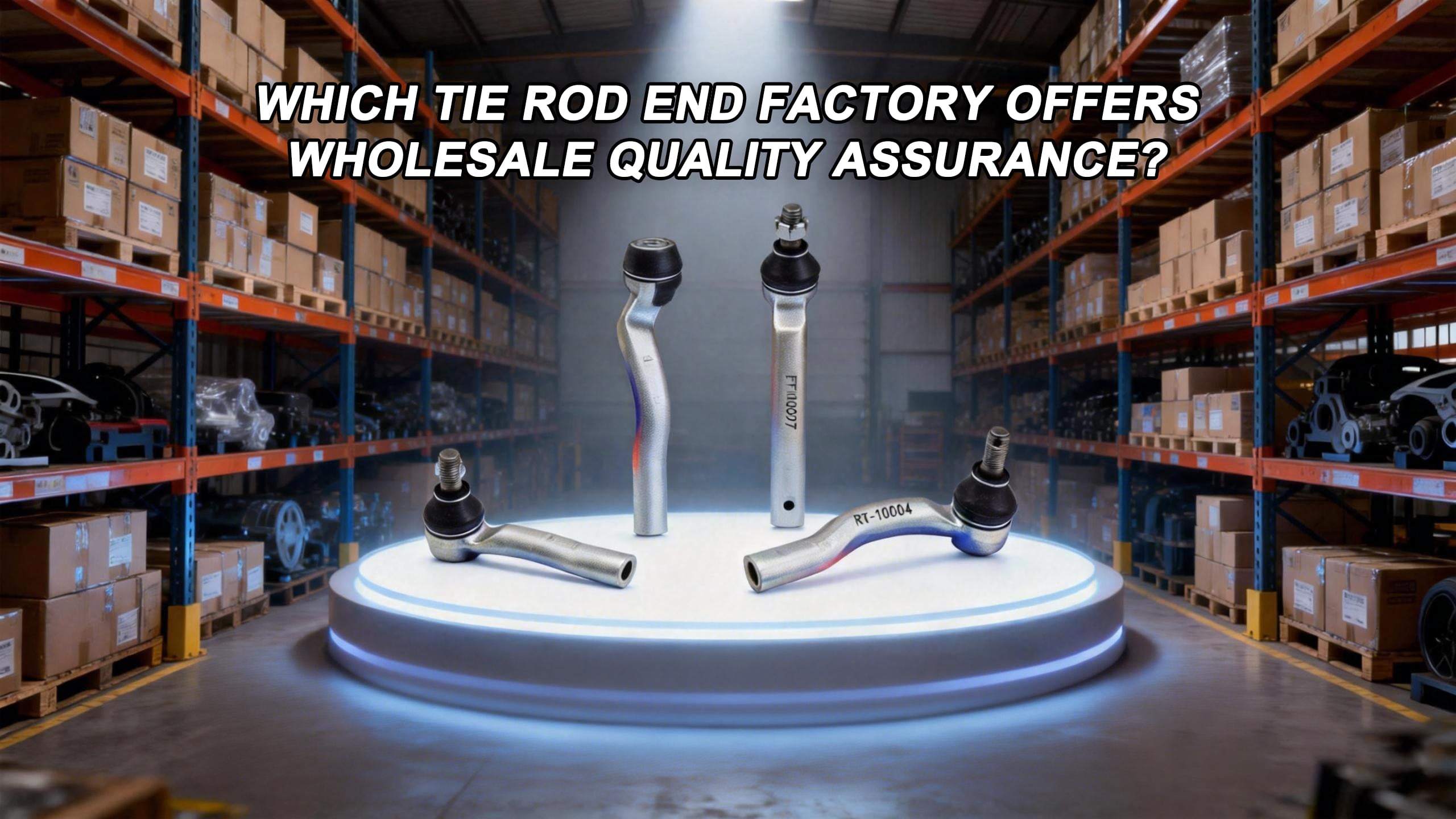
What Defines True Wholesale Quality Assurance for Tie Rod Ends?
Beyond Compliance: How Reliable Tie Rod End Factories Embed Quality in Every Batch
Quality control for wholesale products actually starts way before anyone even thinks about final checks. Top manufacturers build precision right into their processes from day one using computer aided design and manufacturing systems alongside robotic forging techniques. These methods help maintain extremely tight tolerances on components like tie rod ends, down to the micron level. During assembly, operators monitor torque in real time to make sure joints hold together properly. There are multiple layers of process control throughout production too. They test raw materials with spectrometers and validate heat treatments to cut down on inconsistencies. Regular training sessions keep workers engaged with quality standards, turning what might otherwise just be a box to check into something everyone cares about. The whole system works to stop problems before they happen instead of waiting until after production when it's too late. This means customers get consistently good results even when ordering large quantities.
Why Zero-Defect Tolerance Is Non-Negotiable in High-Volume Tie Rod End Supply
Tie rod ends are among the most critical parts in vehicle steering systems, where reliability simply cannot be compromised. A single failure means complete loss of steering control, which becomes an absolutely terrifying scenario when we're talking about thousands or even millions of vehicles on the road. The National Highway Traffic Safety Administration reported last year that steering system issues were responsible for around 18% of all car recalls. That's why leading manufacturers have developed strict quality controls. They run every part through automated visual inspections capable of spotting tiny surface flaws at the micron level. At the same time, they randomly test samples from each production batch using destructive methods to check for hidden weaknesses. These combined approaches keep defects down to less than one in ten thousand parts, even when factories churn out half a million units per month. To make sure these components won't fail under stress, engineers subject them to rigorous testing that simulates decade-long wear and tear plus extreme loads far beyond normal driving conditions. This comprehensive approach ensures drivers stay safe no matter how many miles their vehicles accumulate over time.
Certified Manufacturing: IATF 16949 and Tiered Inspection for Tie Rod Ends
How IATF 16949 Certification Validates Process Control Across the Tie Rod End Production Line
Getting IATF 16949 certified really locks down quality for tie rod ends through systematic process control, not just meeting basic compliance standards. The automotive industry has its own special framework here that requires companies to document risks at all stages of production, starting right from when they validate designs up until they audit suppliers. Factories that have gone through this certification process tend to see about 38% fewer defects after getting certified according to Automotive Manufacturing Solutions in 2023. One reason? They implement things like Failure Mode Effects Analysis, commonly known as FMEA, which helps catch potential problems before they actually happen. Statistical process control keeps an eye on important factors during manufacturing, such as keeping forging temperatures within a tight ±5°C range and measuring how much force ball joints can withstand using those fancy digital dynamometers we've all heard about. And let's not forget about the Continuous Improvement Principle built into the certification itself. This principle pushes manufacturers to keep making small but meaningful improvements over time, so every batch of products actually lives up to what original equipment manufacturers expect in terms of steering performance.
From Raw Material Checks to Final Lot Testing: The 5-Stage Tie Rod End Inspection Protocol
Robust quality assurance integrates five layered inspections:
| Stage | Scope | Key Methods | Tools |
|---|---|---|---|
| Raw Material | Alloy composition & integrity | Spectrometry, hardness testing | XRF Analyzers, Rockwell testers |
| Forging | Structural grain alignment | Metallographic cross-section review | CNC-controlled furnaces |
| Machining | Dimensional accuracy | CMM (Coordinate Measuring Machines) | Laser-guided calipers |
| Assembly | Torque/retention force | Dynamic tension testing | Robotic torque arms |
| Final Lot | Endurance & corrosion | Salt spray (ASTM B117), load cycles | Environmental chambers |
This protocol ensures zero-defect tolerance. Final validation runs 500,000 simulated steering cycles (SAE J2573) while monitoring wear patterns. Tiered checks guarantee traceability—each tie rod end links to its material mill certificate (ASTM A576) and assembly logs. Such rigor supports scalable customization, since batches are validated against OEM-specific fatigue thresholds.
Material Integrity and Real-World Validation of Tie Rod Ends
Corrosion-Resistant Alloys: ASTM A576, SAE J403, and Why Material Traceability Matters
High quality tie rod ends are made from special alloys that resist corrosion and meet industry standards like ASTM A576 and SAE J403. These specs require around 0.23 to 0.33 percent carbon content to strike just the right balance between hardness and flexibility. Tracking materials throughout production is absolutely essential too. When manufacturers keep detailed records all the way from the smelting process to final machining, they know their products will hold up against harsh conditions like road salt and constant moisture exposure. Skip this documentation step though, and cheaper alloys might develop tiny cracks over time. Those small issues can grow into serious problems down the road, potentially leading to complete steering system failure when drivers need it most.
Dynamic Performance Testing: Salt Spray, Steering Cycle, and Load-Life Validation for Tie Rod Ends
Testing tie rod ends through rigorous validation puts them through their paces with conditions that mimic what happens on actual roads. Salt spray chambers can show how parts hold up against rust after about 10 years worth of exposure all packed into just 1,000 testing hours. Meanwhile, steering cycle tests run through something like 150 thousand turns back and forth to see if they'll last. What really matters though is seeing how they perform when subjected to loads around 3.5 kN of force, which basically simulates hitting those nasty potholes we all love at highway speeds. Plants that actually run these comprehensive tests report getting nearly perfect results with over 99.8% survival rate according to Automotive Reliability Journal from last year. Skip these important checks however, and manufacturers face problems down the road with joints wearing out too fast and dealing with warranty claims nobody wants.
ASTM: American Society for Testing and Materials
OEM-Aligned Wholesale Production: Customization, Scalability, and Global Compliance
The big car companies need tie rod end suppliers who can handle three main things really well: making parts that fit exactly into different vehicle designs, scaling production up or down as needed, and meeting all sorts of international rules. When we talk about production that lines up with original equipment manufacturers, it basically means creating custom solutions whether that involves changing thread patterns, tweaking ball joint setups, or altering how components mount onto vehicles. And this has to happen while keeping the same high quality standards whether they're making just 50 units for testing or thousands for mass production. The ability to scale production depends heavily on manufacturing systems that are built in modules and have good real time monitoring capabilities. These systems let factories switch between small batches and large runs without any drop in quality. Compliance with global regulations is another major concern. From the European Union's UNECE R79 requirements for steering systems to North America's FMVSS standards, getting these certifications right matters a lot. When suppliers understand and meet these regional safety standards properly, it saves money in the long run by avoiding expensive redesigns, clearing customs faster, and reducing warranty issues around the world.
FAQ
What is the importance of quality assurance in tie rod ends production?
Quality assurance ensures that tie rod ends are manufactured to meet high standards, minimizing the risk of steering system failure and enhancing vehicle safety.
Why is zero-defect tolerance critical in manufacturing tie rod ends?
Zero-defect tolerance is vital to prevent steering failures, which are critical for the safety of thousands or millions of vehicles.
How does IATF 16949 certification enhance manufacturing quality?
It enforces systematic process control and continuous improvement through documentation and risk assessment, reducing defects significantly.
How are tie rod ends tested for quality?
Tie rod ends undergo a 5-stage inspection protocol, including raw material checks and endurance testing to ensure they meet industry standards.
What materials are used in manufacturing high-quality tie rod ends?
Special alloys resistant to corrosion, compliant with standards like ASTM A576 and SAE J403, are used to ensure durability and flexibility.
Table of Contents
- What Defines True Wholesale Quality Assurance for Tie Rod Ends?
- Certified Manufacturing: IATF 16949 and Tiered Inspection for Tie Rod Ends
- Material Integrity and Real-World Validation of Tie Rod Ends
- OEM-Aligned Wholesale Production: Customization, Scalability, and Global Compliance
-
FAQ
- What is the importance of quality assurance in tie rod ends production?
- Why is zero-defect tolerance critical in manufacturing tie rod ends?
- How does IATF 16949 certification enhance manufacturing quality?
- How are tie rod ends tested for quality?
- What materials are used in manufacturing high-quality tie rod ends?