
 EN
EN



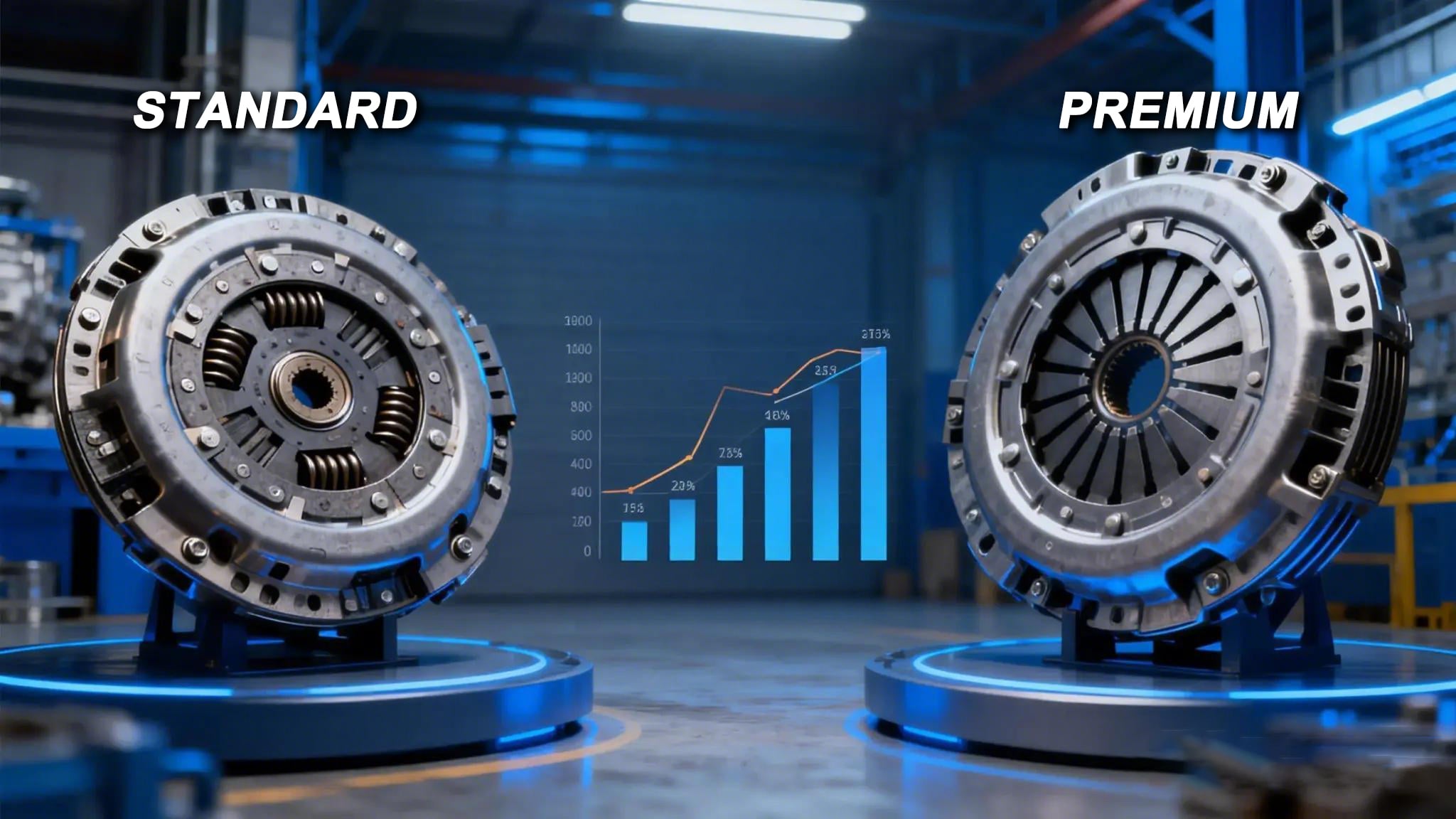
Clutch Cover Total Cost of Ownership: How Direct Factory Sourcing Cuts Costs by 18–27%
Hidden Costs in Traditional Clutch Cover Supply Chains
The traditional multi tier distribution system hides a lot of hidden costs that go way beyond what appears on the price tag. Most distributors typically mark up clutch covers by somewhere between 22% and 35%, according to various industry reports. Then there are those annual inventory costs that eat away at about 18% of each unit's value over time. Quality issues from one production batch to another can lead to around 14% rework rates, which means extra work for employees and more money spent on inspections. When parts are in short supply, fragmented logistics systems drive up shipping costs even more, sometimes charging premiums equal to 5% or 8% of the total order. All these inefficiencies don't show up in the per unit pricing, but they quietly chip away at profit margins across the board.
The TCO Impact of Eliminating Distributors and Trading Companies
When companies source clutch covers directly from factories, they actually cut down on Total Cost of Ownership (TCO) much more than just getting cheaper prices per unit. Getting rid of middlemen means no more paying those distributor profits (typically around 15 to 25 percent), avoiding those annoying cross docking charges that run about $12 to $18 per pallet, and not having to keep so much extra stock sitting around (which can save between 30 and 45 percent). According to recent research from the automotive supply chain sector in 2024, this approach typically brings TCO down somewhere between 18 and 27 percent. Why? Because there's one clear person responsible for everything and because manufacturers can see exactly what's happening with production as it happens. This kind of visibility makes real just in time delivery possible, which cuts warehouse space needs almost in half. Plus, companies get better payment terms too, often stretching from net 30 days to net 60 days, saving roughly 9 percent on financing costs each year.
Real-World Savings: $3.2M Annual Reduction on 450K Clutch Covers
A Tier-1 supplier validated these gains by shifting 450,000 annual clutch cover units to direct factory sourcing. Their holistic cost reduction framework delivered measurable results:
| Cost Factor | Before Direct Sourcing | After Direct Sourcing | Reduction |
|---|---|---|---|
| Unit Price | $28.75 | $22.10 | 23% – |
| Freight | $4.20 per unit | $2.85 per unit | 32% – |
| Quality Control | $310k annually | $90k annually | 71% – |
| Inventory Holding | 12 weeks | 5 weeks | 58% – |
The initiative generated $3.2 million in annual savings–equivalent to a 26% TCO reduction–and lifted defect-free delivery rates to 99.2%. This case demonstrates how consolidated supplier relationships convert theoretical efficiencies into tangible, bottom-line impact.
Clutch Cover Supply Chain Resilience: Faster Lead Times and Lower Obsolescence Risk
How Multi-Tier Distribution Drives Inventory Volatility and Clutch Cover Obsolescence
The multiple layers in distribution networks really mess with inventory stability when it comes to clutch covers. Every step along the way from distributors to wholesalers and those regional warehouses needs some extra stock just in case. This creates bigger problems with forecasting what people actually need, sometimes making mistakes as high as 14 to 23 percent off target. All this extra stuff sitting around means higher storage costs and greater chances of parts becoming useless. We've seen time and again that when products take longer to get where they need to go, they tend to become obsolete faster. The delays caused by all these middlemen mean clutch covers might arrive at factories after new designs have already been implemented. And with how quickly car manufacturers update their platforms these days, whole batches of parts can turn into worthless inventory within just 8 to 12 months after production starts.
Just-in-Time Clutch Cover Fulfillment Through Vertical Integration
Direct factory partnerships enable genuine just-in-time (JIT) fulfillment by removing intermediate stockholding points. Manufacturers align production schedules directly with end-user demand signals–reducing average lead times by 34–48%, per automotive case studies. This vertical integration delivers three operational advantages:
- Dynamic order adjustments: Factories respond to schedule changes within 72 hours–versus 3-week delays in distributed models
- Reduced warehousing overheads: 28% lower inventory carrying costs by eliminating double-handling
- Waste minimization: Near-zero obsolescence through demand-matched production cycles
By maintaining raw material buffers instead of finished goods, factories sustain 99.2% order fulfillment rates while keeping obsolescence below 0.8%–a fivefold improvement over traditional channels.
Strategic Clutch Cover Sourcing: Consolidating Suppliers for Yield, Flexibility, and Scale
Industry Shift: 63% of Tier-1 Suppliers Now Require Direct Clutch Cover Factory Partnerships
The automotive supply chain is moving pretty strongly towards working directly with factories these days. About two thirds of Tier-1 suppliers actually require this approach when they need clutch covers. What's happening here? Companies want better control over everything from costs to quality right at the production level. Sure, cutting out those distributor markups that usually range between 12% and 18% helps save money, but there's more to it than that. When manufacturers get involved early, they can watch how materials are treated through processes like metallurgy work, proper heat treatments, and all the precision machining details. Getting close to the factory floor lets both sides agree quickly on what materials should be used, especially important for parts that need to handle lots of torque without breaking down. And let's face it, when demand suddenly jumps up or car models change, having fewer middlemen means things don't get stuck in limbo waiting for approvals from somewhere else.
Building a Clutch Cover Supplier Scorecard: Yield Rate, Tooling Reuse, and MOQ Agility
Supplier consolidation succeeds only when guided by objective, operationally grounded metrics. Leading procurement teams evaluate clutch cover partners using three non-negotiable criteria:
- Yield Rate: Target >98% defect-free output. Consistently low yield signals underlying process instability–often in forging consistency or thermal processing.
- Tooling Reuse: Prioritize compatibility with existing dies and molds. Proven tooling reuse cuts setup fees by 15–30% per run and accelerates ramp-up for new variants.
- MOQ Agility: Favor suppliers accepting orders under 5,000 units. Flexible minimum order quantities prevent overstocking and reduce annual warehousing costs by 22%.
Together, these metrics ensure suppliers deliver not just cost savings–but scalable, responsive, and technically assured capacity.
FAQs on Clutch Cover Sourcing and Supply Chain
Why should companies consider direct factory sourcing for clutch covers?
Direct factory sourcing reduces Total Cost of Ownership (TCO) by eliminating middlemen, which results in savings on distributor profits, cross docking fees, and inventory costs. This approach also provides better production visibility, reducing lead times and improving financial terms, resulting in overall cost savings.
What operational advantages does vertical integration offer in supply chains?
Vertical integration enables just-in-time fulfillment, significantly reducing lead times and obsolescence risks. It allows for dynamic order adjustments, reduced warehousing overheads, and minimal waste, improving operational efficiency and maintaining high order fulfillment rates.
How does direct factory sourcing affect the quality of clutch covers?
Sourcing directly from factories allows companies to closely monitor the production process and material quality, leading to better control over the final product's quality. It reduces potential rework rates and increases defect-free delivery rates.
Table of Contents
- Clutch Cover Total Cost of Ownership: How Direct Factory Sourcing Cuts Costs by 18–27%
- Clutch Cover Supply Chain Resilience: Faster Lead Times and Lower Obsolescence Risk
- Strategic Clutch Cover Sourcing: Consolidating Suppliers for Yield, Flexibility, and Scale
- FAQs on Clutch Cover Sourcing and Supply Chain