
 EN
EN



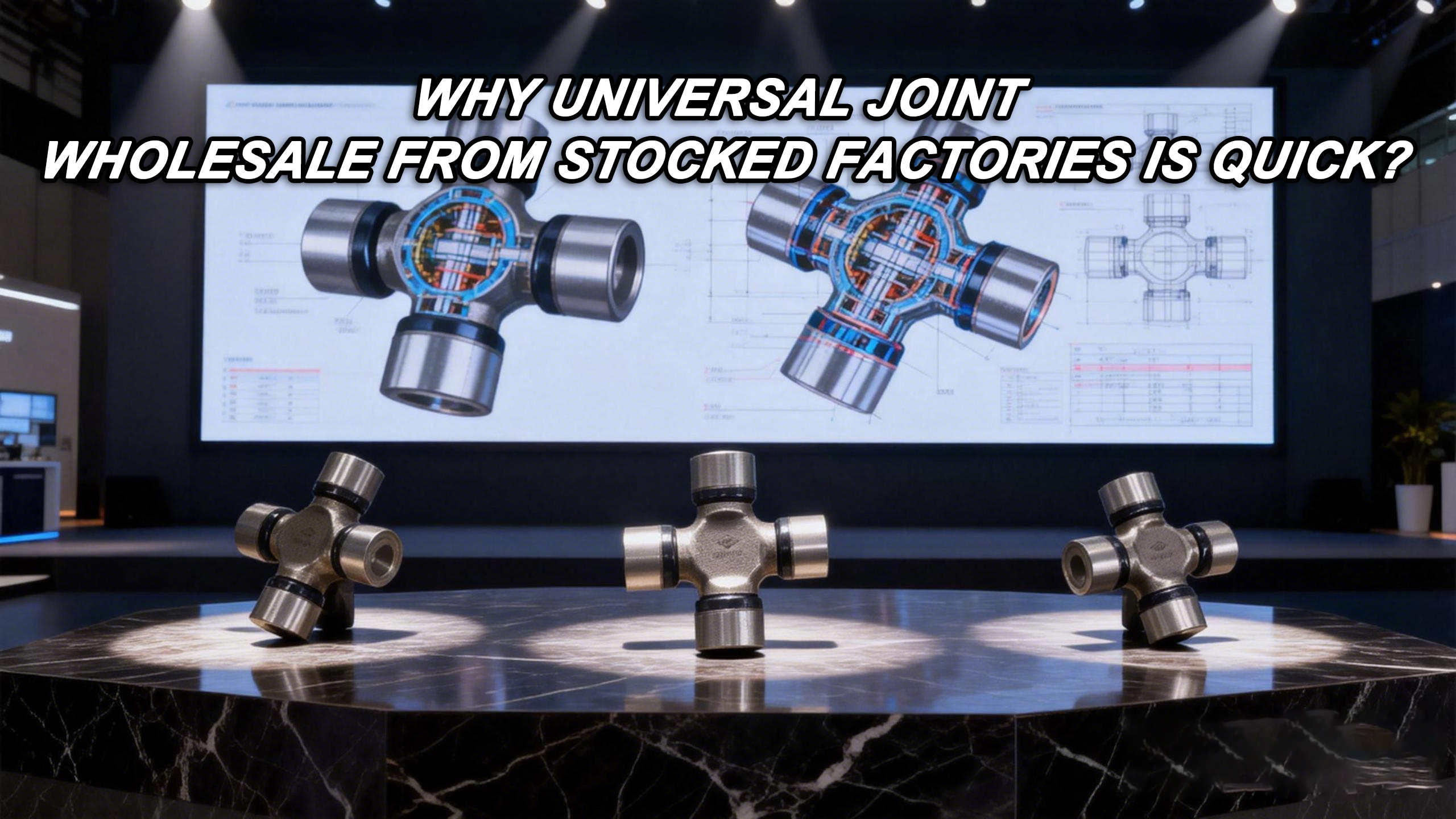
Pre-Stocked Inventory: The Core Driver of Universal Joint Wholesale Speed
How Finished-Goods Buffering Eliminates Manufacturing Wait Times
Having finished goods ready in stock changes how universal joints get sold wholesale because it takes all those production delays out of the picture when fulfilling orders. Traditional made to order setups involve casting first, then forging, followed by heat treatment one after another. But with pre stocked inventory, warehouses can handle multiple tasks at once instead of everything happening step by step. When customers place orders, they come straight from our verified stock shelves rather than sitting around waiting for weeks while raw materials get processed through factories. This means sales don't have to wait on manufacturing anymore, so we can promise delivery within just 1 to 2 days no matter how big the order is or what's going on in the supply chain. The Industrial Logistics Journal reported back in 2023 that companies using this method saw their lead times drop by nearly four fifths compared to old fashioned production lines where everything had to be made fresh for each customer request.
Real-World Benchmark: 72% Faster Dispatch vs. Made-to-Order Universal Joint Suppliers (2023)
A 2023 distribution study comparing 47 industrial suppliers found that stocked factories dispatch universal joint orders 72% faster than made-to-order competitors. Key findings:
| Metric | Stocked Factories | Made-to-Order | Improvement |
|---|---|---|---|
| Average Dispatch Time | 1.2 days | 4.3 days | 72% faster |
| On-Time Delivery Rate | 98% | 76% | 22% higher |
| Order Volume Capacity | 290% | Baseline | 2.9X scale |
Source: Global Bearing Distribution Analysis 2023
This speed advantage stems from eliminating casting/forging queues and standardizing SKUs. Automotive manufacturers using pre-stocked universal joints reduced assembly line downtime by 41% annually—demonstrating how inventory buffering directly accelerates customer operations.
Streamlined Production Architecture Enables Rapid Universal Joint Fulfillment
Skipping Casting, Forging, and Heat-Treatment Queues Through Parallel Finished-Goods Flow
The standard way to make universal joints involves going through several steps one after another casting first, then forging, followed by heat treatment each step typically takes around 3 to 5 days just sitting in line. But factories that keep stock on hand skip all those delays completely. They put already made parts that have been checked for quality straight into their inventory systems instead. This approach cuts out that whole 15 day waiting period we usually see, so when orders come in they can be fulfilled right away without having to track down raw materials or wait for machines to free up. The difference is pretty dramatic compared to traditional methods.
Modular Universal Joint Design and Standardized SKUs Accelerate Picking and Packaging
When companies use standardized parts like those 10-32 spline caps and the common 100mm crosses, they can actually fulfill around 90-95% of their orders right from pre-assembled kits. The warehouse software does all the heavy lifting too, matching things like bore sizes and flange types to specific module numbers on the fly, which cuts down on waiting for custom work. Assembly folks can put together these kits in just under eight minutes now, compared to the old days where custom builds took forever, sometimes over half an hour. And according to recent checks on bulk shipments, this modular approach really works wonders for quality control, cutting down mistakes by roughly two thirds overall.
Supply Chain Readiness: How Stocked Factories Reduce Total Customer Lead Time
Case Study: Automotive Tier-1 Supplier Cuts Universal Joint Delivery from 22 to 3 Days
A major automotive Tier-1 supplier reduced universal joint delivery from 22 to 3 days after shifting to pre-stocked inventory partners—a 86% improvement. This was achieved by eliminating three critical bottlenecks:
- Order processing queues, since universal joints shipped immediately from existing inventory
- Manufacturing delays, as no custom fabrication was required
- Logistics coordination friction, streamlined through standardized packaging and bulk shipment protocols
The impact extended beyond speed: inventory carrying costs dropped 19%, production line stoppages decreased by 73%, and universal joint availability reached 99.2%. This case confirms that strategic inventory positioning delivers both rapid response and supply chain resilience—converting linear procurement into parallel, predictable fulfillment streams.
Balancing Speed and Quality: Mitigating Risks in Universal Joint Wholesale From Stock
Buying universal joints wholesale from factories that stock them ready to go speeds things up for delivery, though it comes with quality issues that need watching closely. When companies rush to fulfill orders quickly, they sometimes cut corners on checking each joint thoroughly, which means bad measurements or flawed materials might slip through to customers. Getting the wrong size or type is a real problem too many times. These mismatched parts just won't fit properly with whatever they're supposed to connect to, and in systems where torque matters a lot, this kind of error can cause breakdowns at rates as high as 40%. Smart distributors who want both good performance and fast service have figured out three solid approaches worth mentioning:
- Multi-stage inspection checkpoints, including automated optical measurement for yoke ear parallelism and journal diameters
- Material certification protocols, verifying alloy composition and hardness documentation against ASTM A108 and SAE J403 standards
- Compatibility validation frameworks, cross-referencing joint specs against application load profiles and OEM drivetrain schematics
As reported in the 2024 Industrial Components Quality Report, suppliers combining AI-driven anomaly detection with manual audit sampling reduced defect rates by 58%—without extending lead times. This dual emphasis ensures inventory-driven speed never compromises the mechanical integrity essential for drivetrain reliability or operational continuity.
FAQ
Why is pre-stocked inventory important for universal joint wholesale?
Pre-stocked inventory eliminates production delays by having finished goods ready, allowing orders to be fulfilled immediately without waiting for manufacturing processes.
What are the main benefits of a pre-stocked inventory for suppliers?
Suppliers with pre-stocked inventory can promise faster delivery times, reduce lead times significantly, and enhance their order volume capacity compared to traditional production methods.
How does pre-stocked inventory affect quality control?
While pre-stocked inventory speeds up delivery, it also requires stringent quality control measures like multi-stage inspections and material certifications to ensure that rapid fulfillment does not compromise product quality.
What is the impact of pre-stocked inventory on supply chain resilience?
Pre-stocked inventory enhances supply chain resilience by converting linear procurement processes into parallel streams, which streamlines order fulfillment and reduces lead time.
Table of Contents
- Pre-Stocked Inventory: The Core Driver of Universal Joint Wholesale Speed
- Streamlined Production Architecture Enables Rapid Universal Joint Fulfillment
- Supply Chain Readiness: How Stocked Factories Reduce Total Customer Lead Time
- Balancing Speed and Quality: Mitigating Risks in Universal Joint Wholesale From Stock
- FAQ