
 EN
EN



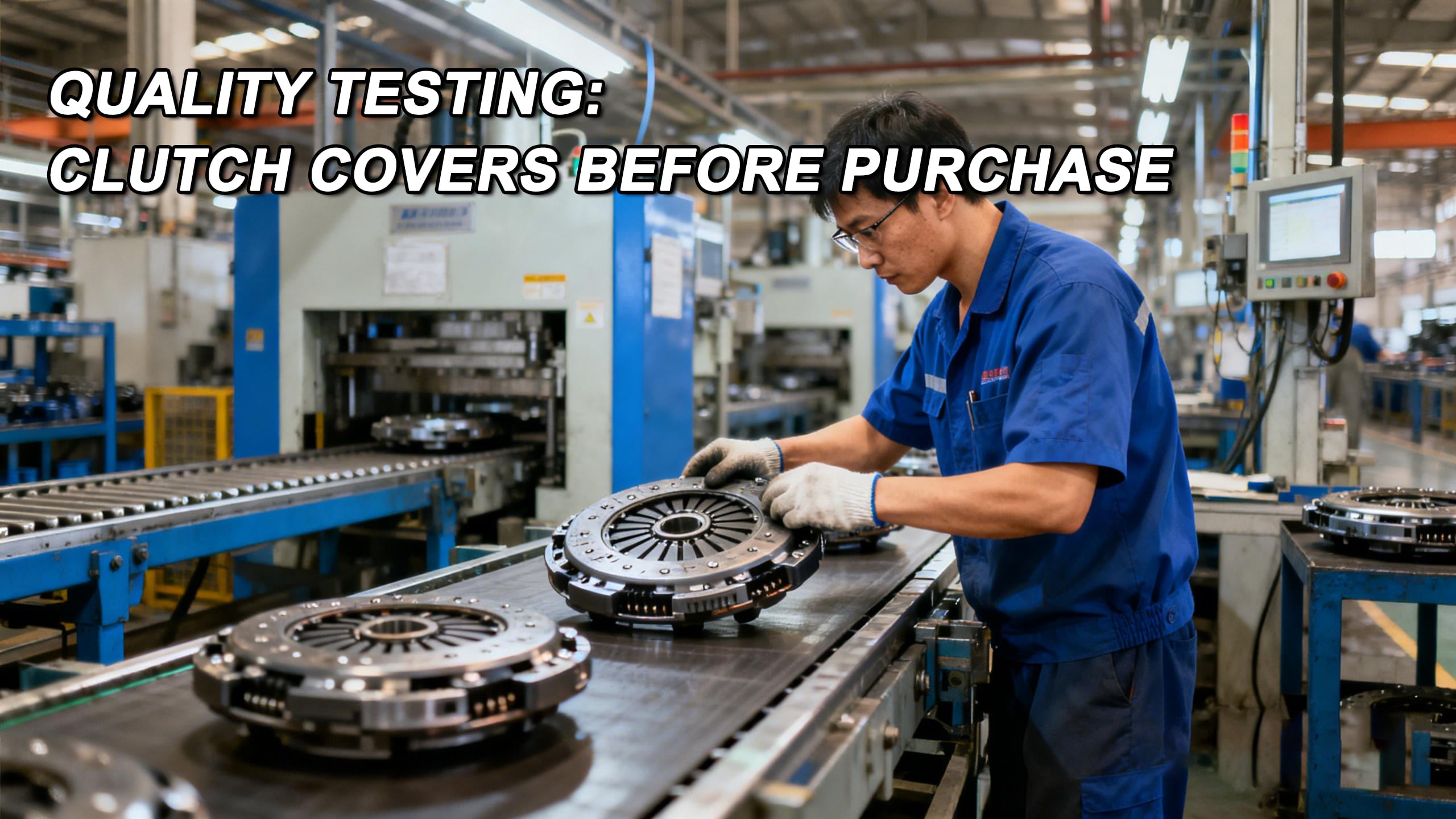
Visual and Dimensional Inspection of the Clutch Cover
Surface Defects, Warpage, and Bolt-Hole Alignment Checks
Looking closely at parts under good lighting catches problems before they get installed: tiny cracks, pits in the surface, or uneven machining marks all point to weak spots in the metal. When warping goes beyond about 0.3 mm (check it with a straight edge and those thin feeler gauges), the part won't fit right against the flywheel and throws off how the pressure plate sits. Even small bolt hole misalignments can cause extra strain on transmission parts when power is transferred through them. Mechanics see this happen all the time actually - around 35% of early clutch failures come down to these kinds of surface issues going unnoticed. Taking the time for this check isn't just procedure, it's what keeps vehicles running reliably mile after mile.
Critical Dimension Verification: Diaphragm Spring Height and Cover Flatness
When checking the diaphragm spring height, take measurements at three spots spread out evenly around the edge and compare them to what's specified by the original equipment manufacturer. If there's a difference greater than plus or minus half a millimeter, it changes how the clutch engages and distributes force, which can lead to problems like slippage or really rough shifting when driving. For cover flatness checks, place the component on a properly calibrated granite surface plate and run precision feeler gauges along it. Most designs allow for tolerances between 0.1 mm and 0.4 mm, though specifics vary based on manufacturer requirements. When the cover isn't flat enough as required, it throws off how pressure is distributed across the plate, leading to hot spots forming during operation and parts wearing down much faster than they should. Before moving on to actual function tests, make sure all these measurements get recorded accurately against the engineering blueprints provided by the manufacturer.
Material and Structural Integrity Testing for Clutch Cover Reliability
Non-Destructive Testing (NDT) for Cracks and Internal Flaws
Non-destructive testing plays a vital role in finding those hidden flaws without damaging the parts themselves. For surface cracks, dye penetrant works well for anything around 0.1 mm or deeper. Magnetic particle methods pick up on what's going on beneath the surface in materials that respond to magnets. And ultrasonic testing? That's the go-to method for spotting internal problems like voids or foreign material, especially important areas like where diaphragm springs sit and around bolt bosses. The numbers back this up too. Companies that stick with regular NDT checks see about a 40% drop in field failures according to data collected by top suppliers in the industry. Makes sense when we think about it since catching these issues early saves both money and headaches down the road.
Hardness and Tensile Strength Validation Against OEM Specifications
When we validate materials for clutch covers, we're basically checking if they can handle the necessary hardness and strength needed for good clamping over time. The Rockwell C hardness scale should read somewhere between 38 and 42 on those critical spots like the pressure plate face and where the springs sit. This range helps make sure the component won't wear down unevenly or deform under stress. For tensile strength, we need at least 600 MPa, which we test by pulling apart samples until they break while simulating those intense forces of 15 to 20 kilonewtons that happen when the clutch is engaged. Getting consistent hardness throughout the part matters a lot too. If there are soft spots, the metal might give way after many heat cycles from engine operation, which could mess up the shape of the diaphragm spring and damage how the release bearing interacts with everything else in the system.
Functional Performance Testing Under Realistic Load Conditions
Torque Transfer Consistency and Clutch Release Smoothness Assessment
Testing with dynamometers checks how components perform when subjected to actual road conditions. The test runs through more than 500 engagement cycles starting from engine idle all the way up to redline speed, increasing by 200 RPM each time, to measure how well torque is transferred rotationally. When measurements show differences greater than 15% compared to standard values, it usually means problems with diaphragm springs wearing out too soon or issues with the friction surfaces breaking down. At the same time, special sensors with high resolution track how smoothly the clutch releases, looking for those annoying stick-slip movements that cause vibrations throughout the drivetrain system. Important standards for passing or failing include keeping engagement shocks below 0.3g, ensuring the release bearing moves in a straight line, and maintaining consistent pedal pressure without fluctuations exceeding plus or minus 10 Newtons. Studies have found that inconsistent release forces lead to about 40% more clutches needing replacement before reaching 50,000 miles on average.
Thermal Stability Testing: 150–350°C Cycling to Simulate Heavy-Duty Use
Putting clutch covers through accelerated thermal cycling means they go through over 50 temperature swings between 150 and 350 degrees Celsius. These conditions mimic what happens during long hauls, downhill stretches, or those frustrating stop-and-go situations common in commercial trucking. The testing process takes about 90 minutes per cycle, switching back and forth between intense heat and controlled cooling periods. During this time engineers watch closely for any warping (anything over 0.2 mm is a fail), track changes in metal structure, and check if surface hardness drops by more than 5%. After all that, the diaphragm spring needs to hold at least 95% of its original clamping power to pass. Technicians also use infrared cameras to spot hot spots that appear before parts actually break down. Interestingly enough, thermal problems account for around 62% of clutch cover failures seen in fleet operations today, which explains why this kind of testing has become standard practice for getting heavy-duty components certified.
Durability and Longevity Validation for Clutch Cover Assemblies
Dynamic Fatigue Testing to SAE J2632: 50,000+ Engagement Cycles
The SAE J2632 dynamic fatigue test checks how well components hold up over time when exposed to real-world mechanical and thermal stresses. During testing, assemblies go through over 50,000 complete engagement cycles, which translates to roughly eight years worth of intense driving conditions including frequent hill starts, quick gear changes, and continuous high torque situations. Special thermal sensors monitor where heat builds up most at critical points like the diaphragm spring base and where it contacts the pressure plate. After testing, engineers look closely at dimensional changes. If there's more than 0.2 mm flatness variation, if springs lose over half a millimeter in height, or if tiny cracks appear around bolt holes, that means the part won't last as long as needed. Components that pass this rigorous test typically remain structurally sound for about ten years without experiencing spring failures or problems at the fastener connections. Industry research from 2023 shows that following these standards cuts down on early clutch cover failures by nearly two-thirds in heavy-duty vehicles.
FAQ
What is the purpose of visual and dimensional inspection in clutch covers?
The purpose of visual and dimensional inspection is to identify surface defects, warpage, and bolt-hole alignment issues. These checks ensure the clutch cover fits appropriately with the flywheel and does not cause extra strain on transmission parts.
Why is non-destructive testing (NDT) essential for clutch covers?
NDT is crucial as it detects hidden flaws like cracks and internal issues without damaging the parts. Regular NDT helps in significantly reducing field failures by catching problems early.
What is the importance of thermal stability testing?
Thermal stability testing assesses how clutch covers withstand extreme temperature variations, simulating real-world conditions. It helps prevent warping and degradation of material strength, crucial for reliable operation.
How does dynamic fatigue testing contribute to clutch cover durability?
Dynamic fatigue testing evaluates the longevity of clutch covers under mechanical and thermal stresses. Passing this test ensures components remain structurally sound for about ten years, minimizing early failures.