
 EN
EN


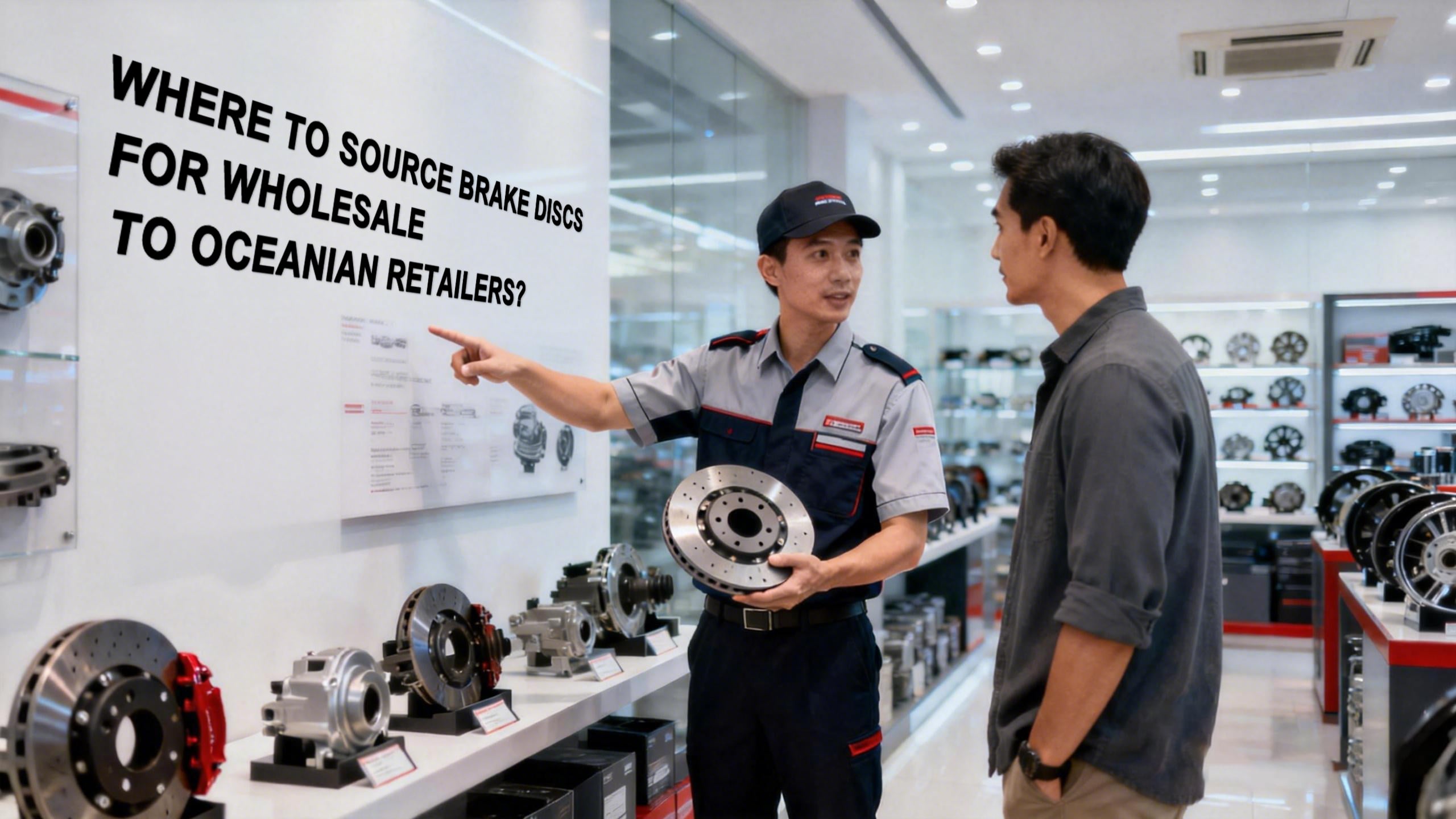
Understanding Oceanian Brake Disc Demand: Market Drivers and Retailer Needs
Australia and New Zealand Automotive Aftermarket Dynamics
The automotive aftermarket is booming in Australia and New Zealand thanks to high car ownership rates and older vehicle fleets. More than three quarters of cars on the road in these countries are over five years old, which means parts need replacing sooner rather than later. Brake discs and other safety components see particularly frequent replacements as drivers prioritize their families' safety. Both nations have tough regulations governing automotive parts. Australia has its ADR standards while New Zealand follows NZTA guidelines that set clear performance benchmarks and require regular checks. These rules naturally boost demand for parts that meet all the necessary specifications. Distributing parts across such vast territories poses another challenge. From busy city streets to outback roads, suppliers must maintain robust distribution systems that can reach every corner of these geographically diverse markets consistently.
Retailer Priorities: Price, Certification, Lead Time, and Local Support
Oceanian retailers evaluate brake disc suppliers through four non-negotiable criteria:
- Competitive pricing, essential for maintaining healthy margins in price-sensitive markets
- Certification compliance, particularly ECE R90—a de facto benchmark for braking performance adopted across Oceania
- Consistent lead times under 45 days to avoid stockouts and service disruptions
- Local technical support, including warranty assistance and installation guidance
A 2023 Ponemon Institute study found that 68% of retailers would switch suppliers solely due to inconsistent lead times—highlighting how supply chain reliability directly impacts commercial trust and retention.
Sourcing Brake Discs from China: Balancing Cost, Compliance, and Reliability
Non-Negotiable Certifications: IATF 16949 and ECE R90 for Brake Disc Compliance
Getting certified isn't just nice to have it's basically essential if companies want their products on store shelves anywhere. Take IATF 16949 for instance. This certification shows suppliers are following those important international quality standards everyone in the automotive industry respects. Then there's ECE R90 which tests how brakes actually perform when subjected to those tough European regulations. Many places now require this kind of proof before they'll accept parts for sale. Without these credentials? Well, shipments get rejected all the time, sometimes resulting in expensive recalls or even legal trouble down the road. According to that big report from last year called the Global Automotive Compliance Study, almost four out of five rejected shipments were because of missing or incomplete certifications. And here's something else retailers need to remember: don't trust what suppliers tell them about their certifications. Better to check through independent verification services instead. The reason? Interpol found some pretty serious counterfeit operations in 2022 where fake documentation was being used across multiple countries.
Mitigating Supply Chain Risk: Lead Time Management and Port-to-Warehouse Visibility
Oceanic transit introduces inherent variability—but proactive strategies convert uncertainty into predictability:
- Buffer Stock Optimization: Maintain 4–6 weeks of strategic inventory to absorb typical 45–60 day shipping windows from Chinese ports to Sydney or Auckland
- Real-Time Tracking Systems: Deploy IoT-enabled containers with GPS integration to achieve end-to-end port-to-warehouse visibility—reducing shipment uncertainty by 34%, per the 2023 Logistics Tech Study
- Multi-Port Diversification: Source from manufacturers near Shanghai, Ningbo, and Shenzhen to mitigate regional port congestion or policy shifts
- Container Utilization Analytics: Apply AI-driven loading algorithms to cut LCL (Less than Container Load) costs by up to 27%
Close coordination with freight forwarders—and periodic audits of supplier production schedules—ensures early intervention during customs delays or capacity bottlenecks. These practices shift lead time from a risk variable to a managed KPI.
Ensuring Brake Disc Quality at Scale: Material, Testing, and Validation Protocols
To ensure consistent quality in brake discs, manufacturers need to track and validate each step from raw materials all the way through to the final product. The premium grey cast iron used has very specific requirements when it comes to its composition. We're talking about carbon content between 3.0% and 3.3%, plus silicon levels ranging from 1.9% to 2.1%. These numbers aren't just random targets either. Every single melt batch gets checked using both furnace front thermal analysis and spectrometry to confirm everything matches spec. When we look at mechanical properties, there are certain standards that absolutely cannot be compromised. Tensile strength needs to be over 220 MPa, while pearlite content should stay above 95%. Why does this matter? Well, these metrics directly affect how well the discs dissipate heat and maintain their structure after going through multiple heating cycles during normal operation.
Manufacturing controls reinforce consistency:
- Mechanical molding ensures dimensional uniformity and minimises porosity-related defects common in manual casting
- Machined surfaces undergo precision inspection within ±0.02mm tolerances
- Destructive testing simulates real-world stress cycles—including thermal fatigue and load endurance
Full traceability across these stages supports IATF 16949 compliance and satisfies Oceanian retailer expectations for documented validation—particularly thermal fatigue resistance and hardness consistency (190–220 HB) across production runs.
Building a Scalable Wholesale Distribution Model for Brake Discs in Oceania
OEM/ODM Partnerships vs. Branded Aftermarket Sourcing: MOQ, Logistics, and Local Fulfilment Options
For wholesalers looking at their supply chain options, there's a real balancing act between going with OEM or ODM partners versus working with branded aftermarket suppliers. When dealing directly with OEMs or ODMs, companies generally need to commit to much bigger orders first, usually somewhere between $50k and $200k upfront. But what they get in return is pretty significant customization possibilities, full control over branding elements, and better margins down the line. On the flip side, branded aftermarket products come with much smaller entry points, typically around $5k to $20k minimum orders, plus people already know these brands from stores. However, there isn't as much freedom to stand out from competitors or adjust prices based on market conditions. From a logistics standpoint, OEM arrangements tend to mean shipping goods straight from factories to ports, which takes time—often 60 to 90 days total. Meanwhile, many established aftermarket brands have distribution centers closer to major markets, so restocking inventory happens much quicker when needed.
Both models benefit significantly from local fulfilment infrastructure:
- Partnering with Australian warehousing providers reduces final-mile delivery to 2–5 business days
- Using bonded storage facilities in Sydney and Auckland bypasses customs clearance delays
- Consignment stock agreements with national retailers improve shelf availability and reduce working capital strain
Hybrid models—combining OEM-sourced core SKUs with branded fast-movers—are gaining traction. Distributors implementing local fulfilment report 30% shorter order cycles and 18% lower logistics expenses, according to 2023 supply chain benchmarks.
FAQ
Why is there high demand for brake discs in Australia and New Zealand?
Due to high car ownership rates and older vehicle fleets, frequent replacements are necessary. Safety components like brake discs are prioritized for family safety. Stringent regulations further increase demand for compliant parts.
What issues can arise from missing certifications in brake disc production?
Missing certifications can lead to shipment rejections or expensive recalls. Ensuring certifications like IATF 16949 and ECE R90 are in place prevents these complications and legal troubles.
What strategies help mitigate supply chain risks when sourcing from China?
Strategies include buffer stock optimization, real-time tracking, multi-port diversification, and container utilization analytics. These proactively convert shipping uncertainties into predictable operations.
How can retailers ensure brake disc quality at scale?
Retailers should ensure manufacturers adhere to strict material compositions and mechanical properties, conduct rigorous testing, and maintain full traceability and validation across production stages.
What are the differences between OEM/ODM partnerships and branded aftermarket sourcing?
OEM/ODM partnerships offer customizability, branding control, but require larger initial orders. Branded aftermarket sourcing offers smaller entry points and established brand recognition but limits custom options.
Table of Contents
- Understanding Oceanian Brake Disc Demand: Market Drivers and Retailer Needs
- Sourcing Brake Discs from China: Balancing Cost, Compliance, and Reliability
- Ensuring Brake Disc Quality at Scale: Material, Testing, and Validation Protocols
- Building a Scalable Wholesale Distribution Model for Brake Discs in Oceania
-
FAQ
- Why is there high demand for brake discs in Australia and New Zealand?
- What issues can arise from missing certifications in brake disc production?
- What strategies help mitigate supply chain risks when sourcing from China?
- How can retailers ensure brake disc quality at scale?
- What are the differences between OEM/ODM partnerships and branded aftermarket sourcing?