
 EN
EN



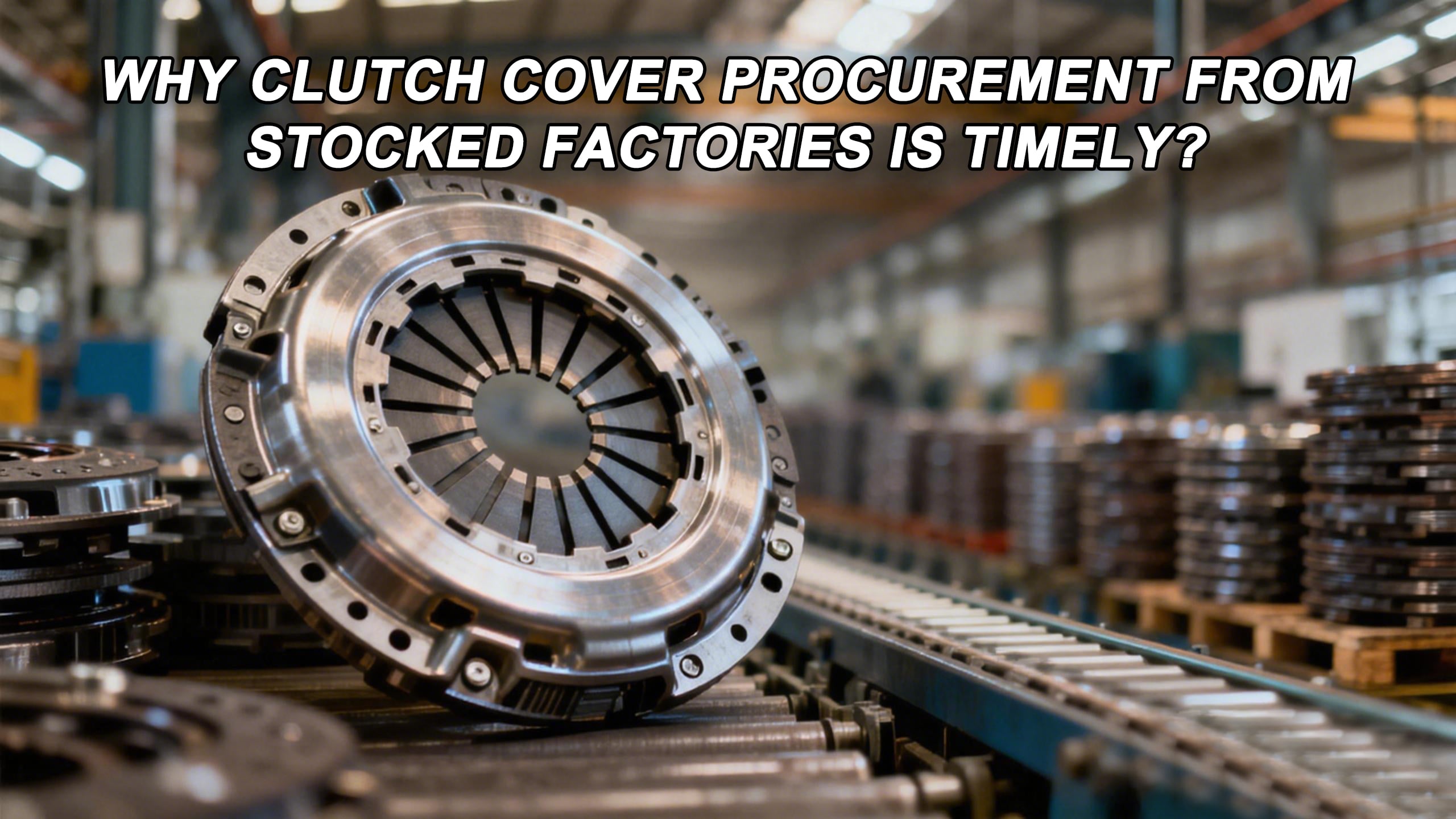
Clutch Cover Supply Chain Risks in Just-in-Time Automotive Manufacturing
The OEM Scheduling–Clutch Cover Lead Time Mismatch
The Just-in-Time (JIT) manufacturing approach leaves clutch cover procurement particularly exposed because of timing mismatches between what's needed and when it actually arrives. Car makers run their factories on tight schedules where parts need to show up basically on the dot, sometimes down to just a few hours window. But getting clutch covers takes around four to six whole days considering all the steps involved from getting raw materials to shipping them out. When things go wrong, this gap turns into a big problem. Take what happened back in 2021 when a semiconductor plant caught fire and stopped car production worldwide for months simply because those tiny computer chips couldn't get made fast enough. Something similar happens with clutch covers too. We see delays happen all the time because suppliers can't get hold of certain alloys, ports get backed up, or there are unexpected customs issues. And then there are those moments when OEMs suddenly change their orders without warning. All these problems end up stopping assembly lines cold, which hurts manufacturers badly financially speaking. Some estimates put the cost at roughly $740 thousand every single hour the factory sits idle according to research published by Ponemon in 2023.
How Stocked Factories Close the Responsiveness Gap
Keeping strategic stockpiles of clutch covers helps factories deal with those pesky JIT supply chain issues, cutting down wait times dramatically. Traditional suppliers can't compete with this approach because these pre-stocked warehouses actually hold enough inventory for 3 to 6 months on popular models. They also use smart systems powered by artificial intelligence to predict when original equipment manufacturers might change their schedules. Plus there are distribution centers located no more than 200 miles away from big car manufacturing plants across the country. Take what happened last year in the Midwest as proof. One auto company was scrambling for clutch covers and got them delivered in just over a day and a half while most companies take around four days normally since they have to go through regular production lines first. What makes this system work so well is how it combines the money saving aspects of just-in-time delivery with the safety net provided by having extra stock available. Companies save money on rush shipping fees and cut storage costs by about 18 percent according to recent industry reports from Automotive Logistics in 2024.
Clutch Cover Procurement Efficiency Gains With Pre-Stocked Inventory
Faster Order-to-Delivery: Real-World Cycle Time Reduction (4.2 → 1.7 Days)
Pre-stocked clutch cover inventory consistently reduces average lead times from 4.2 days to just 1.7 days—a 60% improvement driven by eliminating JIT procurement delays like production approvals and scheduling dependencies. Across 37 benchmarked facilities, this acceleration correlates with a 29% reduction in assembly line stoppages compared to reactive sourcing models.
Cost Savings: Lower Holding Costs and Eliminated Expedited Freight
Stocked factories do more than just save time they actually reduce the overall cost of running operations. When companies consolidate their warehouse space, they typically see around 18% lower storage costs because there's less money wasted on excess inventory penalties. Bulk shipping arrangements also cut down on those expensive last minute freight charges that can eat up $42,000 or more each year at individual facilities. What makes this approach really work is how it tackles the problem of inventory imbalance. Manufacturers used to lose about $740,000 every year according to Ponemon Institute data from 2023 when they had either too much or too little stock. The new system keeps inventory levels aligned with actual customer demand instead of relying on unpredictable forecasts that often lead to costly mistakes.
Clutch Cover Quality Assurance Through Controlled Stock Rotation
Traceability, Shelf-Life Management, and Batch Consistency
When companies manage their stock properly, they significantly boost quality control for clutch covers through a few key approaches. Good tracking systems let us follow parts all the way from when they first arrive as raw materials until they leave the factory door, which means we can catch problems fast before they become bigger headaches. Managing shelf life is another important factor. We stick to FIFO rules so older materials get used first, keeping those friction components performing just right right up until installation time. For batch consistency, we check that every production run meets the same standards regarding things like how hard the surfaces are and how well they handle heat. Manufacturers who have adopted this approach saw around a third drop in warranty issues according to recent industry reports from last year. What does this mean on the ground? More consistent performance at assembly lines, less waste because materials don't expire sitting around, and quicker setup times since there's no need for extra adjustments or recalibrations down the road.
The Future of Clutch Cover Sourcing: Hybrid Inventory Models
Smart car makers are turning to hybrid inventory systems as their go-to solution for keeping clutch cover supplies stable. Basically, these systems mix just-in-time methods for parts that sell fast with some extra stock kept on hand specifically for crucial items like clutch covers. When companies combine inventory stored nearby with their ability to manufacture globally, they can handle supply chain problems better without losing out on bulk purchasing benefits. These hybrid approaches let businesses react quickly when demand suddenly changes or shipping gets disrupted. They can pull from local warehouses but still keep those global price savings intact. What makes this system work so well is how it turns what was once just another expense into something valuable for the business. Production lines stay running smoothly, batches remain trackable throughout the process, and deliveries arrive reliably even when markets get shaky.
FAQ Section
What is Just-in-Time (JIT) manufacturing?
Just-in-Time manufacturing is a strategy where production schedules are tightly aligned with demand, minimizing inventory and reducing storage costs.
How do pre-stocked inventory systems improve clutch cover procurement?
Pre-stocked inventory systems reduce lead times from 4.2 days to 1.7 days by minimizing delays in production approvals and scheduling dependencies, thus reducing assembly line stoppages.
What are the cost benefits of pre-stocked inventory systems?
Such systems lower holding and storage costs by 18% and reduce expedited freight charges, addressing inventory imbalances and aligning with customer demand.
How do hybrid inventory models benefit clutch cover sourcing?
Hybrid inventory models stabilize supply by combining JIT methods with local stock, maintaining global price benefits while allowing swift adaptation to demand changes or shipping disruptions.