
 EN
EN


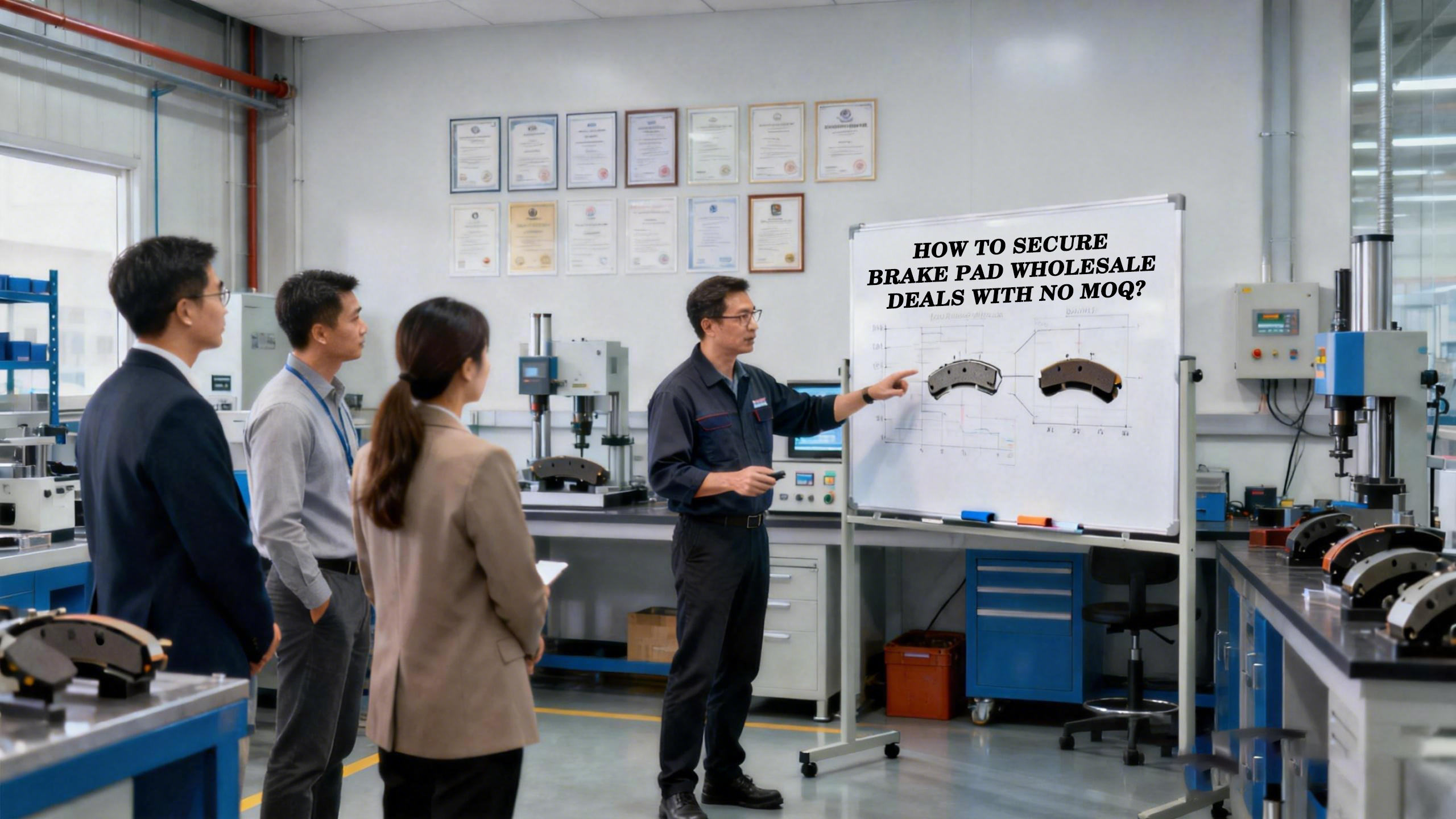
Why Brake Pad Suppliers Impose MOQs—and When They’ll Waive Them
The Core Cost Drivers: Tooling, QC, and Logistics in Brake Pad Manufacturing
Making brake pads involves a lot of upfront costs which is why most suppliers need customers to order minimum quantities just to stay in business. The tooling required for creating those friction compounds can set manufacturers back anywhere between fifteen thousand to forty grand per formula. And these expenses don't really pay themselves off unless there's significant volume moving through the system. Then there's quality control issues too. For parts where safety matters, companies have no choice but to test roughly one to two percent of every batch by destroying samples during testing. Logistics also gets expensive fast. Shipping a single pallet overseas costs about three times what it would if we could fill an entire container. All these factors push suppliers toward setting minimum order requirements to maintain their profit margins. However, when potential clients come forward with solid evidence showing they'll need products over several quarters ahead, many suppliers are willing to bend those rules. They might even take on extra costs temporarily just to build lasting relationships with good customers.
Certification as a Catalyst: How ISO/TS 16949 and ECE R90 Approval Enable MOQ Flexibility
Getting certified changes how minimum order quantities work completely. When suppliers get IATF 16949 certification (which replaced ISO/TS 16949), they typically see around 15 to 30 percent savings on checking each unit because everything follows standard procedures that get regular audits. This frees up money so they can handle smaller customer orders. The same goes for manufacturers who meet ECE R90 standards in Europe. These companies benefit from strict safety rules there, which actually makes supplying small volumes less risky. Their products tend to have defects under 0.1%, so producing small batches still works financially. From what buyers observe in practice, certified suppliers are much more willing to drop those minimum order requirements. Not just giving in, but doing it strategically when there's clear market access, good tech cooperation possibilities, or when developing prototypes is needed. Most non-certified suppliers simply won't bend on these requirements since their production processes vary too much and their quality control systems haven't been verified properly.
Proven Strategies to Negotiate Zero-MOQ Brake Pad Wholesale Terms
Leverage Tiered Commitments: Forecast-Based Agreements Over Fixed Quantities
Instead of going along with those strict minimum order quantities, try suggesting commitments based on what actual sales look like. Something like guaranteeing 5,000 units spread out over four months shows we're serious about working together but doesn't leave suppliers stuck with too much stock sitting around. From what we've seen in the field, this method actually allows companies to get started without any MOQ requirements at all, though they do pay about 8 to 12 percent more per unit compared to buying in bulk. The real win here is how it splits the risk evenly both sides benefit. Suppliers don't waste resources on unused capacity, and businesses aren't left holding onto products no one wants. To make things even better, include some kind of performance bonus when actual sales beat predictions. If someone sells more than expected, they get a rebate back. This creates real partnership between buyers and suppliers that lasts well beyond just one deal.
Bundle Sourcing: Combine Brake Pads with Rotors or Hardware to Unlock MOQ-Free Pricing
When companies bundle products together, they basically get around those minimum order quantity requirements because the overall order becomes bigger and allows for some items with lower profit margins to be included. Take automotive parts for instance. Rotors and caliper hardware typically bring in much better profits compared to brake pads. This means suppliers can actually afford the extra work involved in setting up production runs and quality checks for brake pads when these are bundled with other components. Many distributors who have adopted this approach see their inventory moving about 30% quicker, while their actual buying costs drop somewhere between 10 and 15%. Why? Because everything gets shipped together, there's less back and forth at warehouses, and predicting what needs to be ordered becomes simpler. The catch here is building strong relationships with suppliers. Show them that your business consistently buys across different product categories, and they might grant permanent exemptions from MOQ rules instead of just giving temporary breaks when asked nicely.
Balancing Risk and Value: Smart Pricing Models for No-MOQ Brake Pad Orders
Unit Cost vs. Total Landed Cost: Why ‘No MOQ’ Can Lower Your Effective Brake Pad Procurement Cost
Looking only at what something costs per unit doesn't tell the whole story about how much it really costs to buy things. When we talk about total landed cost or TLC for short, this includes all those extra expenses that come along with getting products from point A to B. We're talking about shipping costs, import taxes, warehouse space, insurance coverage, plus what it costs to keep stuff in stock until it gets sold. According to recent data from 2023 logistics reports, these additional costs can sometimes be over 40% of what the item actually costs. That's where no minimum order quantity programs start making sense. These programs cut down on storage fees dramatically too many companies pay around $2.50 each month per square foot of warehouse space but with these new arrangements, that drops down to just about 40 cents instead. Plus there's another big benefit nobody talks about enough the risk of having outdated inventory basically disappears because brake pads tend to change their formulas somewhere between 18 to 24 months anyway.
| Cost Factor | High-MOQ Model | No-MOQ Model |
|---|---|---|
| Unit Price | $15–$20 per set | $18–$23 per set |
| Storage Fees (Monthly) | $2.50/sq ft | $0.40/sq ft |
| Obsolescence Risk | High (8% attrition) | Minimal (<1%) |
| Total Cost/Set | $27–$33 | $21–$26 |
The result? Distributors prioritizing TLC over headline unit prices report 22% lower effective procurement costs—freeing working capital for high-velocity SKUs and enabling more responsive, leaner operations.
Trusted Sources: How to Identify Reliable Brake Pad Suppliers Offering Genuine MOQ-Free Programs
Checking if a supplier is legitimate shouldn't be optional when looking for brake pads without minimum order quantities. Look for manufacturers who can show real certifications anyone can check online. The presence of ECE R90 markings right on product packaging matters a lot, and AMEA registration for friction materials adds another layer of credibility. Don't just take their word for it either. Go ahead and verify these claims through official sources such as the UNECE type approval database. Good suppliers won't hide behind glossy brochures but will gladly provide actual third party testing results showing how well their products handle wear, maintain structural integrity under stress, and resist fading during extended use. When reviewing contracts, watch out for red flags. Legitimate MOQ free arrangements typically include specifics about consistent product quality, guaranteed timely shipments, and straightforward policies regarding defective items, without sneaky conditions that force future large orders down the road. Suppliers that control everything from raw material procurement all the way through molding, bonding processes, and final quality checks tend to give better value since they absorb setup expenses instead of charging extra to customers. Factory audit reports are worth asking for too. ISO/TS 16949 or newer IATF 16949 certification isn't just paperwork; it shows serious commitment to quality management systems that really work even when production runs stay small.
FAQ
Why do brake pad suppliers impose minimum order quantities (MOQs)?
Brake pad suppliers impose MOQs due to high initial costs associated with tooling, quality control, and logistics. Setting MOQs helps them maintain profit margins by ensuring significant volume sales.
What is the significance of certification like IATF 16949 and ECE R90 in brake pad supply?
Certifications like IATF 16949 and ECE R90 enable suppliers to save on quality checks and reduce risks, allowing them greater flexibility in lowering or waiving MOQs.
How can businesses negotiate for zero-MOQ terms?
Businesses can negotiate zero-MOQ terms by leveraging tiered commitments, bundling products, or demonstrating forecast-based sales, thus demonstrating reliability to suppliers.
What is total landed cost (TLC) and why is it important?
Total landed cost includes all costs associated with procurement, including shipping, storage, and taxes. Focusing on TLC rather than unit cost can lead to a better understanding of effective procurement costs.
How can I identify reliable brake pad suppliers offering genuine MOQ-free programs?
Look for suppliers with verifiable certifications, proper testing results, and transparent business practices. Also, check official sources like the UNECE type approval database to ensure claims are legitimate.
Table of Contents
- Why Brake Pad Suppliers Impose MOQs—and When They’ll Waive Them
- Proven Strategies to Negotiate Zero-MOQ Brake Pad Wholesale Terms
- Balancing Risk and Value: Smart Pricing Models for No-MOQ Brake Pad Orders
- Trusted Sources: How to Identify Reliable Brake Pad Suppliers Offering Genuine MOQ-Free Programs
- FAQ