
 EN
EN


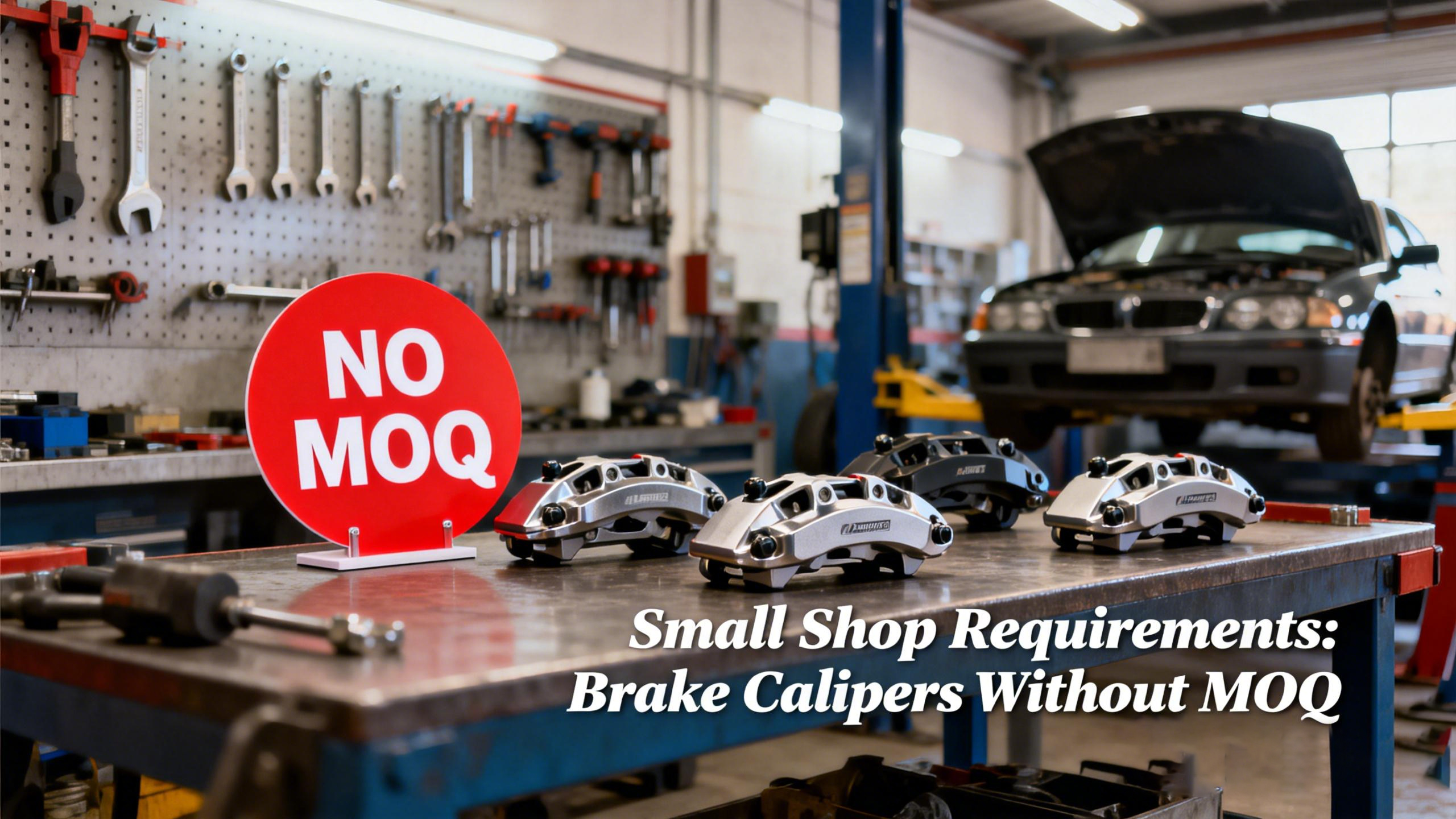
Why MOQs Hurt Small Automotive Workshops
Annual Brake Caliper Demand vs. Typical MOQs: The Inventory Mismatch
Most small auto repair shops need to swap out around 20 to 50 brake calipers each year. However, parts suppliers often require minimum orders of at least 100 units. This means mechanics have to buy enough calipers for two to five years all at once, tying up their cash in inventory that sits on shelves collecting dust. There are several problems with this situation. First, when car models change over the years, those old calipers become obsolete. Second, some sealed hydraulic parts actually expire after sitting too long. And third, as customers trade in older vehicles for newer ones, whole batches of calipers just sit there doing nothing. For shops that don't go through many calipers anyway, this creates financial strain without any real benefit to their bottom line.
Cash Flow and Storage Constraints in Low-Volume Brake Caliper Inventory Management
Minimum order quantities lock away anywhere from five to ten thousand dollars per caliper type, which really hurts small repair shops that typically bring in less than two hundred grand each year. Space issues make things even worse for many businesses. Most city based workshops don't have much more than a thousand square feet of space, so there's just no way to store all those big pallets. Putting inventory elsewhere costs over two hundred bucks a month per pallet, and then there's all the wasted time when technicians have to haul parts between facilities. All this tied up money stops shops from buying better diagnostic equipment, investing in employee training programs, or hiring experienced workers. The result? Lower quality services and slower business growth across the board.
The Technical and Economic Barriers to Low-Volume Brake Caliper Production
Casting, Machining, and QA Bottlenecks Below 50-Unit Runs
When manufacturers produce brake calipers in small batches below 50 pieces, they run into serious problems with their regular production efficiency. Aluminum casting requires expensive molds that can cost anywhere from $10k to $50k depending on the design. These are fixed costs that only make sense when spread out over big orders. With smaller production runs, companies struggle to recoup these expenses and frequently have to settle for lower quality components or simpler designs. Precision machining becomes even harder at these low volume levels because every single part needs to be aligned properly with pistons and sealed correctly within a tolerance range of plus or minus 0.05mm. Quality control adds another layer of difficulty since non-destructive tests for tiny cracks and pressure checks take just as long whether checking five parts or 500. All these issues create major delays in factories that were built to work best when producing things in bulk quantities.
How Tooling Costs Drive MOQ Enforcement—and What Enables MOQ-Free Alternatives
MOQs exist primarily to recoup tooling investments: a $35,000 caliper mold requires ~100 units to reach breakeven. Yet three innovations now decouple production viability from volume:
- Digital manufacturing, including CNC and metal 3D printing, enables small-batch fabrication without custom molds;
- Aggregated demand networks, where platforms pool orders from multiple shops to meet supplier thresholds;
-
Modular designs, using standardized mounting brackets and swappable core assemblies to slash per-unit setup time and cost.
Together, these reduce the economic breakeven point to just 5–10 units—making single-digit procurement feasible without inventory overhead.
MOQ-Free Brake Caliper Sourcing Solutions for Small Shops
Consolidated Drop-Shipping Networks: On-Demand Brake Caliper Fulfillment
Drop shipping networks that consolidate operations get rid of those pesky inventory problems by sending orders straight from local warehouses right to workshops, skipping the whole stocking process entirely. What these systems do basically is collect all the buying requests from dozens if not hundreds of different shops, which allows them to negotiate better prices at wholesale levels without having to meet minimum order quantity requirements (those MOQs everyone hates). Once a workshop actually needs something, their order gets picked up by automated systems that send out the exact caliper needed usually within two to three business days give or take. The Warehouse Efficiency Report came out last year showing some pretty impressive numbers too this setup saves around 40 percent on storage costs compared to old school inventory methods. Plus with real time tracking features and smart algorithms that know when to reorder stuff automatically, businesses can save money and have their staff focus more on what they really need to be doing instead of constantly managing stock levels.
Certified Refurbished and Hybrid OEM Brake Calipers: Quality, Traceability, and No MOQ
Brake calipers that have been certified as refurbished actually perform just as well as original equipment manufacturer parts but come in at around 30 to 50 percent cheaper. What happens during the refurbishment process? Well, every single unit gets put through its paces with pressure tests reaching all the way up to 3,000 pounds per square inch. They replace all those worn out seals and pistons too, plus check how resistant they are to rust and corrosion. Some companies offer hybrid solutions where they take brand new parts from manufacturers like pistons, seals, and various hardware components and combine them with thoroughly tested housing units that have been brought back to life. These refurbished parts even come with digital records so mechanics can track their history if needed. The system works pretty well when looking at regional certification centers that collect orders from multiple repair shops, which helps avoid minimum order quantity issues. Quality assurance isn't something these companies skimp on either. They measure everything down to the last millimeter using lasers and verify what materials were used in construction to make sure everything meets SAE J2574 standards. Real world testing shows about 99.2% of these rebuilt calipers work flawlessly, making it possible for garages to buy just one unit at a time without worrying about quality concerns.
FAQ
What are MOQs and why do they hurt small automotive workshops?
MOQs, or Minimum Order Quantities, are the lowest number of units a supplier is willing to sell at wholesale prices. They hurt small workshops by forcing them to purchase more inventory than they need, which ties up cash and causes storage issues.
How can small shops overcome MOQs?
Small shops can use consolidated drop-shipping networks, purchase certified refurbished parts, or join aggregated demand networks to overcome MOQs and reduce inventory costs.
What innovations allow for MOQ-free sourcing?
Digital manufacturing, aggregated demand networks, and modular designs help decouple production viability from volume, enabling MOQ-free sourcing.