
 EN
EN



How Control Arms Directly Influence Ride Comfort and NVH
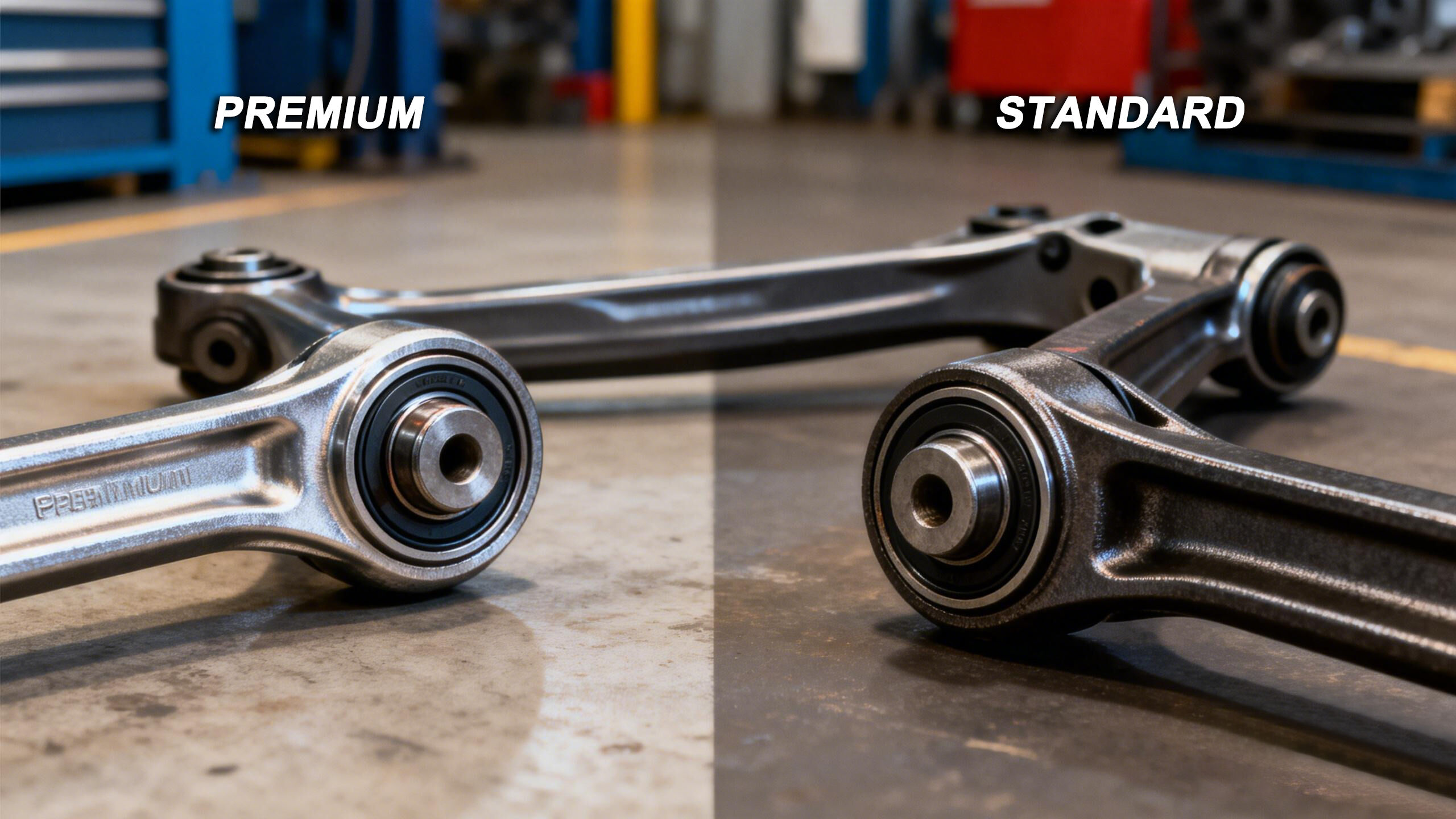
Control arms act as those important connection points linking the wheels to the car body, and they have a big impact on how smooth the ride feels plus all that noise vibration stuff we call NVH. When driving over bumps, these parts help manage the up and down motion of the wheels while keeping everything aligned properly beneath the car. They basically soak up shocks from rough roads before they can get into the passenger area. A well designed control arm will cut down on annoying vibrations from potholes and gravel roads, whereas cheap or poorly made ones let all that harshness travel through the frame, which tires out drivers fast and creates those pesky rattling sounds inside. These components also keep the wheels lined up correctly when turning corners or stopping hard, so tires don't wear unevenly and create extra road noise. The rubber bushings and joints in good quality arms do a decent job filtering out high pitch vibrations, while solid construction helps reduce those lower frequency shakes everyone hates. All this means control arms play a key role in getting that balance between quiet comfort and responsive handling that car manufacturers spend so much time perfecting.
Bushing Technology: The Critical NVH Control Point in Every Control Arm
Rubber, Polyurethane, and Delrin Bushings – NVH Performance Compared
The control arm bushings serve as the main point where vibrations pass from the suspension parts to the car's frame. Rubber bushings do a great job keeping noise out of the cabin by soaking up around 90 percent of those high frequency shakes that would otherwise rattle through the vehicle. However these rubber pieces don't last long when subjected to constant heavy loads over time. For something that strikes a better balance, polyurethane bushings come to mind. They last about three times longer than standard rubber options thanks to their harder material composition, though they still offer some level of vibration damping without being too stiff. On the other end of the spectrum we find Delrin or acetal resin bushings which are all about sharp handling response since they barely deflect at all under stress. But drivers should be prepared for quite a bit more road noise coming through the floors and seats because these materials just don't absorb much of the vibration that gets transferred from the wheels.
| Material | Vibration Dampening | Noise Isolation | Longevity |
|---|---|---|---|
| Rubber | Excellent | Excellent | Moderate |
| Polyurethane | Good | Good | High |
| Delrin | Poor | Poor | Exceptional |
Material selection involves clear trade-offs: rubber for luxury-oriented comfort, polyurethane for balanced daily use, and Delrin for track-focused applications where noise tolerance is secondary to steering response and geometric fidelity.
Joint Design Decisions: Ball Joint, Uniball, and Heim Trade-Offs for Comfort
What kind of joint sits inside a control arm really matters when it comes to finding that sweet spot between dampening vibrations and maintaining good handling. Ball joints are pretty good at keeping things quiet because they put all those moving parts inside lubricated rubber housing that basically blocks out most of the high frequency noises from getting into the passenger compartment. That makes for a much quieter driving experience overall. But there's a catch. These ball joints don't move around very far - usually somewhere between 68 to 80 degrees of movement. So if someone has made serious modifications to their vehicle, this limitation might actually cause problems with wheel travel. On the flip side we have uniballs which work differently. They use metal against metal spherical bearings and can handle way more movement than ball joints typically by about 10 to 15 extra degrees. This gives better performance off road but comes at a cost. Road noise becomes a real issue since there's absolutely no isolation from bumps and impacts.
Heim joints (spherical rod ends) provide extreme articulation and fine-tuning adjustability, yet their exposed bearing design amplifies noise and increases susceptibility to contamination, reducing long-term refinement. Aftermarket designs often increase articulation at an NVH cost: uniballs exhibit near-zero friction loss but lack inherent dampening.
The weight of materials really makes a difference here. When it comes to control arms, going with aluminum cuts down on what's called unsprung mass. This means the suspension can better handle road irregularities and puts less stress on the joints overall. On the flip side, steel arms are heavier but they stand up better to impacts. However, their extra weight means the joints need to be built stronger to handle all that inertia when things get bumpy. Drivers who care most about ride quality inside the cabin often go for sealed ball joints combined with polyurethane isolators because they work great at controlling noise, vibration, and harshness. But if someone needs serious off-road capability where the suspension travels a lot, then uniballs or Heim joints still make sense despite the fact that they tend to be noisier and need more regular maintenance checks.
Material Selection: Aluminum vs. Steel Control Arms for Optimal Damping and Mass Balance
The choice of material for control arms has a big effect on how well a suspension works, mainly because of how weight is distributed and how vibrations get handled. Aluminum arms cut down on unsprung mass by around 40 to 50 percent when compared to steel, which means the car responds better to rough roads. Lighter weight makes for a smoother ride since wheels bounce back quicker after hitting bumps and don't carry as much inertia. What's interesting about aluminum is its crystal structure actually dampens vibrations on its own, so less noise gets transmitted into the body of the car. Steel arms have their advantages too though. They're stronger overall, which is why many people still go with them for trucks, muscle cars, or anything driven off pavement regularly. The extra weight helps stabilize things during sharp turns. Steel does need special coatings to prevent rusting problems though. Aluminum won't corrode easily but tends to wear out faster when subjected to constant heavy impacts. Most regular commuters will find aluminum arms give just what they want in terms of lighter weight and quieter operation. But if someone drives something that carries lots of cargo or spends time on really tough terrain, steel might be worth considering despite being heavier.
FAQ
What are control arms?
Control arms are components that connect the wheels to the car body, influencing ride comfort and noise, vibration, and harshness (NVH).
Why is bushing technology important in control arms?
Bushing technology in control arms is crucial for NVH control, as bushings help absorb vibrations and reduce noise.
How do aluminum and steel control arms differ?
Aluminum control arms are lighter, reducing unsprung mass and offering better damping and quieter operation, whereas steel arms are heavier but offer more strength and durability.